

- July 12, 2026
- By
- Blog
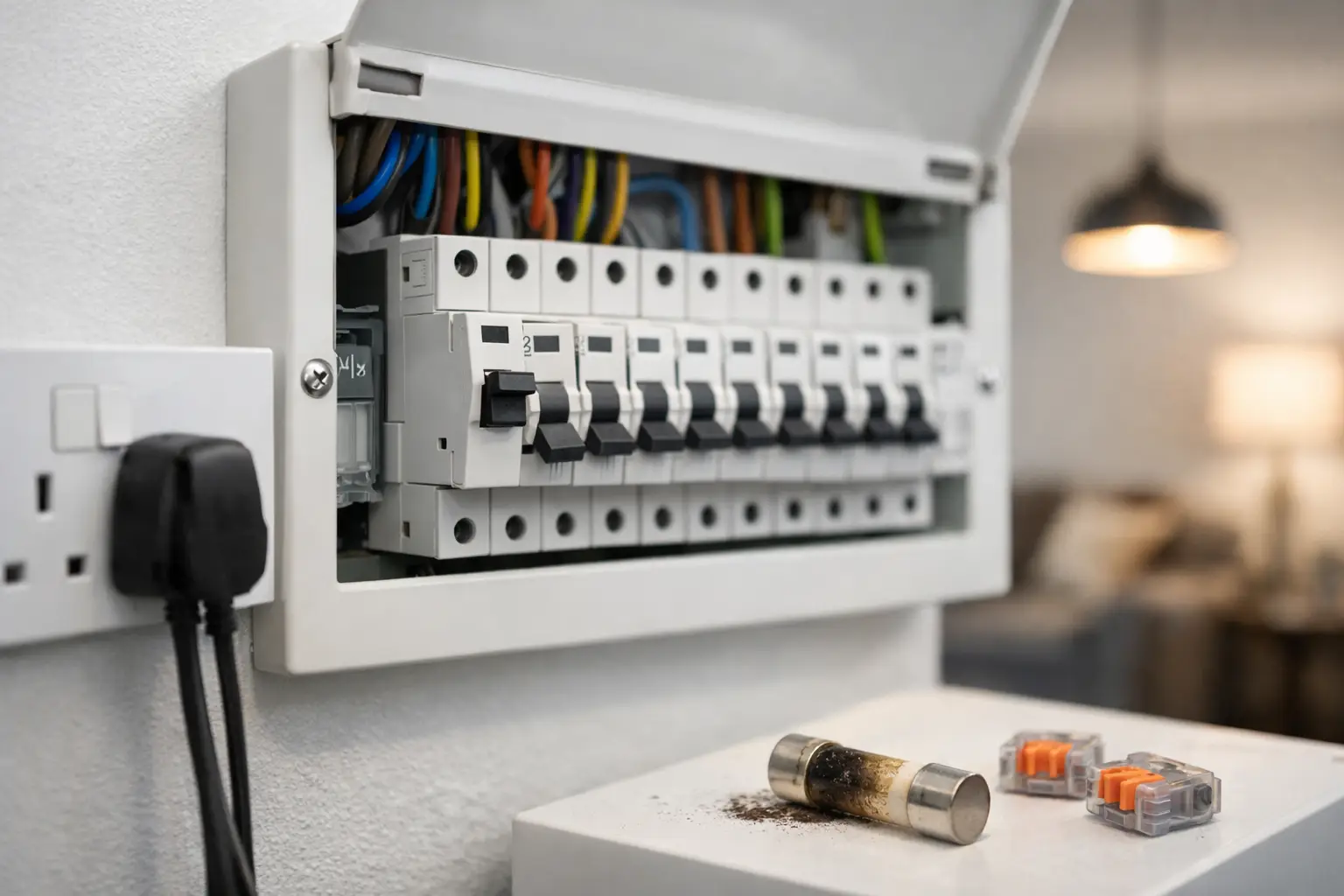
A sudden loss of power is inconvenient. A fuse box that trips repeatedly is also a warning that should not be ignored. If you are asking, “why does my fuse box keep tripping?”, the good news is that the protective device is doing its job. It has detected a fault, overload or possible electric shock risk and disconnected the supply before it can cause more serious harm.
Modern homes usually have a consumer unit rather than an old-style fuse box, but most people use the terms interchangeably. Inside are switches that protect different parts of the installation, such as sockets, lights, the cooker or an electric shower. Knowing which switch has tripped can help narrow down the cause, but you should never remove the cover or attempt repairs yourself.
Why does my fuse box keep tripping?
A consumer unit normally trips for one of three reasons: too much demand on a circuit, a fault in an appliance or cable, or electricity leaking to earth. The switch that has moved to the off position gives an electrician useful information about the type of fault.
An MCB, or circuit breaker, usually trips when a circuit is overloaded or there is a short circuit. An RCD, which often protects several circuits, trips when it detects an imbalance in the electrical supply. This may indicate current escaping somewhere it should not, potentially through damaged insulation, moisture or a faulty appliance. An RCBO combines both forms of protection for an individual circuit.
Repeated tripping is not something to solve by holding a switch in place or resetting it again and again. That can mask an issue while allowing heat or damage to build up elsewhere.
An overloaded circuit
Overloads are common in busy kitchens, utility rooms and home offices. A single circuit may be supplying a kettle, toaster, microwave, washing machine, tumble dryer and other high-demand appliances. If their combined demand exceeds what that circuit is designed to handle, its breaker will trip.
This does not always mean the house needs rewiring. Sometimes the solution is as straightforward as changing how appliances are used or providing an additional circuit for a high-load appliance. It depends on the age and layout of the installation, the rating of the circuit and what has been added to the property over time.
Electric heaters are another frequent cause. Plugging several portable heaters into one ring circuit during cold weather can place a significant load on the wiring and sockets.
A faulty appliance or lead
If the power trips when you use a particular appliance, stop using it straight away. A damaged flex, loose plug connection, worn heating element or internal fault can all cause a trip. Washing machines, dishwashers, kettles, tumble dryers and irons are regular offenders because they combine heat, water and moving parts.
Look only for obvious external damage, such as a crushed cable, scorch marks, a cracked plug or a damp appliance. Do not take the appliance apart. Even when it appears normal, an internal fault may still be present.
A useful safe check is to unplug the appliances on the affected circuit, reset the breaker once, then reconnect and use them one at a time. If the circuit trips as soon as one item is connected or switched on, leave that item unplugged and arrange for it to be repaired, replaced or tested. If the circuit trips with everything unplugged, the problem is more likely to be within the fixed wiring or consumer unit.
Damage to wiring, sockets or accessories
A nail or screw driven into a wall can damage a concealed cable. So can rodents, ageing insulation, DIY alterations and loose connections in sockets, light fittings or junction boxes. These faults may be intermittent, which is why a circuit can work normally for days before tripping again.
Signs that need prompt professional attention include a burning smell, buzzing, crackling, discolouration around a socket or switch, a warm faceplate, visible damage, or lights that flicker when an appliance is used. Turn off the affected circuit if it is safe to do so and do not use the area until it has been checked.
Moisture and outside equipment
Water and electricity are a bad combination. Outside sockets, garage supplies, garden lights, bathroom extractor fans and shower circuits can trip when moisture enters a fitting, cable joint or appliance. The issue may appear after heavy rain, a leak, condensation or cleaning.
Do not assume the fault will disappear once things dry out. Water ingress can corrode connections and reduce insulation resistance over time. An electrician can test the circuit properly, locate the affected section and make the repair safely.
A fault in the consumer unit or an older installation
Sometimes the protective device itself is faulty, particularly in an ageing consumer unit. Older fuse boards may lack the protection expected in modern homes, while additions made over the years can leave circuits poorly labelled, overloaded or unsuitable for current use.
A consumer unit upgrade is not the automatic answer to every trip. The underlying fault must be found first. However, where a board is outdated, damaged or unable to provide appropriate RCD protection, an upgrade can improve safety, make fault finding clearer and bring the installation in line with current requirements.
What you can safely do before calling an electrician
Start by checking whether the trip affects the whole property or only certain rooms or appliances. Note what was running when it happened, whether it occurred after using a shower or washing machine, and whether there has been recent rain, decorating work or drilling into walls. These details can save time during fault finding.
At the consumer unit, identify the switch that has tripped. If there is no smell of burning, visible damage or sign of water, you can switch off and unplug appliances on the affected circuit, then try resetting it once. If it stays on, reconnect appliances gradually. If it immediately trips again, leave the switch off.
Do not replace a breaker with one of a higher rating, fit a larger fuse, bypass an RCD or keep resetting a tripping device. Those actions remove the protection designed to prevent electric shock and fire. Never open the consumer unit cover, as live parts may be present even when switches appear to be off.
When repeated tripping is an emergency
Call an electrician urgently if the consumer unit will not reset, the trip is affecting essential equipment, or you notice overheating, smoke, burning smells, sparking or buzzing. If there is immediate danger, such as smoke or fire, get everyone out of the property and contact the emergency services.
A complete loss of power may also be a supply issue rather than an internal fault. Check whether neighbours are affected and whether the electricity meter display is live. If the issue is limited to your property or a single circuit, it needs investigating by a qualified electrician.
For homeowners and landlords around Chester, a proper fault-finding visit should involve testing rather than guesswork. Gerrard’s Electrical Solutions traces faults methodically, explains the findings in plain English and carries out repairs in line with BS 7671 and current 18th Edition requirements.
Why landlords should act quickly
A repeatedly tripping circuit can leave tenants without heating, lighting, cooking facilities or hot water. It can also point to a condition that needs attention before it becomes a more serious safety issue. Landlords have a duty to keep electrical installations safe and to maintain a valid Electrical Installation Condition Report where required.
An EICR is not a substitute for resolving an active fault. If a circuit is tripping now, it should be investigated promptly. Once the immediate problem has been repaired, periodic inspection can identify other concerns such as ageing accessories, inadequate earthing or circuits that are no longer suitable for the property’s use.
A tripping fuse box is not an inconvenience to live around. Leave the affected circuit off if it will not reset safely, make a note of what happened, and arrange for a competent electrician to identify the cause before normal use resumes.