

- July 15, 2026
- By
- Blog
A circuit that trips once may be inconvenient. A circuit that keeps tripping, a socket that feels warm, or a burning smell near the consumer unit needs proper attention. Electrical fault finding is the process of locating the real cause of a problem safely, rather than repeatedly resetting a switch and hoping it stays on.
For homeowners, landlords and business owners, the aim is simple: make the installation safe, restore what has failed and explain clearly what has been repaired. The fault may be small, such as a damaged accessory or failed light fitting. It can also point to a deeper issue with ageing wiring, moisture ingress, an overloaded circuit or equipment that should no longer be in use.
What electrical fault finding involves
Electrical faults are not always visible. A consumer unit may trip because a cable has been damaged behind a wall, water has reached an outside fitting, an appliance has developed an internal fault, or several loads are drawing more power than a circuit is designed to handle. The same symptom can have several possible causes, which is why guessing is rarely a good solution.
A competent electrician starts by listening to what has happened. When did the problem begin? Does it occur every time a particular appliance is used? Is it worse in wet weather, after a recent alteration, or when a specific light is switched on? These details can narrow the investigation, but testing is what confirms the answer.
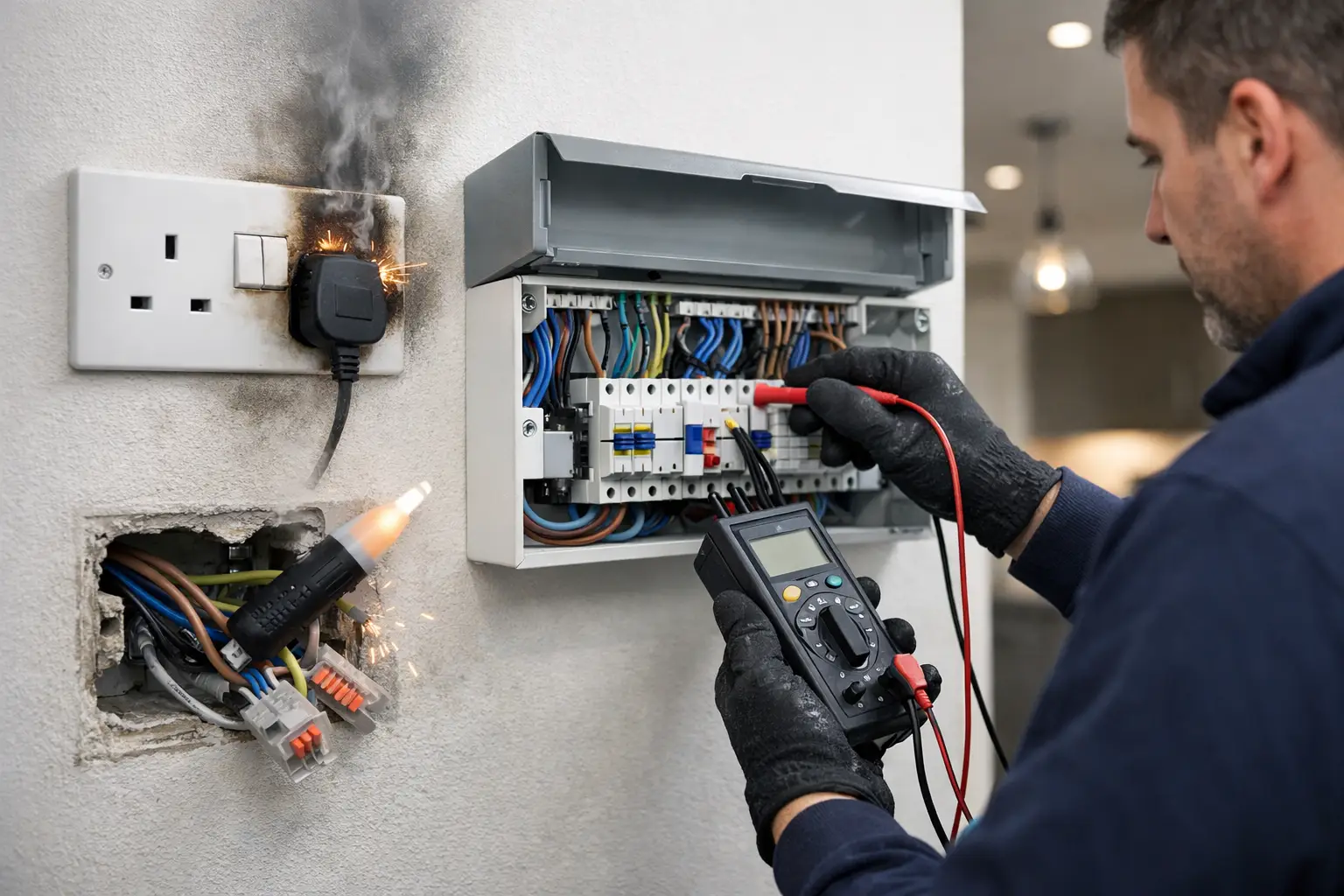
The affected circuit is then inspected and tested using suitable equipment. Depending on the fault, this may include checking continuity, insulation resistance, polarity, earth fault loop readings and the operation of protective devices. These tests help identify whether the issue is in the fixed wiring, an accessory, a light fitting, the consumer unit or something plugged into the circuit.
The important distinction is between finding a symptom and finding the cause. Replacing a tripping breaker without investigating why it tripped may leave the underlying risk in place. A proper repair should address the fault, not merely make the problem disappear temporarily.
Common signs you need an electrician
Some problems are obvious emergencies. Others are easy to put off because the electrics appear to work most of the time. That does not always mean they are safe.
A consumer unit that will not reset is one of the most common reasons to call. The switch is doing its job by disconnecting power when it detects a fault or potentially dangerous condition. Do not force it into position or keep trying to reset it if it immediately trips again.
Other warning signs include flickering lights, sockets that have stopped working, a buzzing sound from electrical equipment, electric shocks or tingles from metal fittings, scorch marks, loose outlets and a persistent burning smell. If you can smell burning, see smoke, hear crackling, or notice heat at a socket, switch off the power if it is safe to do so and seek urgent help. Do not touch damaged wiring or attempt to remove a cover.
Outside electrics deserve particular care. Garden lights, garages, sheds and external sockets are exposed to rain, condensation and accidental damage. A fault may only show itself after heavy weather, which can make it tempting to ignore once the circuit starts working again. Intermittent faults still need investigating, especially where water may be involved.
Why circuits trip – and why it depends
Not every trip means the same thing. Understanding the type of protective device that has operated helps an electrician decide where to begin, but it does not replace testing.
An overloaded circuit can trip when too many high-demand appliances run at once. Kettles, heaters, tumble dryers, ovens and power tools can quickly add up, particularly in older properties where there may be fewer circuits. In this case, changing how appliances are used may help, but a review of the circuit design could also be sensible.
A short circuit happens when conductors connect in a way they should not, often because of damaged cable insulation, a loose connection or a failed appliance. This usually causes an immediate trip. An earth leakage fault is different: a small amount of current is escaping to earth, often through damaged insulation, moisture or faulty equipment. A residual current device, or RCD, is designed to disconnect the supply quickly to reduce the risk of electric shock.
There is a practical check you can make before arranging a visit: unplug appliances on the affected circuit, then try resetting the switch once. If it holds, plug items back in one at a time. If one appliance causes the trip, leave it unplugged and have the appliance checked or replaced. If the circuit will not reset with everything unplugged, or you are unsure which sockets are affected, stop there and call an electrician. Never dismantle plugs, sockets or the consumer unit to investigate.
What to expect during a fault finding visit
Good fault finding should feel methodical, not mysterious. Your electrician should first make the area safe, then explain what they are checking in plain English. Power may need to be isolated for part of the visit, so it helps to mention anything that depends on electricity, such as medical equipment, alarms, freezers or a home-working setup.
After inspection and testing, the electrician should explain the diagnosis and the available repair options. Sometimes the answer is straightforward and can be resolved there and then, such as replacing a damaged socket, light fitting, connection or protective device. Other faults require further work, particularly if cables are concealed, the installation is old, or replacement parts are needed.
The best option depends on the condition of the installation and the reason for the fault. A targeted repair is often appropriate where the rest of the circuit tests safely. Where repeated faults are linked to deteriorated wiring, a damaged consumer unit or an unsuitable installation, a wider upgrade may offer better long-term value and safety.
At Gerrard’s Electrical Solutions, fault finding is carried out with clear communication, transparent call-out pricing and a focus on putting the problem right properly. Work is completed to current BS 7671 and 18th Edition requirements, with straightforward advice on what is urgent, what can wait and what will prevent the issue returning.
Faults in rental and commercial properties
Landlords have a duty to keep electrical installations safe. A tenant reporting a tripping circuit, failed smoke alarm supply, damaged socket or exposed cable should be taken seriously, even if the issue appears intermittent. Acting promptly protects occupants and can prevent a minor repair turning into a larger disruption.
An Electrical Installation Condition Report, known as an EICR, is not a substitute for fault finding when there is an active problem. An EICR assesses the overall condition of an installation and identifies departures from safety standards. Fault finding focuses on diagnosing a current defect. Together, they give landlords a clearer picture of immediate repairs and longer-term maintenance needs.
For shops, offices and other commercial premises, a loss of power can affect trading, security systems, refrigeration, IT equipment and staff safety. The priority is to isolate danger and restore essential services where possible, without bypassing protective devices or taking shortcuts. Planned remedial work may be the right approach when the immediate fault is safe but a more permanent repair needs coordinating around business hours.
Preventing repeat electrical problems
Not every fault can be predicted, but regular attention reduces avoidable risks. Avoid overloading extension leads, replace damaged chargers and appliances, keep outdoor connections protected from weather and do not ignore loose fittings or repeated tripping. If a property has an older fuse board, no RCD protection, fabric-insulated wiring, or circuits that struggle with modern demand, an electrical assessment is worthwhile.
Small changes can make a genuine difference. Additional sockets reduce reliance on trailing leads. Properly installed outdoor power is safer than running a cable through a window. Consumer unit upgrades can improve protection, while a rewire may be the sensible answer in a property with widespread ageing or altered wiring.
If your power keeps tripping or something does not feel right, treat it as useful warning rather than an annoyance. Switch off what you can safely, avoid DIY repairs and arrange a qualified electrician to identify the cause before a small fault becomes a serious one.
Comments (2)
Best Energy Saving Lighting Upgrades for Homes - Gerrards Electrical Solutions
Sep 23, 2026[…] protection against moisture and damage. If there are signs of cracked fittings, water ingress, tripping circuits or unreliable lights, treat it as an electrical repair issue rather than repeatedly changing […]
Best Kitchen Electrical Upgrades for Safer Homes - Gerrards Electrical Solutions
Oct 02, 2026[…] that a kitchen needs attention include regularly tripping circuits, warm or damaged socket fronts, lights that flicker when an appliance starts, a burning smell, or […]