

- July 13, 2026
- By
- Blog
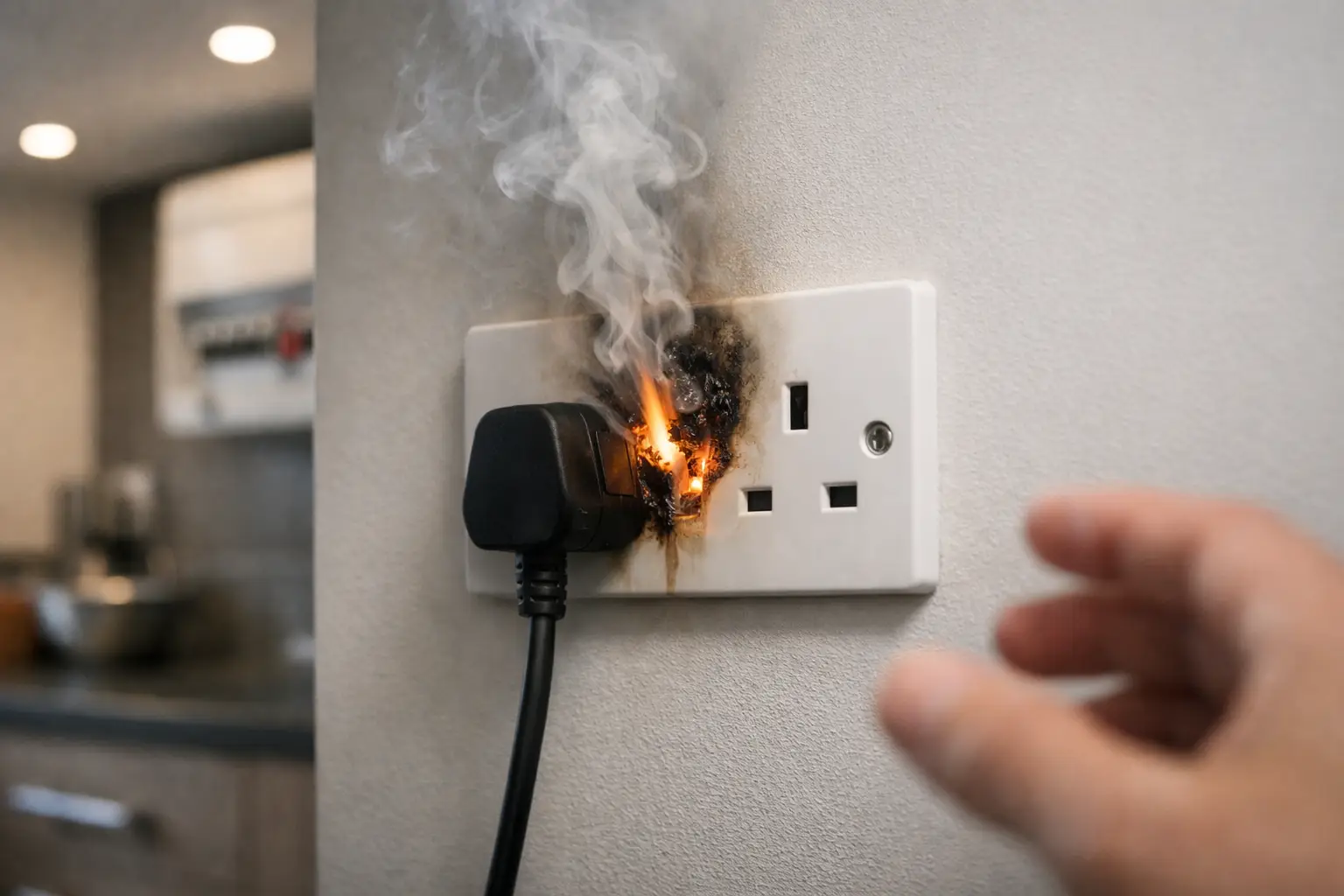
A burning smell from electrical socket is not something to monitor for a few days or cover up with air freshener. It can be an early warning that a connection, cable or accessory is overheating behind the faceplate, where the problem is not always visible. Acting quickly can prevent damage to your wiring, loss of power or, in the worst cases, an electrical fire.
Treat a burning smell from an electrical socket as urgent
Electrical equipment should not smell of burning plastic, hot rubber, scorched wood or melting insulation. A faint smell that appears after using a high-powered appliance may still point to a loose connection or an overloaded socket. A stronger smell, heat around the socket or any discolouration calls for immediate action.
Do not assume the issue is harmless because the socket is still working. Electricity can continue to flow through a damaged connection while heat builds up. In some cases, a circuit breaker may trip before a serious incident develops. In others, the fault may sit on a circuit that has not yet tripped.
The risk is higher in older properties, properties with ageing wiring, and homes where extension leads or multi-way adaptors are used regularly. However, even a newer installation can develop a fault through poor connections, damaged accessories or a defective appliance.
What to do straight away
If you notice a burning smell from an electrical socket, stop using that socket immediately. Unplug anything connected to it only if it is safe to do so. Do not pull a plug out if the socket is hot, cracked, sparking or smoking.
Take the following steps:
- Switch off the relevant circuit at the consumer unit if you can identify it safely and the area is dry and accessible.
- Keep people away from the socket and do not use it again until it has been checked.
- If there is smoke, sparking, visible melting or flames, leave the property if necessary and call 999.
- Do not spray water on an electrical fire or try to remove the socket faceplate yourself.
If the smell is coming from a plug or appliance rather than the socket itself, switch off the power and leave that item unplugged. The appliance may be the cause, but the socket and circuit should still be checked if there is any heat, marking or smell remaining afterwards.
Common causes of a burning smell from an electrical socket
Loose connections behind the socket
A loose terminal connection is one of the most common causes. Electrical current travelling through a poor connection creates resistance, and resistance creates heat. Over time, this can damage cable insulation, scorch the back box and melt parts of the socket.
Loose connections can happen as installations age, after sockets have been disturbed during decorating or renovation work, or where a socket was not fitted correctly in the first place. The faceplate may feel warm, look slightly yellowed or show brown marks, but not always. The evidence can be hidden behind the wall.
Overloaded sockets and adaptors
One double socket is not designed to supply unlimited demand simply because a multi-way adaptor has been added. High-load appliances such as fan heaters, tumble dryers, kettles, air fryers, portable radiators and washing machines can draw significant power.
Running several high-demand items from one outlet, particularly through an extension lead, can overheat plugs, leads and socket contacts. The problem is not just the number of items connected. It is the total electrical load, the condition of the adaptor and how long the appliances run for.
Portable heaters deserve particular care. They should be plugged directly into a suitable wall socket, never used with a lightweight extension lead or overloaded adaptor. If a socket smells hot after a heater has been used, stop using both until they have been inspected.
A damaged plug, lead or appliance
Sometimes the socket is not the original fault. A plug with loose pins, a split cable, a damaged flex or an internal appliance fault can generate heat at the point of connection. Signs include a hot plug top, blackened pins, a distorted plug or a smell that appears only when one particular item is in use.
Do not replace a fuse repeatedly or continue using an appliance that trips the circuit. Fuses and circuit breakers operate for a reason. Repeated tripping often indicates a fault that needs proper diagnosis, not a workaround.
Old or damaged socket accessories
Socket outlets wear out. Plug contacts can loosen after years of use, especially in busy areas such as kitchens, utility rooms and living rooms. Cracked faceplates, loose fittings and sockets that no longer hold a plug firmly should be replaced before they become a safety issue.
Signs of heat damage may also be linked to unsuitable or poor-quality accessories. A properly installed, correctly rated socket is a small part of a larger electrical system, so the circuit condition matters as much as the visible faceplate.
Wiring faults or inadequate circuits
Older wiring, damaged cable insulation and unsuitable connections can all cause overheating. In some homes, additional sockets, kitchen appliances or extensions have been added over the years without upgrading the circuit to suit the demand.
A qualified electrician can test the circuit, identify whether the fault is local to the socket, and check whether the protective devices at the consumer unit are operating correctly. This is particularly valuable where there are recurring issues, frequent tripping or multiple sockets showing signs of wear.
Why the smell may disappear but the danger remains
A burning smell can fade once an appliance is unplugged or the circuit cools down. That does not mean the fault has resolved itself. Heat may already have weakened insulation or damaged the socket terminals, making another overheating event more likely the next time the circuit is used.
This is why simply avoiding the affected outlet is not a long-term solution. The wiring behind it may supply other sockets, and a hidden fault can worsen without any obvious warning. A prompt inspection gives you a clear answer rather than uncertainty.
What an electrician will check
A competent electrician will first make the area safe, then investigate the source of the heat rather than replacing parts blindly. This may include checking the socket, plug and appliance, inspecting connections, testing the circuit and assessing the consumer unit protection.
The repair could be as straightforward as replacing a damaged socket or tightening a loose connection. If testing reveals older or deteriorated wiring, the recommendation may be further repairs, a partial rewire, a consumer unit upgrade or an Electrical Installation Condition Report. The right option depends on the condition of the installation, not just the visible damage.
At Gerrard’s Electrical Solutions, fault finding is approached with clear explanations and practical advice, so you understand what has caused the issue, what work is needed and what can safely wait. Work should be completed to current BS 7671 requirements, with no guesswork around a potential fire risk.
Extra responsibilities for landlords
For landlords, a burning socket smell should be treated as a priority repair. Tenants should be told to stop using the affected outlet, and the fault should be assessed without delay. It may also indicate a wider problem that needs attention before it affects another part of the property.
A current EICR helps identify deterioration, damaged accessories and issues with protective measures, but it does not replace responsive maintenance when a new fault appears. Keeping records of repairs and test results also supports a safer, better-managed rental property.
Reducing the chance of another fault
Avoid overloading outlets, replace damaged leads promptly and use good-quality, correctly rated extension leads only where necessary. High-load appliances are best connected directly to a wall socket. If plugs feel loose, sockets are warm, lights flicker or circuits trip repeatedly, arrange an inspection before a small warning becomes an urgent repair.
A burning smell is your home telling you something is wrong. Switch off, keep clear and get a qualified electrician to find the cause before using that circuit again.
Comments (3)
What to Do During a Power Outage at Home - Gerrards Electrical Solutions
Sep 25, 2026[…] you smell burning, see smoke, notice sparking, hear crackling from sockets or the consumer unit, or find signs of […]
How to Prepare for a Home Electrical Inspection - Gerrards Electrical Solutions
Oct 06, 2026[…] Small details can point to a fault that does not appear while the electrician is present. Before the appointment, write down anything you have noticed, including circuits that trip, lights that flicker, sockets that feel warm, switches that crackle or a persistent burning smell. […]
Top Signs of Loose Wiring You Should Not Ignore - Gerrards Electrical Solutions
Oct 14, 2026[…] accessory. Stop using that point and arrange for it to be checked. If there is smoke, scorching or a burning smell, isolate the circuit if it is safe to do so and call an emergency […]