

- July 24, 2026
- By
- Blog
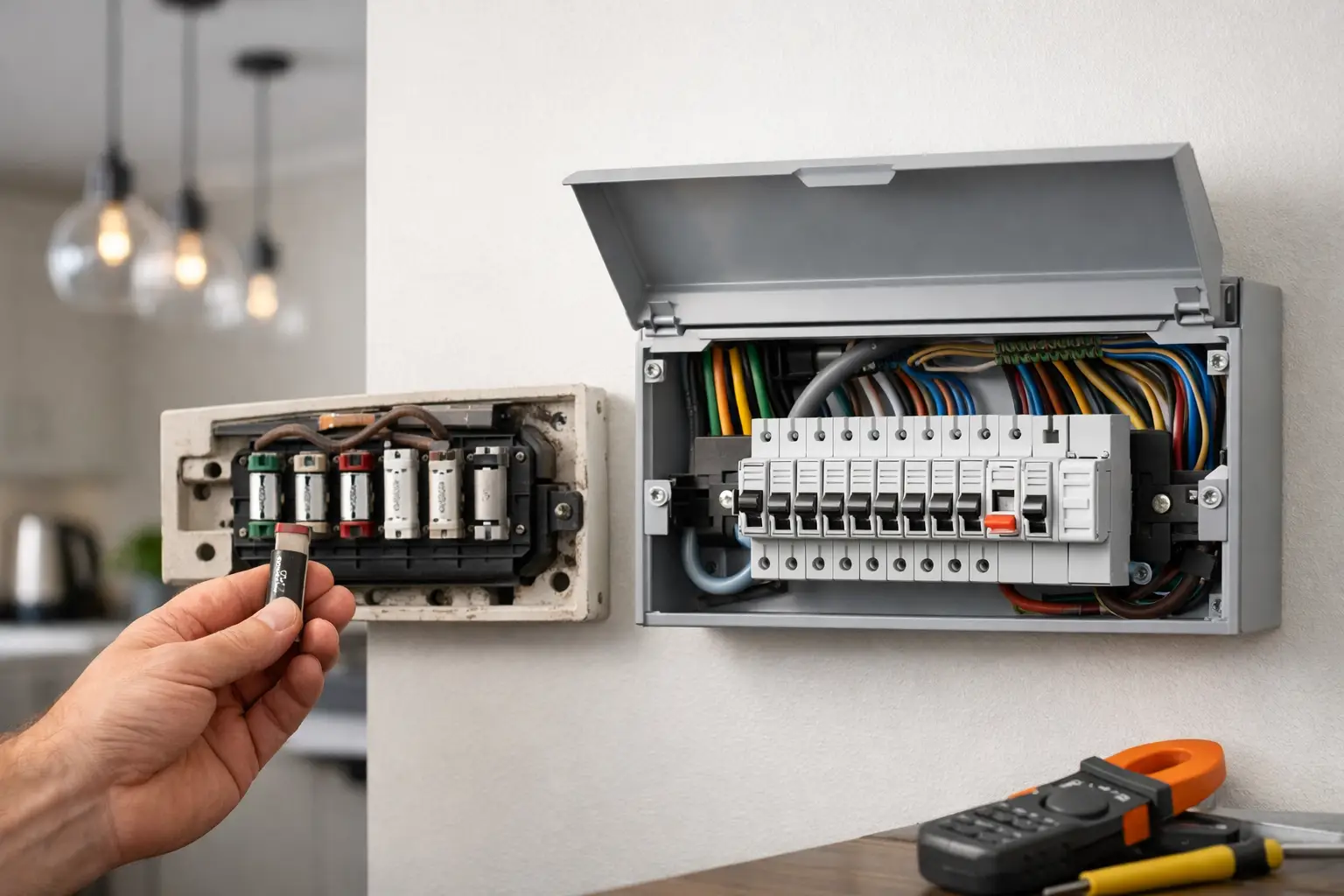
A fuse board upgrade is rarely something property owners plan until a circuit starts tripping, an inspection highlights concerns, or an electrician finds an older board during other work. Yet the consumer unit is the point where your home’s electrical safety measures come together. If it is outdated, damaged or unsuitable for how you use the property now, upgrading it can be one of the most worthwhile electrical improvements you make.
Often called a fuse board, the modern name is a consumer unit. It distributes electricity around the property and contains protective devices designed to disconnect a circuit quickly if something goes wrong. A properly selected and professionally installed unit helps reduce the risk of electric shock, fire and repeated loss of power.
When should you consider a fuse board upgrade?
Age alone does not automatically mean a consumer unit is unsafe. Some older installations can remain serviceable where they have been well maintained and tested. However, old-style rewireable fuses, a wooden-backed board, visible damage, missing blanks or frequent tripping are all reasons to arrange a professional inspection.
A fuse board upgrade is commonly recommended after an Electrical Installation Condition Report, known as an EICR. The report assesses the condition of fixed wiring, accessories and protective equipment. If it identifies a limitation in the existing consumer unit, or faults that cannot be safely addressed without replacement, an upgrade may be the sensible next step.
It is also worth reviewing the board when your property is changing. An extension, new kitchen, electric shower, induction hob, EV charger, garden office, heat pump or additional security system can all place new demands on the installation. Adding circuits to an old or full consumer unit is not always practical or appropriate. In some cases, a replacement board provides a safer and tidier foundation for the work.
For landlords, a satisfactory EICR is a key part of maintaining a safe rental property. A consumer unit does not need replacing simply because a tenant moves in, but any observed damage, inadequate protection or reportable defects should be dealt with promptly by a competent electrician.
What a modern consumer unit does differently
Modern consumer units are built around faster, more effective protection than many older fuse boards. They use circuit breakers rather than replaceable fuse wire, making it easier to identify and reset an isolated circuit after the cause of a trip has been found.
They will normally include RCD protection. An RCD, or residual current device, monitors the flow of electricity and can disconnect power rapidly if it detects an imbalance that may indicate a fault to earth or a risk of electric shock. This is particularly valuable on circuits serving sockets, outdoor equipment and areas such as kitchens and bathrooms.
Many installations now use RCBOs instead. These provide overcurrent and residual current protection on each individual circuit. The practical advantage is reduced disruption: if one circuit develops a fault, it is less likely to switch off power to unrelated parts of the home. Whether RCBOs are the right choice depends on the installation, budget and design of the board, but they are often a useful option for households that want better circuit separation.
Surge protection may also be considered. A surge protection device can help protect sensitive equipment from certain transient voltage spikes, which can be caused by events within the electrical network or by switching. It is not a guarantee that every appliance will be protected from every fault, but it is an increasingly relevant consideration in homes with smart controls, home-working equipment, televisions, alarms and connected devices.
A new board does not automatically fix old wiring
This is an important distinction. Replacing a consumer unit is not a cosmetic swap, and it should never be treated as a quick way to hide problems elsewhere in the installation. The electrician must assess the condition of the relevant circuits before connecting them to a new board.
If cable insulation is deteriorating, sockets are damaged, earthing arrangements are inadequate or previous alterations are unsafe, those issues may need remedial work first. Sometimes targeted repairs are enough. In older properties, particularly where wiring has not been updated for decades, a partial or full rewire may be the better long-term answer.
That is why clear advice matters. You should be told what the inspection has found, what needs to be addressed for safety, and what work is optional or beneficial for future use. A reputable electrician will explain this in plain English rather than presenting technical terms without context.
What happens during the upgrade?
Before work begins, the electrician should inspect and test the existing installation to establish whether it is suitable for a new consumer unit. This includes checking the main earthing and bonding arrangements, the condition of the circuits, cable identification and the ratings of the protective devices required.
The power will need to be isolated while the board is changed. For most homes, this means planning around a period without electricity. Fridges, freezers, broadband equipment, alarms, heating controls and any medical or work-from-home requirements should be considered before an appointment is booked. If you have a solar PV system, battery storage, an EV charger or other specialist equipment, mention it at the quoting stage because these systems need to be assessed as part of the design.
Once installed, the new consumer unit and circuits must be tested. The work should comply with BS 7671 and current 18th Edition requirements. You should receive the relevant electrical installation certification, along with clear information about the new board and any recommendations for other work.
Clean workmanship is more than a nice extra here. A well-organised consumer unit with clearly labelled circuits makes future fault finding, maintenance and emergency isolation far easier. It also gives you a better understanding of what each switch controls when a circuit trips.
How much does a consumer unit upgrade cost?
The cost depends on the size of the property, number of circuits, type of protective devices, condition of the existing wiring and any remedial work identified during testing. A straightforward replacement in a modern property is very different from upgrading a board in an older house with incomplete earthing, poorly documented alterations or damaged accessories.
Be cautious about prices that appear to cover a board change without allowing for inspection, testing, certification or the possibility of necessary repairs. The cheapest quote can become expensive if important safety work has been excluded or if the installation is not properly tested once complete.
A clear quotation should explain what is included, the proposed consumer unit specification, whether RCBO and surge protection are allowed for, and how any additional remedial work would be handled. This gives you a fair basis for comparing options without surprises later.
Signs that need urgent attention
A consumer unit should be checked without delay if you notice burning smells, scorching, buzzing, heat around the board, cracking, loose covers, repeated tripping or electric shocks from appliances or fittings. Do not repeatedly reset a circuit breaker in the hope that the problem will disappear. Leave the affected circuit off where possible and arrange for a qualified electrician to investigate.
If there is smoke, fire, visible arcing or an immediate danger, isolate the supply only if it is safe to do so and contact the emergency services. Electrical faults can develop quickly, particularly where heat or damaged insulation is involved.
For homeowners and landlords around Chester, Gerrard’s Electrical Solutions can assess an existing fuse board, explain any findings clearly and carry out compliant consumer unit upgrades with proper testing and certification. The right time to act is before a minor concern becomes a disruptive or dangerous fault – especially if your home is already telling you that its electrics are struggling.