

- October 28, 2026
- By
- Blog
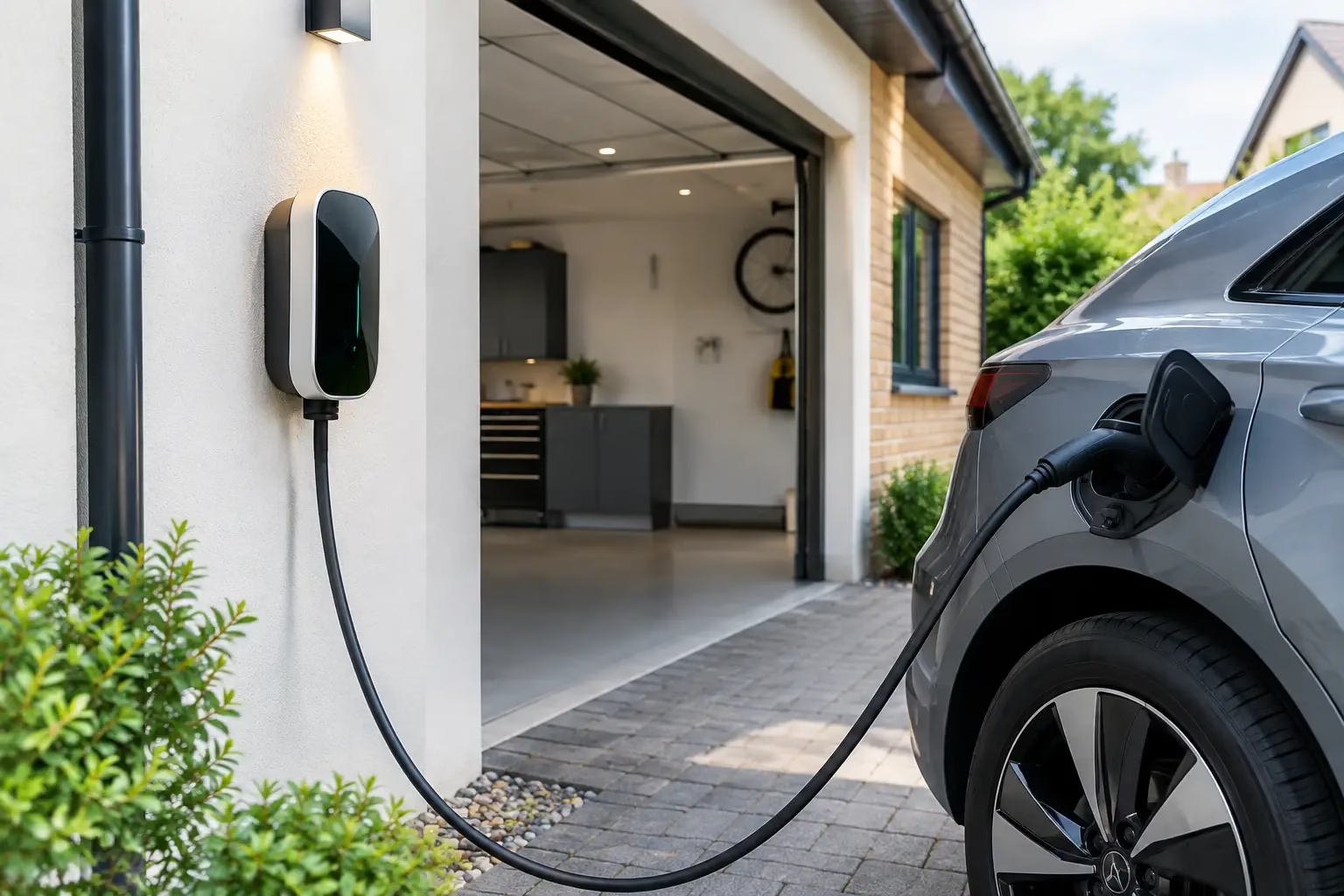
A home charger is one of the biggest practical benefits of owning an electric vehicle. This electric vehicle charger guide explains what you actually need to consider before installation, from charging speed and cable position to your consumer unit and the safety checks that should never be skipped.
For most homeowners, the right answer is not simply the most powerful charger available. It is the unit that suits your vehicle, driving routine, parking arrangement and existing electrical supply, installed properly by a competent electrician.
Start with how and where you park
The most convenient charging point is usually where the car sits overnight. If you have an off-road driveway, garage or allocated bay close to your property, a wall-mounted charger can make daily charging straightforward. You plug in when you get home and wake up with the battery replenished.
If your vehicle is parked on the road, the situation needs more thought. Running a charging lead across a public pavement creates a trip hazard and can lead to damage, so it is not a suitable long-term arrangement. Depending on the property and local authority requirements, there may be other options, but these should be considered before buying a charger.
Cable route matters too. A neat installation is not just about appearance. Cables need to be protected from accidental damage, suitably supported and routed so they do not create hazards around doors, paths or parking spaces. A site visit allows an electrician to identify the safest route from the consumer unit to the charger before work begins.
Choosing the right charging speed
Most domestic electric vehicle chargers are rated at 7kW. With a typical single-phase UK home supply, this is usually the sensible choice. It provides far quicker charging than a standard three-pin plug while remaining suitable for the majority of homes and electric vehicles.
A 7kW charger can add roughly 25 to 30 miles of range per hour, although the real figure depends on the vehicle, battery condition, temperature and charging settings. For an overnight charge, that is more than enough for many drivers.
A 3.6kW unit charges more slowly but may be appropriate where the available supply, cable route or budget makes it the better fit. Higher-powered units are possible at properties with a three-phase supply, but this is uncommon in most homes. It is also worth checking the vehicle itself: some cars cannot accept the full output a charger can provide.
Charging speed is only one part of the decision. If your car is parked for 10 to 12 hours every night, paying extra for capacity you will rarely use may not offer much value. An electrician should explain the options plainly rather than push a specification that does not suit your household.
Why a proper electrical survey matters
An EV charger is a high-load electrical appliance. It should not be treated like an additional outdoor socket. Before installation, the electrician needs to assess the property’s electrical installation and confirm that it can safely support the charger.
This normally includes checking the condition and capacity of the consumer unit, the earthing arrangement, the main supply, protective devices and the proposed cable route. Older fuse boards, signs of deterioration or limited spare capacity do not automatically prevent an installation, but they may mean remedial work or a consumer unit upgrade is needed first.
Load management can be particularly useful in homes with electric showers, immersion heaters, heat pumps or other substantial electrical loads. A compatible charger can monitor household demand and reduce its output temporarily when necessary. This helps avoid overloading the supply while still allowing the vehicle to charge when capacity is available.
The electricity network operator may also need to be notified about a new charger. In many cases, the installer manages this process as part of the work. If your supply needs upgrading, it is far better to identify that before the charger is fitted than after you have committed to a unit.
Safety and compliance are not optional
A charger should be installed to current BS 7671 requirements and with the correct protective measures for EV charging. This is specialist work because electric vehicles introduce particular considerations around earthing, fault protection and the way the vehicle connects to the supply.
Depending on the charger and installation design, the electrician may need to provide additional protection against certain types of fault current. The unit must also be installed on an appropriately rated circuit, not added to an existing circuit that was never designed to carry the extra load.
Outdoor equipment needs to be suitable for the environment. The location should minimise exposure to impact, standing water and unnecessary strain on the cable and connector. A charger positioned at a practical height, with a clear space to park and connect, is easier and safer to use every day.
Once complete, you should receive the relevant electrical certification. Keep it with your property records, particularly if you are a landlord or intend to sell the property. It demonstrates that the work has been inspected, tested and documented properly.
Tethered or untethered charger?
A tethered charger has a charging cable permanently attached. It is quick to use because the lead is already there, and it is a popular choice for households charging the same vehicle most of the time. The trade-off is that the cable is always visible and, if it is damaged, the attached lead may need specialist replacement.
An untethered charger has a socket instead. You use your own vehicle cable, which can look tidier when not in use and may be more flexible if you change cars. It does mean taking the cable in and out of the vehicle, and you will need to make sure you have the correct lead available.
Neither option is universally better. The best choice usually comes down to how often you charge, where the unit will sit and whether appearance or convenience matters most to you.
Smart functions: useful, but choose what you will use
Most new home chargers include smart controls through an app. These can show charging history, allow you to set a schedule and help you take advantage of off-peak electricity tariffs. If your energy supplier offers cheaper overnight rates, scheduling can reduce the running cost of your vehicle without changing your routine.
Some chargers can also work with solar generation, prioritising surplus electricity from panels where conditions allow. This can be worthwhile for homes with solar, but it is not a reason to choose a complicated system you do not understand or need.
Consider the practical basics first: clear controls, reliable connectivity, a sensible warranty and support if the app or charger develops a fault. Smart features are helpful when they save money or simplify charging. They should not make the system difficult for everyone in the household to use.
What affects the cost of installation?
The charger itself is only part of the cost. A straightforward installation on an external wall near the consumer unit is generally less involved than one requiring a long cable run, ground works, a detached garage connection or upgrades to older electrical equipment.
Common factors include the distance from the consumer unit, whether cables can be routed internally or externally, the condition of the existing installation, any need for load management and the accessibility of the parking area. A property with a consumer unit that is full, outdated or unsuitable may need additional work before a charger can be installed safely.
This is why a clear quotation matters. It should set out what is included, any assumptions about cable routes and what could change the price. The cheapest quote is not always the best value if it leaves safety work, testing or certification unclear.
Guidance for landlords and shared properties
Landlords should consider EV charging as part of the wider electrical safety of the property. The charger installation must be designed around the property’s supply and should sit alongside regular inspection and testing, including a valid Electrical Installation Condition Report where required.
For flats, communal parking and shared drives, permission and responsibility can be less straightforward. You may need agreement from a freeholder, managing agent or other residents before work starts. Metering, access, future maintenance and who pays for electricity all need to be clear from the outset.
A well-planned installation can add convenience for tenants and help a property remain attractive, but it should never be rushed simply to meet demand. Safe design and proper documentation protect both the landlord and the people using the charger.
Before you book an installation
Have your vehicle details, preferred charger location and a rough idea of your daily mileage ready for the survey. Mention any high-demand appliances, planned extensions, solar panels or future heat-pump installation. These details help the electrician recommend an arrangement that will still work as your home changes.
For homeowners across Chester and the surrounding area, Gerrard’s Electrical Solutions can assess the existing installation, explain the practical options in plain English and complete EV charger work with safety, testing and tidy workmanship at the centre of the job. A properly specified charger should make owning an electric vehicle easier every day, not create another electrical worry.