

- July 18, 2026
- By
- Blog
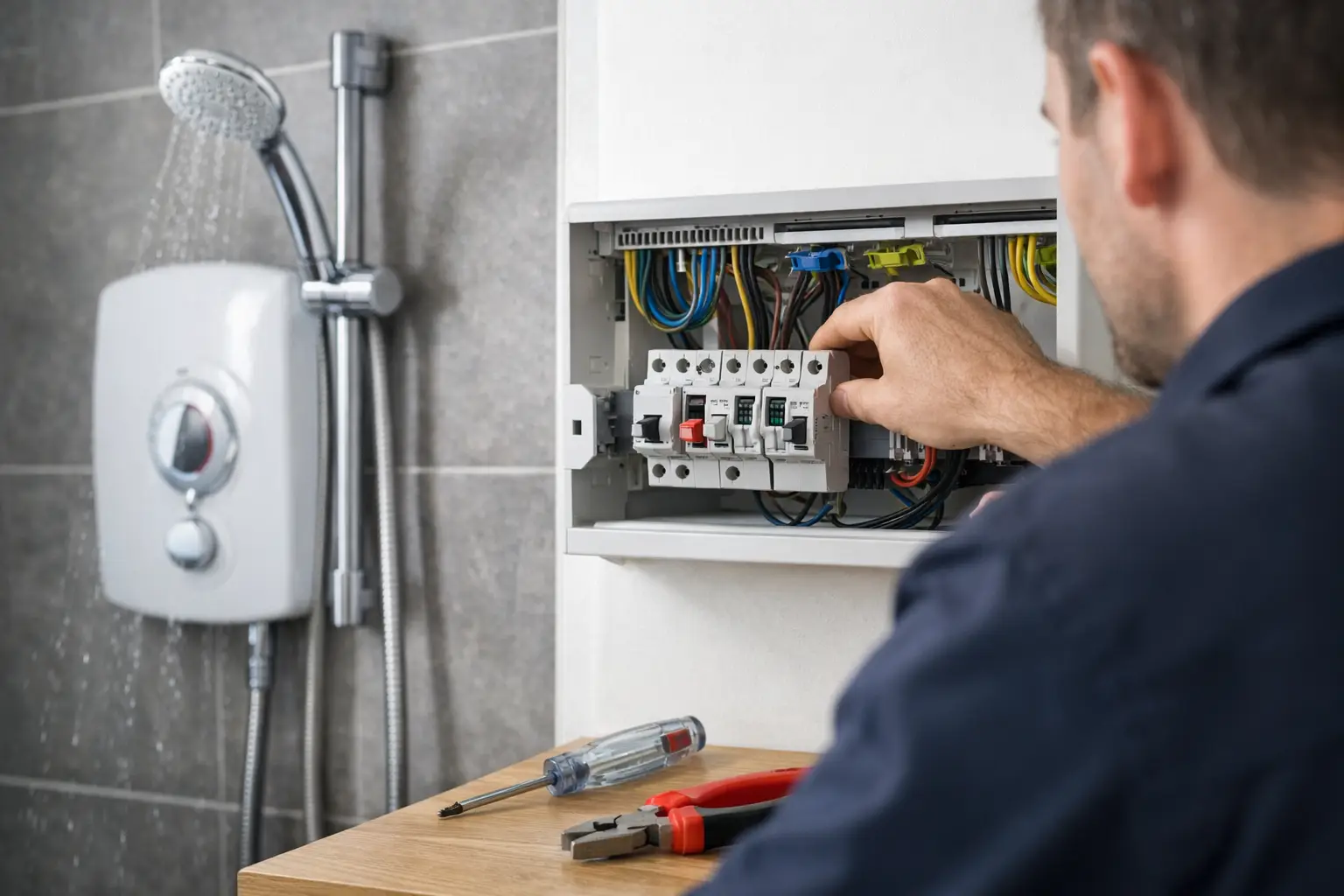
A shower should be one of the most reliable parts of your morning routine. If an electric shower keeps tripping the breaker, however, it is telling you that the electrical installation has detected a fault or overload and has cut the supply for safety. Repeatedly switching it back on is not a fix – it can make a developing problem harder to diagnose and, in some cases, less safe.
The good news is that a tripping circuit does not automatically mean the shower needs replacing. The fault may be within the shower, the circuit, the consumer unit or the supply cable. Finding out which one is the job of a competent electrician, using the correct test equipment.
What should you do when an electric shower trips the breaker?
Stop using the shower straight away. Turn the shower control off, and if it has tripped the circuit breaker or RCD at your consumer unit, leave that device off until the cause has been checked.
There are a few sensible steps you can take without removing covers or touching wiring:
- Check whether the trip happens only when the shower is used, or whether other circuits and appliances are affected too.
- Look for obvious warning signs, such as a burning smell, crackling, discolouration around the shower pull switch or consumer unit, water leaking from the shower unit, or a hot cable or switch.
- If water is coming from the shower casing or an electrical fitting, keep clear and do not use it.
- If there is smoke, scorching, sparking or a persistent burning smell, isolate the supply if it is safe to do so and arrange urgent electrical help.
Do not keep resetting a breaker to see if it will hold. One reset after an obvious temporary event may tell an electrician something useful, but repeated resets can allow a fault to recur under load. Never open the shower unit, tighten terminals or replace a breaker yourself.
Why an electric shower keeps tripping breaker protection
At a modern consumer unit, the device that trips may be an MCB, an RCD or an RCBO. They protect in different ways. An MCB typically reacts to an overload or short circuit; an RCD reacts when electricity may be leaking to earth; and an RCBO combines both forms of protection. Knowing which device has operated can help with diagnosis, but it does not identify the fault on its own.
A fault inside the shower unit
Electric showers heat water using an internal heating element. Over time, the element can deteriorate, especially in hard-water areas where limescale builds up. Water may also enter parts of the unit that should remain dry. Either issue can create earth leakage and trip RCD or RCBO protection, often when the shower starts heating.
A faulty solenoid valve, thermal cut-out, internal wiring connection or circuit board can cause similar symptoms. If the shower runs briefly before tripping, or trips only on a higher heat setting, that pattern is worth reporting to the electrician. It can narrow down the tests required, but it is not proof of a particular failed part.
Loose or heat-damaged connections
An electric shower is a high-load appliance. Even a modest shower can draw far more current than everyday plug-in appliances, and its cable, isolator switch and protective device must all be correctly selected and installed.
Loose terminals can generate heat. Over time, heat can damage insulation, terminals or the switch itself, leading to a short circuit, poor connection or intermittent tripping. A pull-cord isolator that feels unusually warm, looks yellowed or makes a buzzing sound should be treated as a warning sign, not an inconvenience to live with.
An overloaded or incorrectly designed circuit
A shower should normally have its own dedicated circuit. If it shares a circuit with other equipment, or if the cable, breaker rating or connections are unsuitable for the shower’s power rating, the circuit may overload when the unit is running at full output.
This can happen after a shower upgrade. A newer 10.5kW shower, for example, draws more current than a lower-rated model. Simply fitting a larger breaker is not a safe answer. The cable size, installation route, consumer-unit capacity, isolator and protective devices must all be assessed together in line with BS 7671 requirements.
Moisture, damaged cable or an external fault
Bathrooms are humid spaces, and electrical equipment needs to be suitable for its location. Water ingress at the shower, damaged cable hidden in a wall, or a fault at an accessory can all cause protective devices to operate.
Sometimes the shower is only where the fault becomes visible. If the RCD trips when several unrelated appliances are in use, or will not reset even with the shower switched off, there may be another fault on the installation. That needs proper fault finding rather than an assumption that the shower is to blame.
The timing of the trip matters
Make a note of when the circuit trips. It is useful information for the electrician and may save time on site.
If it trips immediately when the shower is switched on, attention may turn to the isolator, supply cable, internal wiring or a short circuit. If it trips only when hot water starts flowing, the heating element or an earth-leakage fault becomes more likely. If it runs at low heat but trips on full heat, the appliance load, cable capacity or a deteriorating element may be involved.
A trip after several minutes can point to heat building up at a loose connection or within a failing component. These are only diagnostic clues. Safe testing is still needed before any repair or replacement is recommended.
What an electrician will check
A competent electrician will not guess at the cause or simply replace the tripping device. They will inspect the shower circuit and test it safely, with the supply isolated where required.
This may include checking the condition and rating of the shower circuit, cable, isolation switch and consumer-unit protection; testing insulation resistance and earth continuity; checking for signs of overheating; and confirming that the RCD or RCBO operates correctly. If the shower itself is faulty, the electrician can advise whether repair is sensible or whether replacement offers the safer, more cost-effective route.
The right answer depends on the age and condition of the shower. Replacing a small internal part can be worthwhile where the unit and circuit are otherwise sound. But an older shower with water damage, repeated faults or unavailable parts may be better replaced. If the circuit is undersized or the consumer unit lacks suitable protection, that work should be addressed before a more powerful shower is fitted.
When this is an emergency
A shower circuit that trips without smoke or heat damage still needs prompt attention, but some signs should be treated as urgent. These include a burning smell, visible scorch marks, a hot isolator switch, sparking, a buzzing consumer unit, electric shocks or tingling from fittings, or water entering electrical equipment.
Turn off the affected circuit if it is safe to do so and do not use the shower. For homeowners and landlords around Chester, a responsive local electrician can investigate the fault, explain the findings in plain English and make sure any repair is completed to current 18th Edition standards.
A tripping breaker has done its job by cutting power before a fault could develop further. Leave it off, avoid trial-and-error resets, and arrange a proper check. A clear diagnosis now is the best way to get your shower working again without compromising the safety of your home or tenants.