

- November 9, 2026
- By
- Blog
A smoke alarm that chirps at 2am is frustrating. A smoke alarm that stays silent when there is a fire is far worse. Taking a few minutes to test hardwired smoke alarms is one of the simplest safety checks you can make in your home, but it needs to be done properly – especially where alarms are linked together or have battery backup.
Hardwired smoke alarms are connected to your home’s electrical supply, usually with a sealed or replaceable backup battery. They are designed to keep working during a power cut and, in many properties, to sound together when one alarm detects danger. That gives everyone in the house a better chance of hearing the warning early.
Why hardwired smoke alarm testing matters
Mains-powered alarms can appear reassuring because they are permanently wired in. However, the mains connection is only one part of the system. The alarm still relies on its sensor, sounder, internal electronics and backup battery. Dust, age, flat batteries and wiring faults can all affect performance.
A regular test confirms that the alarm can sound and that interconnected units communicate with each other. It also helps you spot a fault before you need the alarm in an emergency.
For most homes, a weekly test is a sensible routine. It takes very little time, and choosing a regular moment – such as when you put the bins out or do a weekly clean – makes it easier to remember. If you own a rental property, regular checks also support good property maintenance alongside the required alarm provision and safety inspections.
How to test hardwired smoke alarms
Start by letting everyone in the property know you are testing the alarms. The sound will be loud, and you do not want anyone to mistake it for a real fire. If you have a monitored security or fire alarm system, check whether the smoke alarms are connected to it and follow the provider’s testing procedure first.
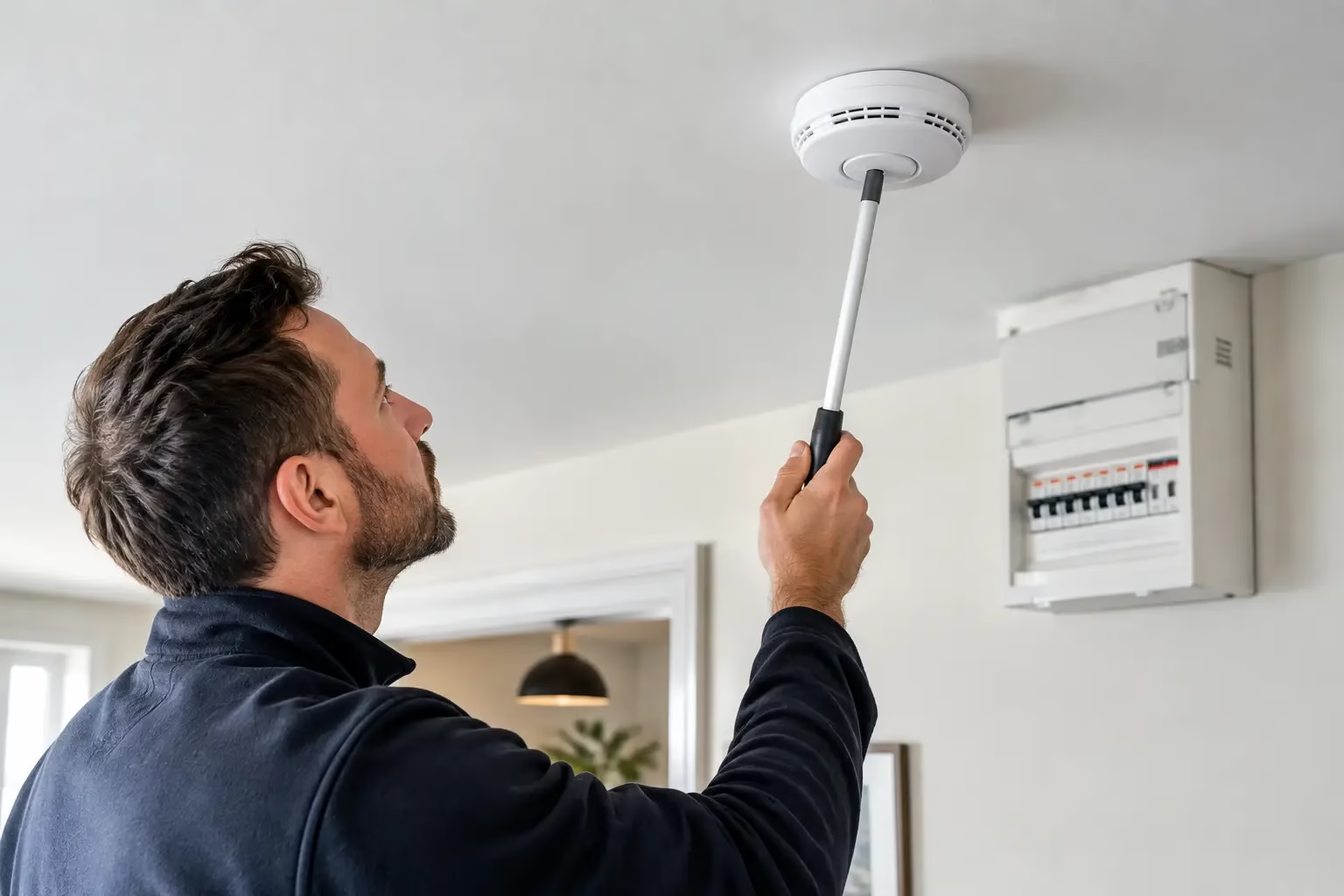
Stand safely beneath the first alarm and press and hold its test button. Depending on the model, you may need to hold it for several seconds. The alarm should sound clearly and loudly. If the alarms are interlinked, the other smoke and heat alarms in the property should also activate shortly afterwards.
Walk through the property to make sure every linked unit has sounded. This is the part many people miss. Testing only the alarm nearest the kitchen or hallway does not prove that an upstairs bedroom alarm will receive the signal.
Once the test is complete, release the button and wait for the alarms to stop. Some systems take a few seconds to reset. Test each alarm individually in turn, not just one unit. This can reveal an isolated fault with a particular detector, sounder or connection.
What a successful test does – and does not – prove
The test button checks that the alarm has power, that the sounder works and, where fitted, that the interlink signal is operating. That is a valuable check, but it may not fully prove that the smoke sensor can detect smoke effectively.
Do not use a naked flame, matches, candles or cooking smoke to test an alarm. This can damage the unit, create a real fire risk and leave residue inside the sensor. Specialist smoke-test aerosol can be used in line with the manufacturer’s instructions, but it is not always necessary for routine household checks. If an alarm has a history of false alarms, does not react consistently or is in a hard-to-reach location, it is better to arrange a professional inspection.
Check the backup battery as well
Most hardwired domestic alarms have a battery backup, even though they are connected to the mains. The backup battery allows the alarm to operate if there is a power cut or a fault on the circuit supplying it.
Some newer alarms have a sealed lithium battery designed to last the life of the unit. Others use a replaceable battery. Check the label or manufacturer’s instructions before opening anything. If the battery is replaceable, use the specified type and fit it correctly. A battery that looks fine can still be too weak to support the alarm during a power failure.
A chirp every minute or so often points to a low backup battery, but it can also indicate end-of-life warning, contamination or a fault. Replacing the battery may solve the issue, but repeated chirping should not be ignored just because the alarm is mains-powered.
Avoid switching off the electrical supply to test whether the backup battery works unless you understand which circuit supplies the alarms and can do so safely. There is rarely a need for a homeowner to interfere with the consumer unit for a routine alarm test. An electrician can check the mains supply and backup operation if there is any doubt.
Signs your alarm needs attention
Smoke alarms do not last forever. Most domestic units need replacing after around ten years, although the exact service life is stated on the alarm itself. Look for a manufacture date or replacement date on the side or back of the unit.
Arrange an inspection or replacement if an alarm does not sound during a test, sounds weak or distorted, continues to chirp after a correct battery replacement, or regularly causes false alarms without an obvious reason. You should also get help if one interlinked alarm sounds but another does not, if the green mains indicator is off, or if you can see damage, discolouration or loose fittings.
False alarms near kitchens are common, particularly where a smoke alarm has been fitted too close to steam or cooking fumes. A heat alarm is often more suitable for a kitchen, while smoke alarms are generally used in circulation spaces and living areas. The right arrangement depends on the property layout and the type of alarm system already installed. Swapping or moving alarms without checking compatibility can leave gaps in protection or prevent interlinking from working as intended.
Do not ignore nuisance alarms
It can be tempting to remove a battery or disconnect an alarm after a false activation. Do not leave it disabled. If cooking fumes set it off, open windows, use an extractor fan where available and clear the air. Many alarms have a hush function that temporarily reduces sensitivity, but this should only be used as intended and never as a permanent workaround.
If nuisance alarms are frequent, the cause needs dealing with. It could be the wrong type of detector in the wrong location, dust or insects in the sensing chamber, ageing equipment, or a wiring and interlink issue. A properly installed system should protect the property without becoming a daily inconvenience.
When to call an electrician
A failed test is not always a simple battery problem. Because hardwired alarms form part of the electrical installation, a fault could involve the supply circuit, connections, interlink wiring or an incompatible replacement unit.
A qualified electrician can identify whether the issue is with the alarm itself or the installation behind it. They can also replace ageing alarms with suitable, compliant units, check that linked alarms operate together and advise on appropriate smoke and heat alarm positions for your home or rental property.
For homeowners and landlords around Chester, Gerrard’s Electrical Solutions can investigate faulty hardwired smoke alarms and provide clear advice on repair or replacement. The aim is straightforward: alarms that work when they are needed, fitted neatly and checked properly.
Make the test button part of your regular routine, keep alarms clean and unobstructed, and act promptly if anything does not sound right. A few loud seconds each week can provide meaningful reassurance for everyone under your roof.