

- August 15, 2026
- By
- Blog
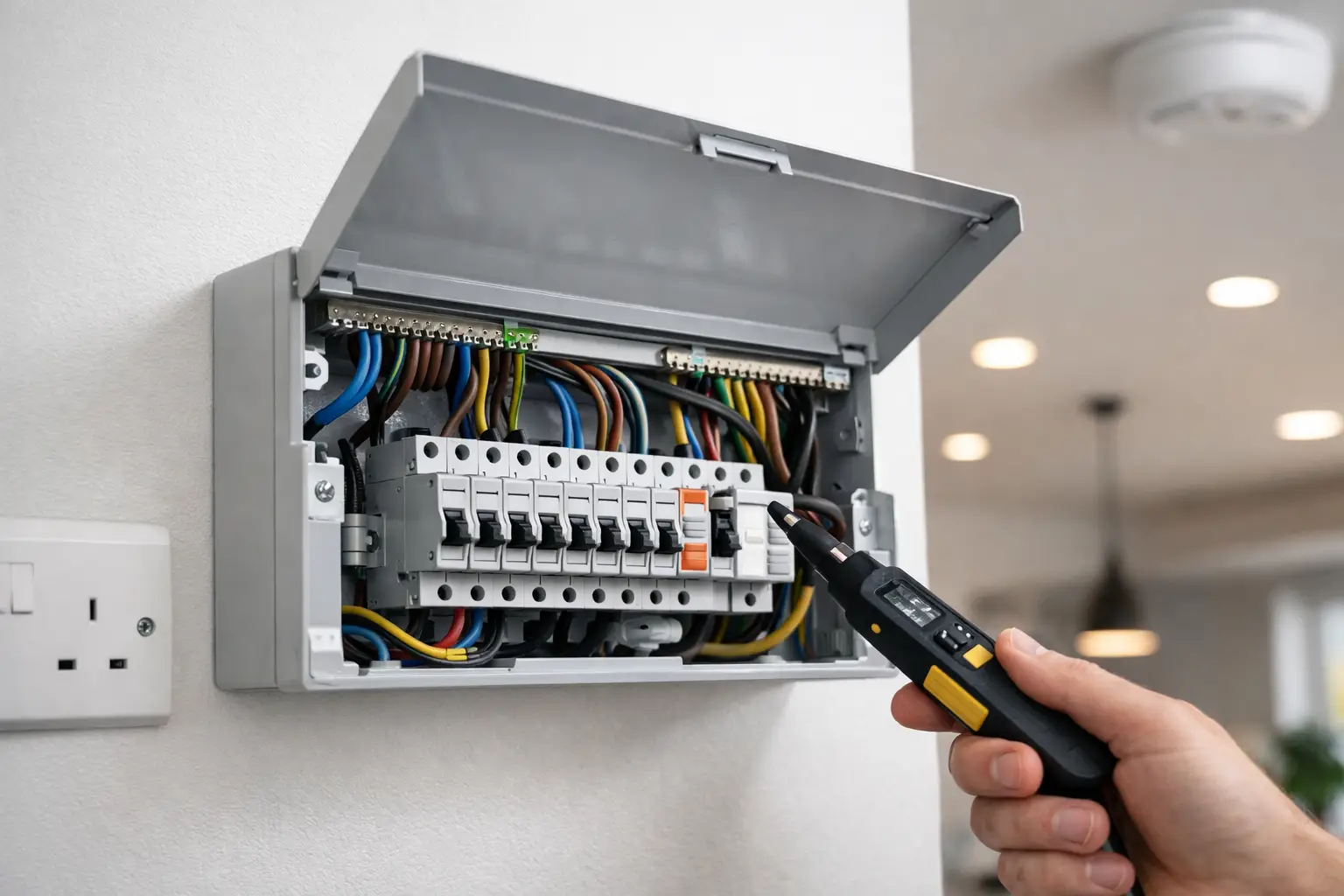
A fuseboard hidden under the stairs or in a cupboard is easy to forget about – until the lights go out, a circuit keeps tripping or you notice a worrying burning smell. So, are fuseboards safe? They can be, but their safety depends on their age, condition, installation quality and whether they provide the protection a modern household needs.
Many homes across Chester and the surrounding area still have older fuseboards that have worked without obvious trouble for years. That does not automatically mean they are dangerous, nor does it mean every property needs an immediate replacement. However, an ageing or poorly maintained unit can leave you with less protection against electric shock, overheating and fire than a modern consumer unit.
Are fuseboards safe in older homes?
A fuseboard is the older name for what is now commonly called a consumer unit. Its job is the same: it distributes electricity around the property and protects individual circuits, such as sockets, lighting, the cooker and shower.
Older units often use rewireable fuses. If a fault occurs, a small piece of fuse wire melts and breaks the circuit. This was standard for many years and, when correctly installed and maintained, a rewireable fuseboard is not automatically unsafe. The issue is that it offers a lower level of protection than current consumer units and is more open to error when a fuse needs replacing.
For example, fitting the wrong thickness of fuse wire can mean a circuit is not properly protected. A fuse may also take longer to disconnect a faulty circuit than a modern miniature circuit breaker, known as an MCB. An MCB trips during a fault and can usually be reset once the problem has been found and resolved.
The biggest difference is often RCD protection. A Residual Current Device monitors the electrical supply and disconnects it rapidly if it detects current flowing where it should not, such as through a person or damaged cable. RCDs can significantly reduce the risk of serious electric shock. Modern consumer units may also include RCBOs, which provide individual protection for each circuit.
An old fuseboard with no RCD protection is not necessarily proof that there is an immediate fault. It is, however, a sensible reason to arrange an electrical inspection and get clear advice on the condition of the installation.
Signs your fuseboard needs professional attention
The condition of the unit matters as much as its age. A qualified electrician should assess the fuseboard and the wiring connected to it, rather than judging it from appearance alone. That said, certain signs should never be ignored.
A burning smell, crackling sound, scorch marks, melted plastic or unusual heat around the fuseboard require urgent attention. Switch off the supply if it is safe to do so, keep clear of the unit and call an emergency electrician. If there is smoke or fire, leave the property and call 999.
Repeated tripping is another common warning sign. It may be caused by a faulty appliance, but it can also point to a damaged cable, overloaded circuit, water ingress or a fault within the consumer unit itself. Simply resetting a breaker again and again is not a repair. If it continues to trip, leave that circuit switched off until the cause has been identified.
You should also arrange a check if the fuseboard has a loose or damaged cover, exposed live parts, missing blanking plates, signs of damp, corrosion, or a mixture of old and new protective devices fitted without clear labelling. A tidy-looking board is not a guarantee of safety, but poor physical condition is a clear concern.
Other reasons to seek advice include lights dimming when appliances start, sockets that feel warm, frequent blown fuses, and recent building work where circuits may have been altered. These symptoms may originate elsewhere in the installation, but the fuseboard is where a competent electrician can start assessing how well the system is protected.
Why modern consumer units offer better protection
A consumer unit upgrade is not just about replacing old fuses with switches. A correctly designed modern unit can improve protection, make faults easier to isolate and bring the installation closer to current BS 7671 requirements.
Modern units normally contain MCBs or RCBOs, RCD protection and a main switch. They are commonly housed in a non-combustible enclosure, helping to reduce fire risk if a connection overheats. Clear circuit labelling also matters more than people think. During a fault or emergency, you need to know quickly which switch controls the downstairs sockets, cooker or outside lighting.
There are practical benefits too. Older fuseboards may not have sufficient capacity or suitable protection for the way people now use electricity at home. Electric showers, induction hobs, home offices, electric vehicle chargers, garden power, security systems and extensions all place new demands on an installation.
That does not mean a new consumer unit will solve every electrical issue. If the wiring is old, damaged or unsuitable, replacing the board alone may not be the right answer. A proper assessment should establish whether the existing circuits are safe to retain, whether repairs are needed, or whether a partial or full rewire should be considered.
When should a fuseboard be upgraded?
There is no single age at which every fuseboard becomes unsafe. The decision should be based on condition, protection and the wider installation. In many cases, an upgrade is worth considering when a property has a rewireable-fuse board, no RCD protection, a damaged or obsolete unit, or plans for significant electrical work.
An upgrade is often advisable before an extension, kitchen refurbishment, loft conversion or new high-load appliance installation. It can also be a sensible part of buying an older property, particularly where there is no recent record of electrical inspection.
For landlords, the electrical installation must be kept safe and inspected at the required intervals. An Electrical Installation Condition Report, or EICR, identifies defects and observations using a clear coding system. If it highlights urgent issues, remedial work should be completed promptly. A fuseboard does not need replacing simply because it is old, but an EICR can show whether its condition or lack of protection affects the safety of the property.
If your unit has been working reliably, an inspection may find that no immediate replacement is necessary. Honest advice should include that possibility. The aim is not to sell an upgrade for its own sake, but to make sure your protection is appropriate and any genuine risks are dealt with properly.
Do not attempt fuseboard repairs yourself
Fuseboards contain live electrical components, even when individual circuits are switched off. Removing covers, tightening connections or changing protective devices without the right knowledge and test equipment can result in electric shock, fire or hidden faults.
Avoid using larger fuses, thicker fuse wire or makeshift repairs to stop a circuit from blowing or tripping. A fuse or breaker operates for a reason. Bypassing that protection may allow a cable to overheat before the supply disconnects.
If a circuit trips, unplug appliances on that circuit and try resetting it once. If it stays on, reconnect items one at a time to help identify a possible faulty appliance. If it trips immediately, will not reset, or you have any concern about the fuseboard itself, call a competent electrician. This is particularly important for circuits serving a shower, cooker, outdoor equipment or sockets in kitchens and bathrooms.
What happens during a consumer unit assessment?
A professional electrician will look beyond the front cover. They will assess the type and condition of the consumer unit, check for signs of overheating or poor connections, and carry out appropriate testing on the installation. They will also consider earthing and bonding, circuit capacity, RCD performance and whether the existing wiring is suitable for a new unit.
You should receive a plain-English explanation of what has been found, what needs attention now and what can be planned for later. If an upgrade is recommended, ask what protection will be fitted, whether any wiring repairs are included, how long the power will be off and whether the work will be tested and certified on completion.
At Gerrard’s Electrical Solutions, the focus is on giving homeowners and landlords clear, practical advice rather than creating unnecessary concern. Electrical work should be completed neatly, tested properly and explained without jargon.
If your fuseboard is old but shows no obvious problems, do not wait for a failure to find out where you stand. A professional inspection gives you a clear picture of its condition and lets you make a safe, informed decision before a small concern becomes an urgent call-out.
Comment (1)
Can Lights Dim? Causes and Safe Fixes at Home - Gerrards Electrical Solutions
Oct 18, 2026[…] in older installations. Repeated flickering, lights that dim dramatically, a burning smell or a buzzing consumer unit are different matters. These signs should be checked promptly by a qualified electrician, […]