

- July 20, 2026
- By
- Blog
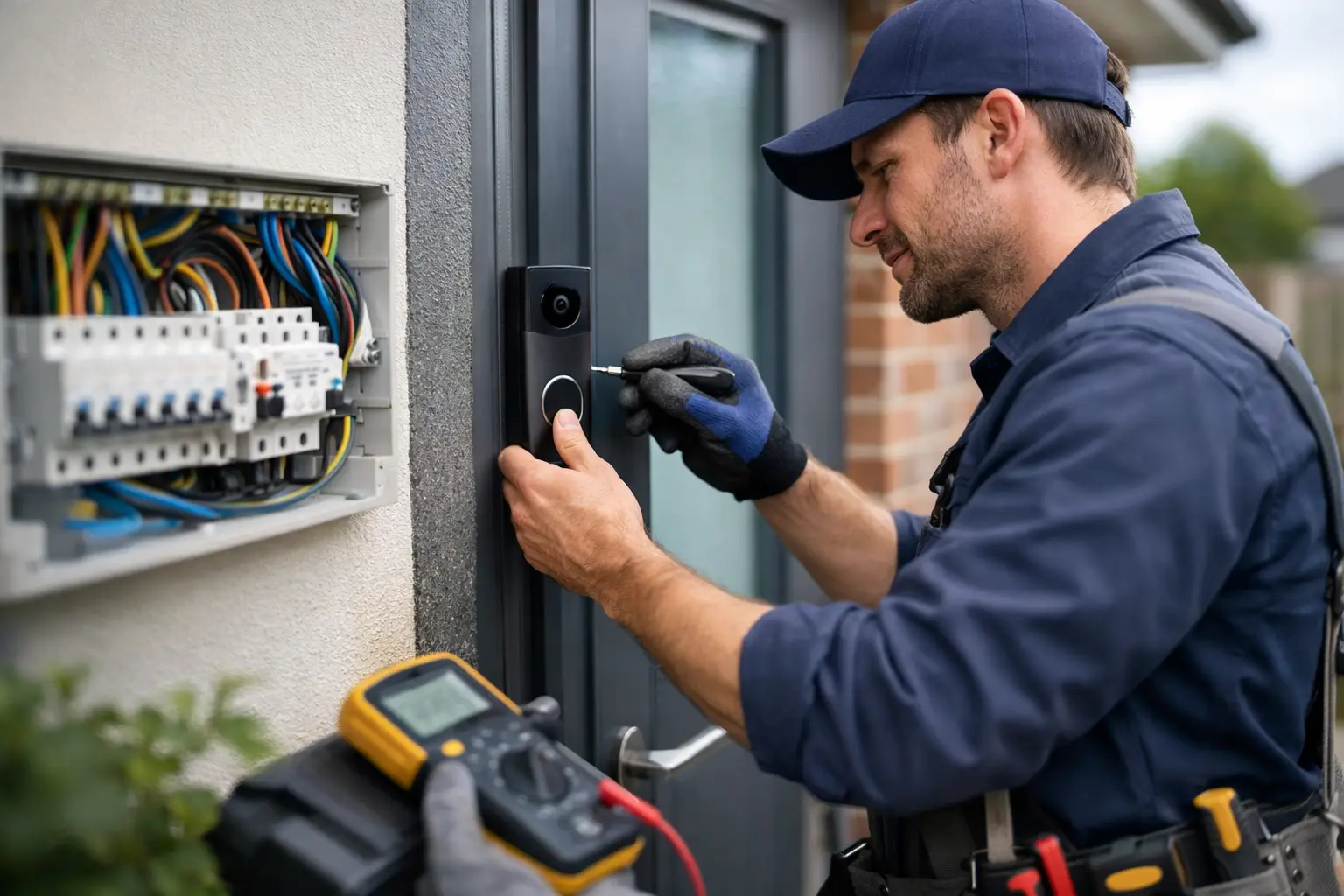
A smart doorbell installation electrician can turn a useful security upgrade into a safe, reliable part of your home rather than another device that needs charging, drops off the Wi-Fi or leaves untidy wiring by the front door. Video doorbells are increasingly popular with homeowners and landlords, but the right installation depends on the property, the chosen model and the condition of the existing electrical supply.
Some battery doorbells are designed for straightforward DIY fitting. Others need connection to existing low-voltage doorbell wiring, a compatible transformer or a new dedicated supply. If there is any doubt about the wiring, the consumer unit or whether a cable can safely be run to the entrance, it is sensible to speak to a qualified electrician before drilling holes or connecting terminals.
Is a professional smart doorbell installation worth it?
It depends on the type of doorbell and your home. A battery-powered unit fixed to a sound wall, within strong Wi-Fi range, may be an easy job for a confident homeowner. You will still need to position it carefully, avoid hidden cables and pipes, and make sure the mounting is secure.
A wired smart doorbell is a different proposition. It may need the existing chime checked, a transformer upgraded, a cable replaced or a new route created from a safe power source. Older homes can have doorbell wiring that is damaged, poorly connected or simply incompatible with modern video doorbells. Connecting a new device to unsuitable equipment can lead to repeated faults, a failed doorbell, nuisance tripping or overheating components.
Professional fitting is particularly worthwhile when you want a neat finish. Rather than surface cables crossing brickwork or a loose transformer tucked into a cupboard, an electrician can assess the safest practical route, protect the wiring and test the installation when complete. This matters at the front of a property, where weather exposure and first impressions both count.
What a smart doorbell installation electrician checks
A proper visit starts with the practical details, not just fitting the device to the wall. The electrician will check where the doorbell needs to sit, how it will receive power and whether the property can support the chosen setup.
Existing doorbell wiring and voltage
Many wired video doorbells require a particular voltage range and may need alternating current or a specific transformer rating. Traditional wired chimes do not always meet those requirements. The existing cable may also be too old, damaged or unsuitable for the new unit.
An electrician can identify what is already in place and explain the options in plain English. Sometimes the existing wiring can be used with a compatible transformer. In other cases, replacing the cable or choosing a battery model is the cleaner and more cost-effective answer.
The safest source of power
A doorbell should not be connected to an improvised supply. Taking power from an unsuitable lighting circuit, using poorly fitted connectors or placing equipment where it could get damp creates avoidable risk.
Where electrical work is needed, it should be carried out in line with BS 7671 and current 18th Edition requirements. The exact work required will vary, but the principle is simple: the supply, connections and protective measures must be appropriate for the installation. A competent electrician will test what they install rather than assuming it is safe because the doorbell powers up.
Cable routes, walls and weather exposure
External walls can hide cables, pipes and structural features. Drilling without checking can damage services or leave a route that allows water into the property. The doorbell also needs to be fixed at a useful height and angle so visitors can be seen clearly, not just their shoulders or the pavement.
The right position may be beside the main entrance, at a side gate or on a shared access point. An electrician can advise on practical cable routing and weather-resistant installation, especially where the entrance is exposed to driving rain or the property has solid walls that are difficult to work with cleanly.
Wired or battery smart doorbell: which is right for you?
A wired unit is usually the best option when you want continuous power and less ongoing maintenance. You will not need to remove it for charging, and some models offer additional features when hard-wired. The trade-off is that installation can be more involved, particularly if there is no usable existing doorbell circuit.
Battery models are flexible and can be a good choice for flats, rental properties where permanent alterations are limited, or entrances where running a cable would be disruptive. Their main drawback is routine charging. Cold weather, frequent motion alerts and a busy front door can shorten battery life, so the device needs to be placed where removal and recharging will not become a nuisance.
Wi-Fi quality should also influence the choice. A perfectly wired doorbell will still be frustrating if the signal at the front entrance is weak. Before installation, test your phone where the doorbell will be located. If the signal is poor, moving the router, adding suitable network equipment or selecting a different position may be necessary. Electrical installation and Wi-Fi performance are separate issues, but both affect the end result.
Common problems we see with video doorbells
The most common issue is a doorbell fitted before compatibility has been checked. A homeowner buys a wired model, connects it to the old chime and finds that it will not stay powered, the indoor chime buzzes constantly or the unit keeps restarting. Often, the solution is straightforward once the supply and transformer are properly assessed.
Poor positioning is another frequent problem. A camera mounted too high can miss faces, while a low unit can be easy to tamper with or give an unhelpful view of the approach. Direct sunlight can also affect image quality at certain times of day. A small adjustment before drilling can make a significant difference.
Untidy wiring is not just a cosmetic concern. Unprotected cable on an external wall can deteriorate, snag or allow moisture to reach connections. Any external equipment should be installed with suitable materials and sensible protection for the location.
Smart doorbells for landlords and rental properties
For landlords, a video doorbell can improve access management and give tenants an added sense of security. However, it should be treated as an installation within an occupied property, not simply a gadget added between tenancies.
Consider who will own and control the account, who receives alerts and how the camera view affects neighbours or shared areas. The tenant should understand how the device works and have clear information about any access to recorded footage. If electrical alterations are required, they should be completed safely and documented where appropriate alongside wider electrical safety responsibilities, including a valid EICR.
Battery doorbells may be preferable where wiring changes are not justified, while a professionally installed wired unit can be better for a long-term rental property with a suitable existing supply. The best answer depends on the building and how the property is managed.
Choosing the right electrician for doorbell work
Do not be afraid to ask practical questions. A reliable electrician should explain whether your chosen doorbell is compatible with the property, what work is actually needed and what the price covers. You should not be pushed into unnecessary alterations when a simpler solution will do.
For installations around Chester and the surrounding area, Gerrard’s Electrical Solutions approaches smart doorbell work as part of the home’s wider electrical safety, not as a quick fit-and-forget job. That means clear advice, tidy workmanship and testing once the work is complete.
If your current doorbell is buzzing, losing power, tripping a circuit or showing signs of damaged wiring, stop using it and arrange an inspection. A well-positioned, correctly powered smart doorbell should make daily life easier – and give you confidence that the first line of security at your door has been fitted properly.