

- August 1, 2026
- By
- Blog
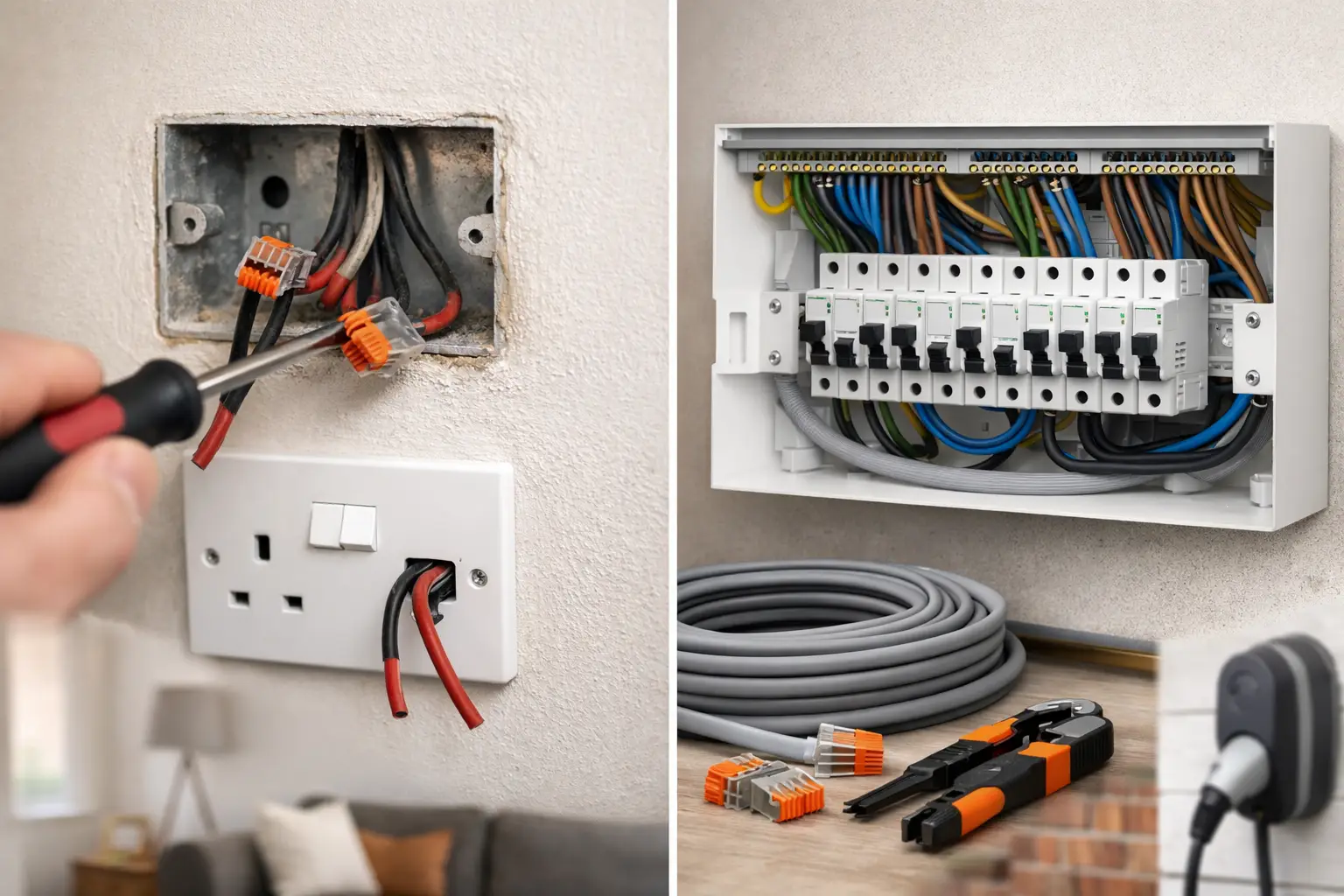
A new kitchen can expose a problem that has been hidden for years: the wiring serving it may not be suitable for the extra sockets, appliances and lighting now planned. Equally, a single damaged circuit does not always mean your whole property needs to be stripped back and rewired. The decision between partial versus full rewiring should be based on the condition, age and safety of the existing installation, not a guess or a one-size-fits-all recommendation.
A proper inspection gives you a clear answer. It identifies what can safely remain, what needs replacing now and what should be planned for later. That approach protects your property, avoids unnecessary disruption and ensures work is carried out to current BS 7671 requirements.
What is a partial rewire?
A partial rewire replaces wiring in one area, or renews particular circuits, while leaving safe and suitable parts of the installation in place. This is common during an extension, loft conversion, kitchen renovation or bathroom refit. It may include new socket circuits, lighting circuits, extractor fans, cooker supplies or outdoor power.
It can also be the right repair where testing finds a clear fault or deterioration on one circuit, rather than across the whole property. For example, a damaged upstairs lighting circuit may need replacement while the newer socket circuits elsewhere remain in good condition.
Partial rewiring is not simply joining new cable to old cable and hoping for the best. The electrician must assess how the new work interacts with the existing consumer unit, earthing and bonding arrangements, protective devices and circuit capacity. The finished installation needs to be safe, correctly tested and properly certified.
What does a full rewire involve?
A full rewire replaces the electrical installation throughout the property. In most cases, this includes new cables for sockets and lighting, a modern consumer unit, new switches and socket outlets, upgraded earthing and bonding, and wiring for fixed equipment such as cookers, showers, smoke alarms and extractor fans.
It is more disruptive because cables often run beneath floors and through walls and ceilings. Lifting carpets, moving furniture and making good chased walls may be necessary. For an occupied home, work can often be planned room by room, but an empty property is usually quicker and easier to rewire.
The benefit is certainty. Rather than adding modern circuits to a patchwork of ageing cable, you have an installation designed around how the property is used now. That can mean enough sockets where you need them, sensible lighting positions, capacity for future improvements and safer protection at the consumer unit.
Partial versus full rewiring: the factors that matter
The age of a property is a useful clue, but it is not proof that it needs a full rewire. A well-maintained installation may have been upgraded over time, while a newer property can still have poor alterations or faults. The condition of the wiring and the quality of previous work matter far more than the date on the deeds.
The type and condition of existing wiring
Older cable insulation can become brittle, cracked or degraded. Historic installations may also have inadequate earthing, older accessories, unsuitable cable routes or circuits that no longer meet the demands placed on them. Signs such as fabric-covered cable, rubber insulation, damaged wiring, exposed connections or a very old fuse board should be investigated promptly.
A full rewire is often the sensible option where faults are widespread, circuits are heavily altered, or the installation has reached the end of its practical life. Replacing one section at a time can become false economy if each improvement reveals another weakness.
Test results, not just visible signs
Much of an electrical installation is hidden. A consumer unit may look modern while cables behind walls are old, damaged or incorrectly connected. This is why electrical testing is essential before a major decision is made.
An Electrical Installation Condition Report, or EICR, checks the condition of the installation and records observations by severity. It can identify urgent dangers, work that needs improvement and areas requiring further investigation. For landlords, a satisfactory EICR is also a key part of meeting electrical safety duties in rented homes.
An EICR does not automatically mean a full rewire. It gives evidence that helps determine whether targeted remedial work is safe and proportionate, or whether replacement is the better long-term choice.
Your plans for the property
A partial rewire works well when a project is contained. If you are extending the kitchen, converting the garage or adding a garden office, new circuits can be installed for those areas and integrated safely with the rest of the home.
If you are renovating every room, changing heating systems, adding an electric shower, installing an induction hob or planning electric vehicle charging, a full rewire may make more sense. It is usually more cost-effective to install the right infrastructure while walls and floors are already being opened up than to revisit the same areas later.
Think about day-to-day use as well. Older homes often have too few sockets, which encourages extension leads and overloaded adaptors. A rewire is an opportunity to put power, lighting, data points, security equipment and smart controls where they will genuinely be useful.
The consumer unit and safety protection
Upgrading a consumer unit can improve protection, but it does not make unsafe wiring safe. Modern devices such as RCDs and RCBOs are valuable safeguards, yet they must be installed only where the existing installation has been assessed as suitable.
Sometimes a consumer unit upgrade and partial rewiring are appropriate together. In other cases, fitting a new board before replacing poor or obsolete circuits only delays the larger job. Clear advice should explain why a recommendation has been made and what work is included.
Cost and disruption: where the real trade-off lies
A partial rewire usually costs less upfront because it involves fewer circuits, less cable and less making good. It may also cause less disruption if the work is limited to one room or one part of the property. That makes it an attractive option when the rest of the installation tests well.
However, the lowest initial price is not always the lowest overall cost. If ageing circuits are left in place and repeatedly need repairs, or if new work has to be altered when the remainder is eventually rewired, the total can rise. A full rewire costs more and creates greater short-term disruption, but it can provide a cleaner, longer-lasting result for a property that genuinely needs it.
Before work starts, ask for a clear scope. It should set out which circuits are being replaced, whether a consumer unit is included, what testing and certification will be provided, and who is responsible for making good plasterwork, decorating and floor finishes. This avoids assumptions and helps you compare quotations fairly.
When you should arrange an inspection
Do not wait for a complete loss of power before seeking advice. Frequent tripping, flickering lights, warm sockets or switches, burning smells, damaged accessories and electric shocks or tingles all need urgent attention. If you smell burning or see smoke, switch off the supply if it is safe to do so and contact an emergency electrician.
For less urgent concerns, arrange an inspection before purchasing a property, starting a renovation or letting a home to new tenants. It is far easier to make a planned decision than to deal with a fault halfway through building work or after a tenant reports a problem.
Gerrard’s Electrical Solutions can assess installations across the Chester area, explain findings in plain English and carry out safe, tidy work with the appropriate testing and certification. Whether the answer is a targeted upgrade or a full replacement, the right choice is the one supported by the condition of your wiring and the future needs of your property.
A sound electrical installation should not be something you have to worry about every time a circuit trips. Start with a professional assessment, then make the decision with clear evidence rather than uncertainty.