

- August 7, 2026
- By
- Blog
A light that flickers when the washing machine starts, a socket that feels warm, or a consumer unit that trips more than once is not something to put on a weekend jobs list. Essential electrical safety checks are about spotting small warnings before they become a shock risk, fire risk or a complete loss of power.
Most property owners do not need to understand every circuit in their home. You do need to know what safe electrics should look, sound and smell like, and when a qualified electrician should take over. A quick visual check, combined with professional inspection at the right time, protects the people using your property and helps avoid disruptive, expensive faults.
Start with the warning signs you can see
Walk through your property occasionally and look at the condition of sockets, switches, light fittings and visible cables. You are not testing the installation or removing any covers. You are simply checking for changes that deserve attention.
Pay particular attention to:
- cracked socket faces, loose switches or damaged plugs
- scorch marks, discolouration or a burning smell around electrical points
- leads trapped under carpets, pinched in doors or stretched across walkways
- buzzing, crackling, repeated flickering or electric shocks from appliances or fittings
A socket or switch should sit firmly against the wall and should not feel hot during normal use. A faint warmth from a heavily used plug can occur, but noticeable heat, melting plastic or a smell of burning calls for immediate action. Stop using the circuit if it is safe to do so and arrange an electrician urgently.
Cables matter too. Flexes with exposed inner wires, taped repairs or damaged insulation should be replaced rather than patched up. This applies especially to appliance leads, extension leads and chargers, which are often moved, bent and overloaded without much thought.
Check your consumer unit without opening it
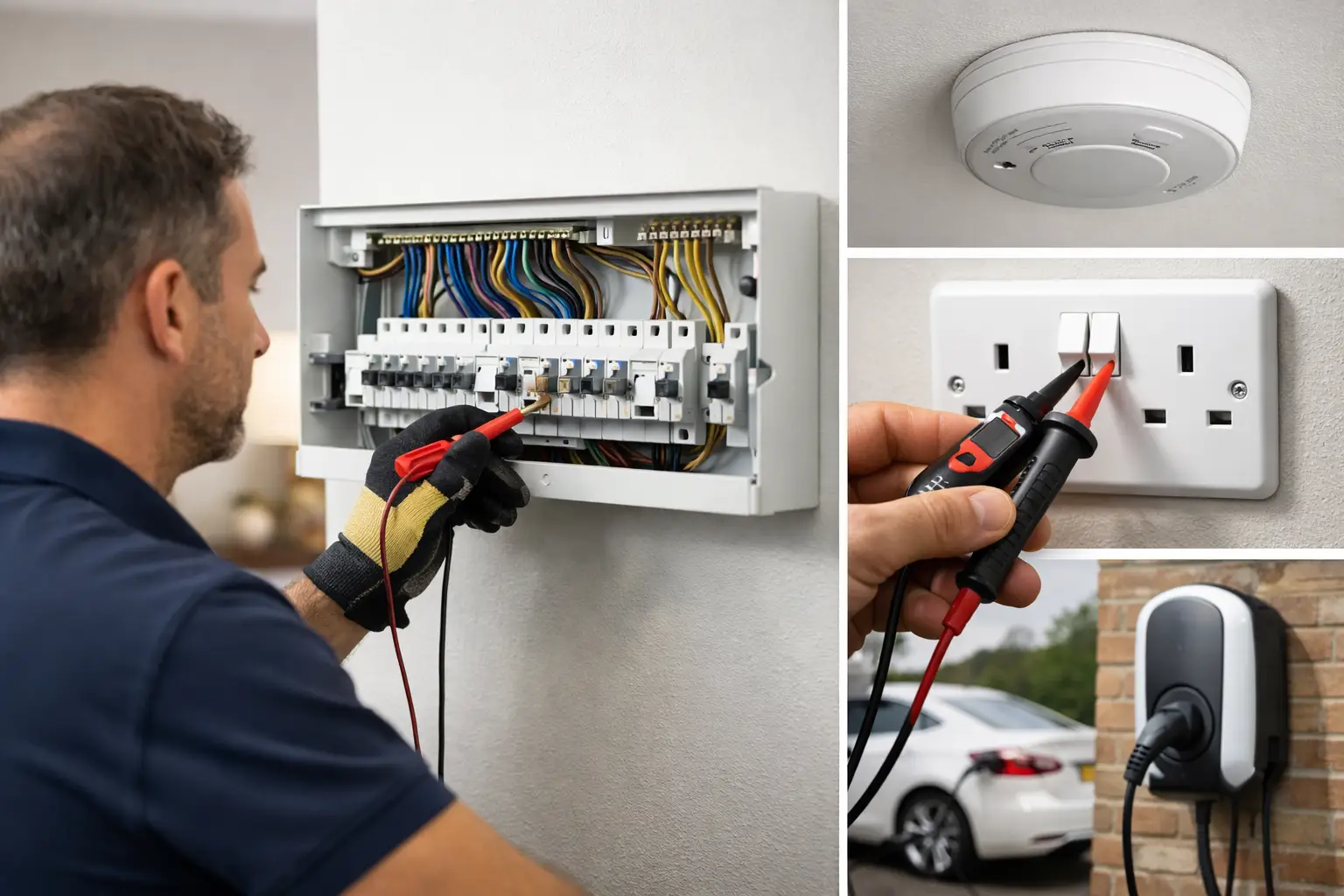
Your consumer unit, sometimes called a fuse board, is the control centre for your electrical installation. It should be accessible, clearly labelled and in good physical condition. Do not remove its cover or touch internal wiring. That work is for a competent electrician.
From the outside, check that circuit labels are readable and that the cover closes properly. If a circuit trips, the label should help you identify whether it serves lights, sockets, the cooker or another area. Clear labelling is valuable in an emergency and makes future fault finding faster.
Modern consumer units normally include RCD protection, which is designed to disconnect power quickly if it detects a potentially dangerous fault. Many RCDs have a test button. The manufacturer’s guidance will state whether and how often it should be tested. If pressing the test button does not switch the device off, or it will not reset afterwards, do not ignore it. Contact an electrician.
Repeated tripping is also a warning, even if power comes back when you reset the switch. One trip may be caused by a faulty appliance or a temporary issue. Regular trips usually mean there is a fault somewhere that needs proper diagnosis. Repeatedly resetting the breaker can mask the problem rather than solve it.
Use sockets and extension leads sensibly
Overloaded sockets are one of the most preventable household electrical risks. High-demand appliances such as kettles, heaters, tumble dryers, washing machines and microwaves should usually be plugged directly into a suitable wall socket, not grouped through an extension lead.
Avoid plugging one extension lead into another. This can overload the first lead while leaving the problem out of sight behind furniture. Choose good-quality, appropriately rated extension leads when they are genuinely needed, and uncoil cable reels fully before using high-powered equipment. A coiled reel can overheat under load.
Bathrooms, kitchens, utility rooms and outside spaces need extra care because water increases the risk of electric shock. Never use a damaged appliance near water, and do not run indoor extension leads outdoors. External sockets and lighting need equipment designed for their location and installed correctly to withstand moisture and weather.
Look for signs of ageing wiring
Not all old electrical installations are unsafe, but age can be a useful prompt for a professional check. A property with original wiring, old-style rewireable fuses, dated accessories or a consumer unit without modern protective devices may need upgrading.
Other clues include lights that dim when appliances start, sockets that are too few for how the home is now used, or circuits that have been altered repeatedly over the years. Modern households place far greater demand on electrics than they did decades ago. Home offices, induction hobs, electric showers, EV chargers, smart devices and outdoor equipment can all expose shortcomings in an older installation.
A full rewire is not always the answer. It depends on the condition of the wiring, the results of testing, your planned alterations and how the property is used. Sometimes targeted repairs, additional circuits or a consumer unit upgrade will be appropriate. A qualified electrician should test first and explain the options in plain English.
Test alarms and treat them as part of electrical safety
Smoke alarms and carbon monoxide alarms are not part of the fixed wiring in every property, but they are a vital safety check. Test them using the built-in button in line with the manufacturer’s instructions, keep them clean and replace batteries where applicable.
If an alarm is hard-wired and does not test properly, it may be an issue with the alarm itself, its backup battery or its electrical supply. Do not simply remove it because it is inconvenient or chirping. Find out why it is signalling.
For landlords, alarm provision and testing form part of a wider duty to keep rental homes safe. Tenants should also report missing, damaged or non-functioning alarms straight away rather than waiting for a routine visit.
When an EICR is the right check
A visual inspection is useful, but it cannot confirm whether wiring concealed in walls, connections at the consumer unit or protective devices are functioning correctly. That is where an Electrical Installation Condition Report, or EICR, comes in.
During an EICR, a qualified electrician inspects and tests the fixed electrical installation against the relevant requirements of BS 7671. The report identifies observations that need urgent attention, recommended improvements and the overall condition of the installation. It is not a pass for every appliance in the building, nor is it a substitute for repairing faults found during the inspection.
Landlords in England must have the fixed installation inspected and tested at least every five years, or sooner if the report recommends it. A copy of the report must be provided to tenants and retained as required. For homeowners, an EICR is particularly sensible when buying an older property, before major alterations, after flood or fire damage, or when there are recurring electrical concerns.
Commercial properties also need a planned approach. The suitable inspection interval depends on the type of premises, the environment and how intensively the installation is used. A busy workshop has different risks from a quiet office.
Know when to call for urgent help
Some faults should not wait for a planned appointment. Call an emergency electrician if you notice a burning smell, smoke, sparking, exposed live parts, water entering electrical equipment, a damaged consumer unit or a loss of power linked to a suspected electrical fault.
If you can do so without putting yourself at risk, switch off the affected circuit at the consumer unit. Do not touch damaged cables, attempt repairs, or use water on an electrical fire. If there is immediate danger, leave the area and contact the emergency services.
For less urgent concerns, make a note of what happens and when. Does the circuit trip only when one appliance is used? Is the fault limited to one room? This information can help an electrician find the cause efficiently, but it should never be a reason to keep using something that appears unsafe.
Make electrical safety part of property care
The best electrical checks are regular, simple and followed through. Keep sockets free from damage, avoid overloading leads, test alarms, take tripping seriously and arrange professional inspection when the property’s age, condition or use calls for it.
For homeowners and landlords around Chester, Gerrard’s Electrical Solutions can investigate faults, carry out EICRs and explain any required work clearly before it begins. Acting at the first warning sign is usually the safest, least disruptive choice for your property and the people in it.