

- October 18, 2026
- By
- Blog
A kitchen light that gently changes brightness when the kettle boils may seem like a minor annoyance. But can lights dim for a harmless reason, or does it point to an electrical fault? The answer depends on what else is happening, how often it occurs and whether the lights are dimming in one room or throughout the property.
Occasional, slight dimming when a high-powered appliance starts can happen in older installations. Repeated flickering, lights that dim dramatically, a burning smell or a buzzing consumer unit are different matters. These signs should be checked promptly by a qualified electrician, particularly where they affect more than one circuit.
Can lights dim when appliances are switched on?
Yes. Appliances with motors or heating elements can draw a high current as they start up. Kettles, electric showers, washing machines, tumble dryers, vacuum cleaners and fridge compressors are common examples. If the supply voltage briefly drops under that demand, nearby lighting can dip for a moment.
In a modern, well-maintained installation, the change is usually subtle and short-lived. It should not leave rooms noticeably dark, cause lamps to flicker repeatedly or affect every light in the house. If it does, the issue may be an undersized or overloaded circuit, a poor connection, ageing wiring or a problem with the incoming supply.
The pattern matters. Lights dimming only when one particular appliance runs gives an electrician a useful starting point. Lights dipping at random, or when nothing significant has been switched on, need a wider investigation.
The difference between dimmable lights and a fault
Many homes now have LED downlights and LED lamps. Although LEDs use far less electricity than older halogen lighting, not every LED is designed to work with a dimmer switch. A non-dimmable lamp on a dimmer may flicker, buzz, fail early or refuse to turn fully off. That is a compatibility issue, rather than necessarily a fault in the fixed wiring.
Even a dimmable LED can misbehave if the dimmer is the wrong type. Older dimmers were often designed around halogen lamps, which had a much higher load. A modern LED circuit may need an LED-compatible trailing-edge dimmer instead. The minimum and maximum load ratings must also suit the number and type of lamps fitted.
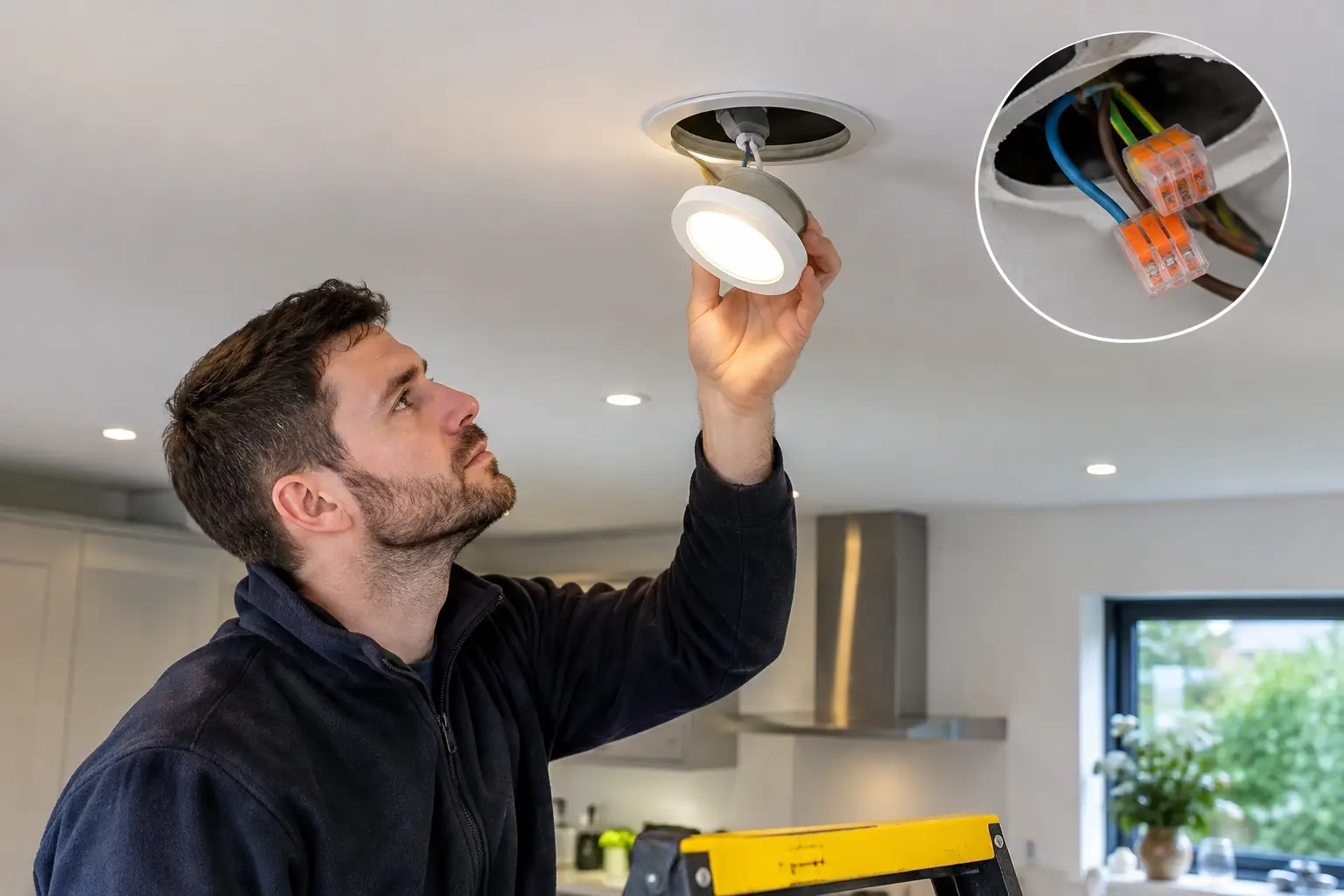
A failed LED driver is another common cause, particularly with integrated LED fittings. In these units, the lamp cannot simply be unscrewed and replaced. The fitting or driver may need testing and replacement by a competent electrician.
Before changing components, check the simple points: are all lamps the same type, are they rated as dimmable if a dimmer switch is fitted, and has the problem started since a lamp or switch was changed? These details can prevent unnecessary work and help identify the correct repair.
Common reasons lights dim or flicker
The cause is not always visible at the light fitting. Electrical systems rely on secure, correctly sized connections from the consumer unit through to every circuit accessory. A weak point anywhere along that route can affect performance.
Loose connections
A loose connection can create resistance and heat. It may be found in a ceiling rose, light fitting, switch, junction box, consumer unit or cable joint. In more serious cases, connections at the meter or supply equipment may be involved.
As well as dimming and flickering lights, warning signs include crackling, a warm switch or socket, discolouration around fittings, a smell of hot plastic, or intermittent power. Do not remove covers or attempt to tighten connections yourself. Isolate the circuit only if it is safe to do so, avoid using the affected area and arrange urgent professional help.
An overloaded circuit
Lighting circuits are usually separate from socket circuits, but alterations over the years can make an installation less straightforward. A converted loft, extension, garden office or newly fitted kitchen may have added demand to circuits that were not designed for it.
Overloading does not always trip a circuit breaker immediately. It can instead show up as voltage drop, nuisance tripping or poor performance when several items are used together. Testing establishes whether the circuit design, protective device and cable capacity are appropriate for the load.
Ageing wiring or an older consumer unit
Older properties around Chester and the wider North West often have electrical work added in stages. A house may have newer sockets in one area but ageing cables, accessories or junctions elsewhere. Previous alterations are not automatically unsafe, but they should be assessed if lights are behaving unpredictably.
A consumer unit upgrade alone is not a cure for every lighting issue. The condition of the existing circuits needs to be tested first. A proper fault-finding visit identifies the cause before any recommendation is made, rather than replacing equipment on guesswork.
Problems with the electricity supply
If lights dim throughout the property, especially alongside changes in the performance of appliances, the issue could be on the supply side. A poor neutral connection is one example that requires urgent attention, as it can cause voltages to become unstable.
Check whether neighbours are experiencing similar symptoms. If they are, the network operator may need to investigate. If the problem appears limited to your property, an electrician can check your installation and advise on the next safe step. Never interfere with the meter, service fuse or supply cables.
When dimming lights need urgent attention
A brief, occasional dip when a large appliance starts is worth monitoring. The following signs are not a wait-and-see situation:
- lights become much brighter as well as dimmer
- flickering affects several rooms or circuits
- switches, sockets or fittings feel hot
- you notice buzzing, crackling, sparks or a burning smell
- circuit breakers trip repeatedly
- power cuts in and out, or appliances behave erratically
Turn off and unplug affected equipment where safe. If there is smoke, sparking or an immediate risk, leave the area and contact emergency services as appropriate. For an electrical fault that needs urgent diagnosis, use a qualified electrician rather than continuing to reset breakers or replace lamps.
What a professional electrical inspection involves
Fault finding is not just a visual check. An electrician will listen to when the dimming occurs, identify which circuits are affected and inspect accessible fittings, switches and connections. They may then carry out electrical tests to check continuity, insulation resistance, polarity, earthing and voltage performance.
The aim is to locate the fault without causing unnecessary disruption to your home. In some cases the repair is straightforward, such as replacing an incompatible dimmer or a failed LED driver. In others, further work may be needed to rectify damaged wiring, improve a circuit or investigate a supply issue.
Work should be completed in line with BS 7671, the UK Wiring Regulations, and any required certification should be provided. This matters not only for safety but also for future property sales, insurance queries and landlord compliance records.
Advice for landlords and homeowners
For landlords, reports of flickering or dimming lights should be treated as a maintenance concern, not dismissed as a tenant changing a bulb. A prompt inspection protects occupants and helps prevent a small defect becoming a more disruptive repair. An up-to-date EICR provides useful information about the condition of the installation, although an intermittent new fault may still need separate investigation.
Homeowners can reduce avoidable LED problems by buying good-quality lamps, matching dimmable lamps to a suitable dimmer and avoiding a mix of different LED types on the same circuit. Do not exceed fitting ratings, cover downlights with unsuitable insulation or make connections in inaccessible spaces without the correct enclosures.
If lights are dimming regularly, Gerrard’s Electrical Solutions can trace the cause, explain the findings in plain English and carry out the right repair. A clear diagnosis is always better than hoping the problem disappears, especially where your home’s electrical safety may be involved.