

- August 5, 2026
- By
- Blog
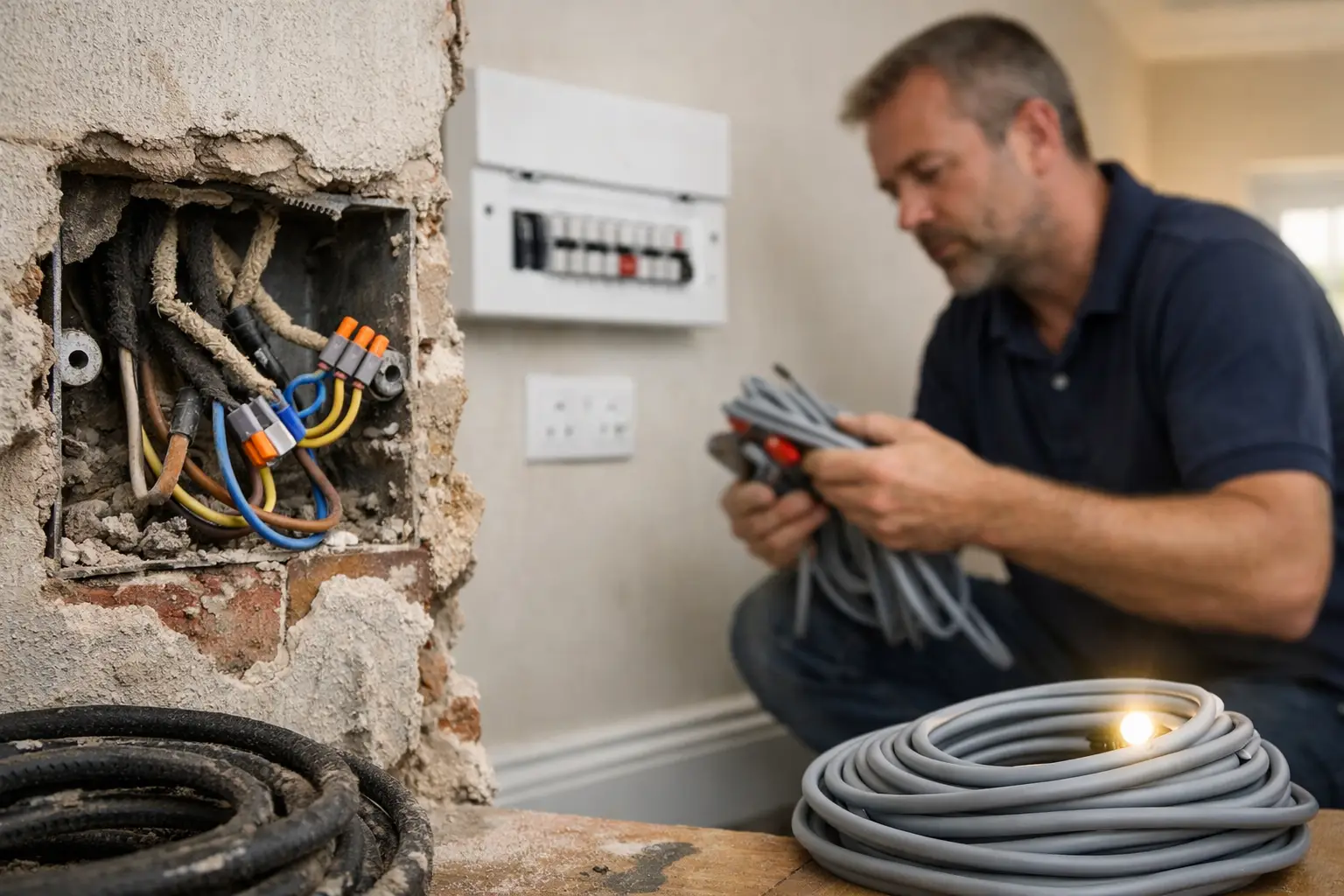
A light that flickers when the washing machine starts, a socket that feels warm, or a fuse that trips without an obvious reason can be more than an everyday annoyance. Knowing when to replace wiring helps you act before a developing fault becomes a shock risk, fire risk or costly emergency repair.
Older electrical systems do not always fail dramatically. In many properties, wiring has simply been added to, adapted and worked harder over decades. A professional inspection can separate a minor repair from the point where a partial or full rewire is the safer long-term decision.
When to replace wiring: the signs not to ignore
Age alone does not automatically mean your home needs rewiring. A well-installed system that has been properly maintained may remain safe for many years. However, wiring in homes built or last updated several decades ago deserves closer attention, particularly if the property has changed hands, been extended, or had DIY alterations.
Frequent tripping is one of the clearest warning signs. Modern consumer units are designed to disconnect power when they detect a fault, so an occasional trip may be caused by one faulty appliance. Repeated tripping on the same circuit, especially with different appliances plugged in, needs fault finding by a qualified electrician.
Other signs that call for prompt professional advice include burning smells, buzzing switches or sockets, scorch marks, loose accessories, electric shocks or tingles, and lights that dim or flicker. Do not continue using an outlet that is hot, damaged or discoloured. Switch off the relevant circuit if it is safe to do so and arrange an inspection.
Older fittings can also give useful clues. Rewireable fuse boards, old-style fuse carriers, round pin sockets, fabric-covered cable, lead-sheathed cable and a lack of earthing are all signs that the installation may be outdated. They do not prove every cable in the house is unsafe, but they strongly justify a proper assessment.
A consumer unit upgrade is not always a rewire
It is common to assume that fitting a new consumer unit will make an old installation safe. It may improve protection, but it cannot repair deteriorated cables, poor connections or hidden unsafe alterations elsewhere in the property.
Before replacing a consumer unit, the existing circuits should be tested. A modern board with RCD or RCBO protection can reveal faults that older equipment did not detect. That is a good safety outcome, but it can mean circuits begin tripping until the underlying issues are corrected.
Sometimes the sensible option is targeted work: replacing damaged cables, adding proper earthing, upgrading a kitchen circuit or installing new circuits for an extension. In other homes, the test results show that several circuits are in poor condition. At that point, a rewire may offer better value and greater peace of mind than repeatedly repairing an ageing system.
What an EICR can tell you
An Electrical Installation Condition Report, usually called an EICR, is the best starting point if you are unsure about the condition of your wiring. It involves visual checks and electrical testing of accessible parts of the installation. The report identifies defects, confirms whether further investigation is needed and records observations using recognised safety codes.
For landlords, electrical safety inspections are a legal responsibility, with EICRs generally required at least every five years or at the interval stated on the previous report. Homeowners are not subject to the same routine requirement, but an EICR is particularly worthwhile before buying an older property, starting major renovations, installing a new consumer unit, or if faults keep occurring.
An unsatisfactory report does not automatically mean a complete rewire. Some observations can be addressed with straightforward remedial work. Serious faults, widespread deterioration or circuits that cannot be tested properly may point towards replacement. A clear electrician should explain what each finding means in plain English, what needs urgent attention and which improvements can be planned.
Properties where rewiring is more likely
A property that has been extended or remodelled several times can have a more complicated electrical history than its age suggests. It is not unusual to find circuits serving rooms they were never intended to supply, hidden junctions beneath floors, or accessories added without suitable cable protection.
Kitchens, loft conversions and gardens are common pressure points. Modern homes use far more electrical equipment than homes of the 1960s, 1970s or 1980s: induction hobs, electric showers, tumble dryers, home offices, EV chargers, outdoor lighting and security systems all place demands on an installation. Adding high-load equipment to an already stretched circuit is not a shortcut worth taking.
A full rewire is also often practical during a major refurbishment. If walls are already being opened, ceilings replaced or floors lifted, installing new cables is less disruptive than returning to the same work later. Planning sockets, lighting positions, USB outlets, extractor fans, smoke alarms and data points at this stage can make the home safer and more convenient for years to come.
What a professional rewire involves
Rewiring is not simply changing sockets and switches. It normally involves replacing cables, installing appropriate new circuits, upgrading the consumer unit where needed, fitting modern accessories and testing the completed work. The design should reflect how you actually use each room rather than copying an outdated layout.
There will be disruption, and an honest electrician will not pretend otherwise. Access is needed behind fittings, under floors and sometimes within walls or ceilings. Chasing walls can create dust, and rooms may need to be cleared or protected. In an occupied property, the work can often be phased to keep essential areas usable, although the exact approach depends on the building and the scale of the work.
The trade-off is that a properly planned rewire gives you a known, tested installation built to current BS 7671 requirements. It also reduces the patchwork of old circuits and questionable additions that can make fault finding difficult and future upgrades expensive.
Do not rely on appearances
Fresh sockets and a new-looking consumer unit can make an installation appear modern while older cables remain concealed in walls. Equally, an old-fashioned accessory does not always mean the wiring behind it is dangerous. This is why visual guesses are not enough.
Avoid lifting floorboards, opening accessories or attempting electrical repairs yourself. Even a circuit that appears switched off may have unexpected connections or damage. Testing, isolation and repair work should be carried out by a competent electrician with the right equipment and knowledge of current regulations.
If you are buying a property, ask whether there is a recent EICR and whether certificates are available for extensions, new circuits or consumer-unit work. Missing paperwork is not proof of danger, but it should influence your decision to arrange an inspection before committing to significant electrical changes.
Make a safe decision before the fault becomes urgent
The right time to replace wiring is usually when testing shows deterioration, when faults are recurring, or when the installation cannot safely support the way the property is now used. Acting early gives you time to compare options, schedule work around your household or tenants, and avoid rushed decisions after a loss of power or a dangerous fault.
For homeowners and landlords around Chester, Gerrard’s Electrical Solutions can assess the installation, explain the findings clearly and recommend repair, upgrade or rewiring work that is proportionate to the condition of the property. If you have a burning smell, visible damage, shocks or persistent tripping, treat it as urgent and seek professional help rather than waiting for the problem to settle.