

- July 28, 2026
- By
- Blog
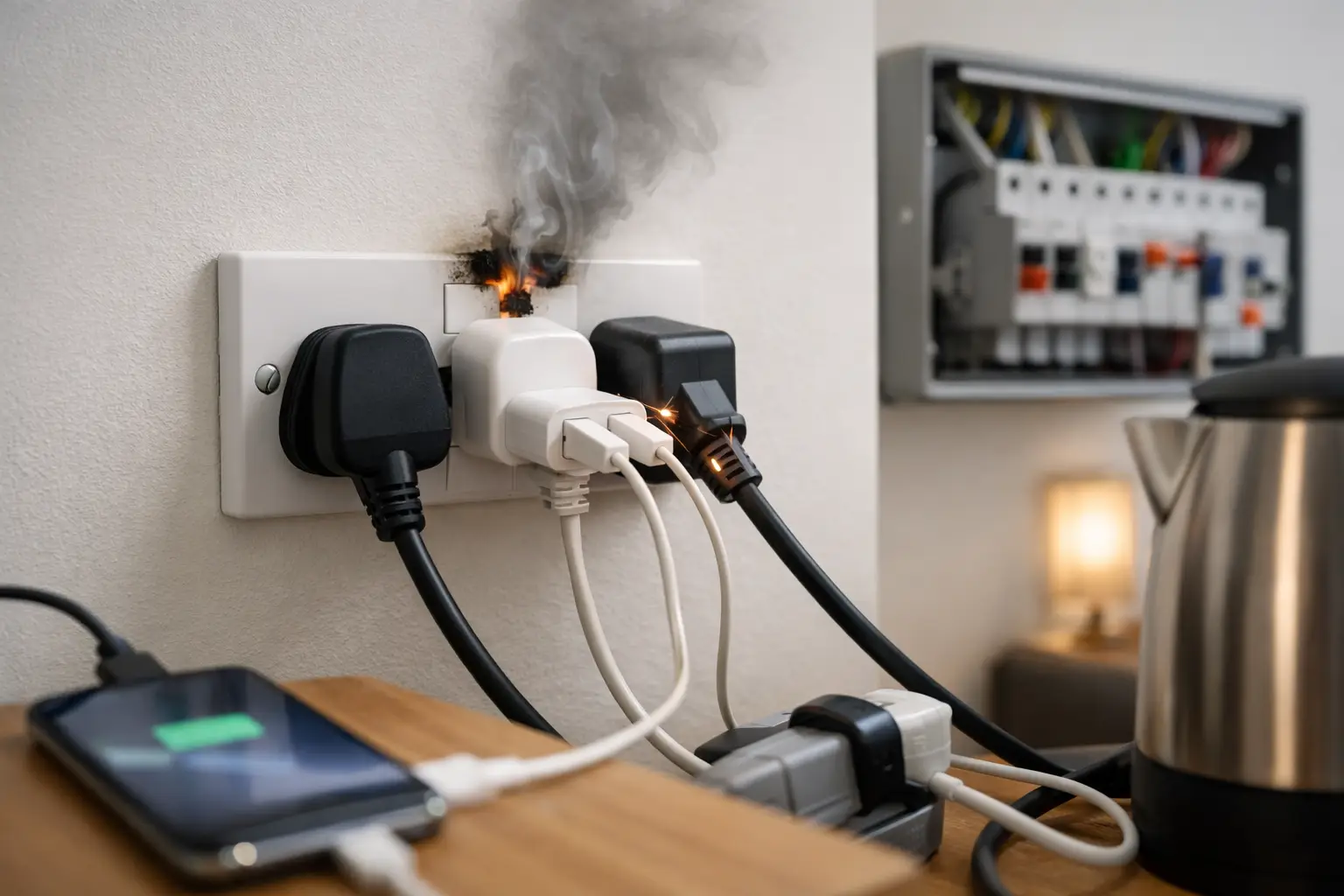
A socket outlet can be overloaded, but the bigger issue is usually the circuit supplying it. If several high-power appliances are drawing electricity from one point, through an extension lead or adaptor, heat can build up in the plug, socket, cable or connections behind the wall. That is why a socket that feels hot, smells unusual or repeatedly trips the electrics needs prompt attention.
A modern consumer unit is designed to disconnect power when it detects a fault or excessive current. That protection is valuable, but it should not be treated as permission to keep resetting a tripping breaker. Repeated tripping is your electrical installation telling you that something needs investigating.
Can sockets overload on their own?
A standard UK socket is normally rated at 13 amps, while a double socket does not automatically provide 26 amps of safe capacity for every combination of appliances. The wiring, protective device and circuit design all matter. A double socket is supplied by one circuit, and both outlets share that supply.
In practical terms, a phone charger, television, lamp and broadband router are unlikely to cause a problem together. High-wattage appliances are different. Kettles, portable heaters, tumble dryers, washing machines, air fryers, microwaves and irons can each draw a significant amount of power. Running several from the same socket outlet, adaptor or extension lead can overload equipment even where the circuit itself has not yet tripped.
The condition of the installation also matters. Older sockets, loose terminals, damaged plugs and ageing wiring may overheat at lower loads than sound, correctly installed equipment. This is one reason visible signs of heat should never be ignored.
The warning signs of an overloaded socket or circuit
Some electrical faults develop quietly, while others give clear warning. If you notice a burning smell, buzzing or crackling, discolouration around a socket, scorch marks, a loose faceplate, melted plastic or a plug that is unusually hot, stop using that outlet straight away. Switch off the circuit at the consumer unit if it is safe to do so, and arrange for a qualified electrician to inspect it.
A circuit breaker or RCD that trips when particular appliances are used is another sign worth taking seriously. The cause may be too much demand on the circuit, but it could also be a faulty appliance, damaged cable, moisture, poor connections or an issue within the fixed wiring. The only safe answer is proper fault finding rather than guesswork.
Lights dimming when an appliance starts, sockets that work intermittently, or a circuit that trips at seemingly random times can also point to a fault. These symptoms do not always mean overload, but they do mean the installation needs checking.
Why extension leads and adaptors create extra risk
Extension leads are useful for temporary, low-demand use. Problems arise when they become a permanent answer to too few sockets, or when one extension lead is plugged into another. This arrangement is often called daisy chaining, and it increases the chance of overloading and cable damage.
The cable on an extension lead may be rated lower than the socket circuit. A multi-way adaptor with several appliances connected can therefore become the weak point, particularly if it is tucked behind furniture where heat cannot dissipate. Coiled extension reels are another concern: if they are used under load while still wound up, heat can build quickly in the cable.
Avoid using extension leads for portable heaters, washing machines, tumble dryers or other high-demand appliances unless the manufacturer specifically permits it and the lead is suitable for the load. Large appliances should normally have access to an appropriate fixed socket outlet. In kitchens, utility rooms and home offices, adding properly installed sockets is often safer and more convenient than relying on adaptors.
A simple way to think about appliance load
Electrical power is measured in watts, and current is measured in amps. As a rough guide, divide an appliance’s wattage by 230 volts to estimate the current it draws. A 2,300-watt kettle, for example, uses around 10 amps. Add a 2,000-watt heater and another appliance to the same extension lead, and its rating can be exceeded very quickly.
You do not need to calculate every appliance in your home. The useful rule is to recognise which items produce heat or use motors, because they are commonly high-demand. Kettles, heaters and hair dryers should not share a crowded adaptor with other heavy-use appliances.
Remember that fuses and circuit breakers protect against certain levels of excessive current, but they cannot guarantee that every plug, adaptor or loose connection will remain cool. A poor connection can generate dangerous heat without drawing enough current to trip protection immediately.
What to do if a socket is hot or the electrics trip
Do not keep testing a suspect socket by plugging appliances back in. Unplug equipment only if it can be done safely and without touching damaged or hot parts. If there is smoke, flames, severe burning or signs of an active electrical fire, leave the area, call 999 and do not use water on electrical equipment.
For a tripped circuit, switch off and unplug appliances on that circuit before resetting the breaker once. If it trips again, leave it off. If it stays on, reconnect appliances one at a time only where there are no signs of damage or overheating. This can help identify whether a particular appliance is involved, but it is not a replacement for an electrical inspection where the fault persists.
Never remove socket covers, tighten terminals or replace a protective device with a larger rating to stop tripping. Those actions can turn a manageable fault into a serious fire or shock risk. Electrical work should be completed by a competent electrician and, where required, tested and certified in line with BS 7671 and current 18th Edition requirements.
When the answer is more sockets, a new circuit or an upgrade
If your home has too few sockets for how you actually live, adaptors will keep reappearing. A properly planned socket installation can put power where it is needed: beside beds, in a home office, around kitchen worktops, near a wall-mounted television or in a utility area. It reduces trailing leads and makes everyday use safer.
For higher-demand equipment, an electrician may recommend a dedicated circuit. This is common for certain kitchen appliances, electric heating, workshops, outdoor supplies and EV charging equipment. The right solution depends on the load, cable routes, existing circuit capacity and the condition of the consumer unit.
In older properties, repeated issues may reveal a wider problem rather than one overloaded socket. An Electrical Installation Condition Report can assess the safety of the fixed wiring and identify deterioration, inadequate earthing, damaged accessories or circuits that are no longer suitable for the property’s needs. Landlords should be particularly proactive, as rental electrical installations must be kept safe and inspected at the required intervals.
Get a fault checked before it becomes an emergency
A hot socket or repeated trip is not something to monitor for a few weeks. Early repair is usually simpler than dealing with damaged wiring, a failed circuit or fire damage later. A qualified local electrician can identify whether the issue lies with an appliance, socket, cable, circuit or consumer unit, then explain the safest repair in plain English.
For homeowners and landlords in and around Chester, Gerrard’s Electrical Solutions can investigate electrical faults, replace damaged accessories, add sockets and assess whether a circuit or consumer-unit upgrade is needed. The aim is not simply to get power back on, but to make sure it stays safe when your household is using it normally.
If a socket is showing signs of heat, switch it off, stop using it and arrange a professional inspection. A safe electrical installation should make daily life easier, not leave you wondering whether the next plug-in will trip the house.