

- November 25, 2026
- By
- Blog
A loose socket, tripping circuit or flickering light can look like a small household job. But with electrician versus handyman repairs, the right choice is not simply about finding the quickest or cheapest person available. It is about knowing where general property maintenance ends and electrical safety begins.
A capable handyman can be a useful contact for many repairs around the home or rental property. However, electrical faults and alterations need the right level of competence, testing and compliance. Getting that distinction right can prevent repeat faults, electric shock, fire risk and expensive remedial work later.
Electrician versus handyman repairs: the practical difference
A handyman typically carries out a broad range of maintenance tasks. That might include repairing cupboards, fitting shelves, sealing a bath, hanging doors, assembling furniture or making good plasterwork after another trade has finished. Some handymen also offer minor electrical tasks, but their title alone does not show whether they are qualified, insured or competent to carry out electrical work safely.
An electrician specialises in electrical systems. They diagnose faults, test circuits, install and alter wiring, fit consumer units, issue appropriate certification and work to the current edition of BS 7671, the Wiring Regulations. The job is not only to make something work again. It is to make sure it is safe under normal use and remains safe if a fault develops.
That difference matters because electrics are largely hidden. A new socket may appear fine on the day it is fitted, yet have a loose connection, damaged cable, inadequate earthing or an overloaded circuit behind it. These issues are not always visible without proper inspection and testing.
Jobs a handyman can usually handle safely
There is a sensible place for a handyman in property maintenance. If a task is purely decorative, mechanical or involves no alteration to the electrical installation, a good handyman may be the practical choice.
For example, they may mount a television bracket, fit shelving around an existing socket, replace a lampshade, repair damaged boxing that does not contain cables, or make good a wall after electrical work has been completed. They can also help with access, preparation and finishing work around a planned electrical installation.
The key point is that they should not disturb wiring, work inside electrical accessories or make assumptions about what sits behind a wall. Drilling into a cable route or cutting into a boxed-in area without checking can create a serious hazard. If cables may be present, stop and have the area assessed first.
When you need a qualified electrician
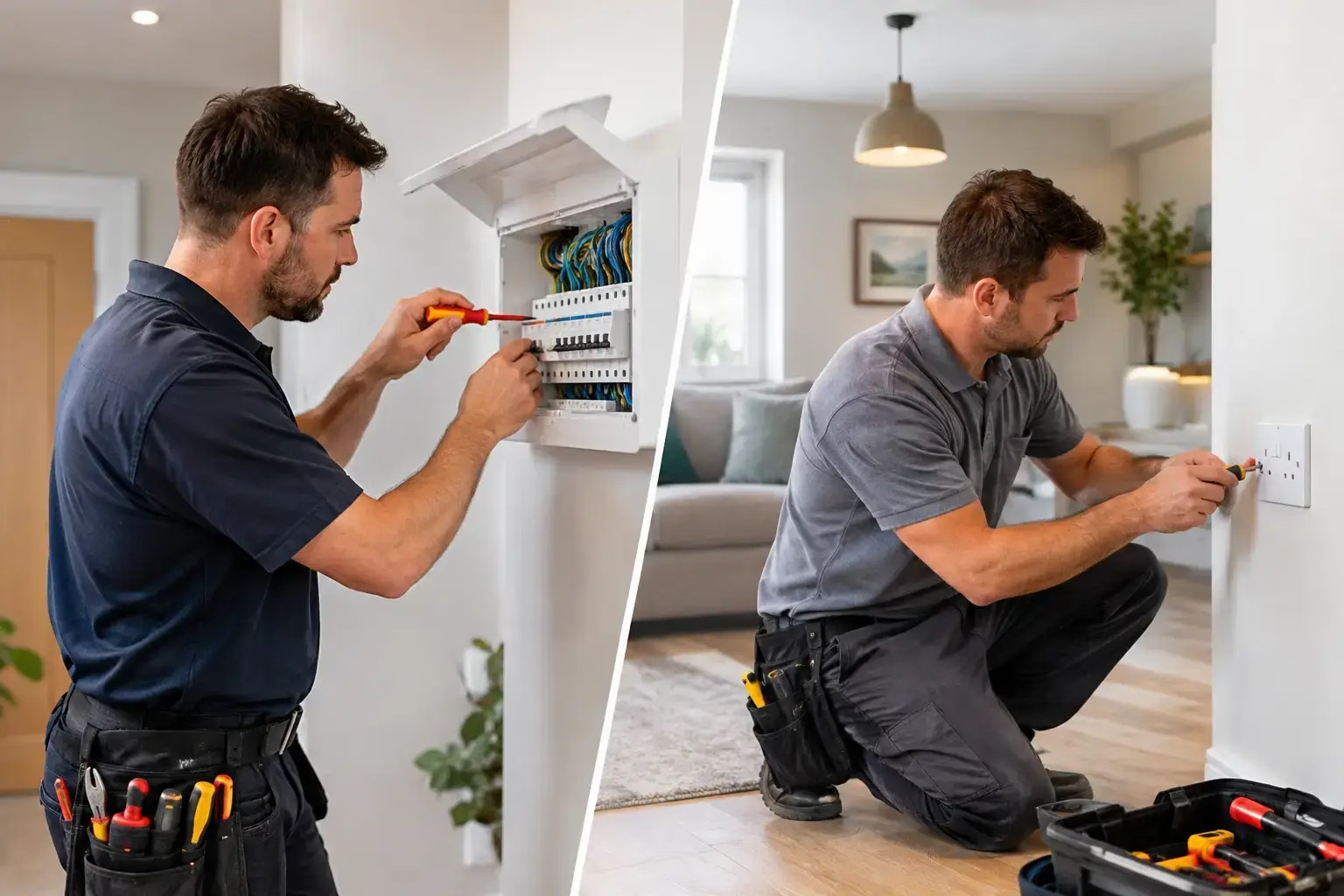
Call an electrician whenever a job involves wiring, a circuit, a protective device or signs of an electrical fault. This includes work that may seem straightforward, such as replacing a damaged socket front, fitting an outdoor light, moving a switch, adding a spur, installing an extractor fan or connecting a new cooker.
An electrician is also the right choice for consumer unit issues, repeated tripping, loss of power, overheating accessories, electric shocks or tingles, damaged cables, and lighting faults that are not caused by a simple lamp change. These problems need fault finding, not guesswork. Resetting a tripped breaker without identifying why it operated can leave the underlying problem in place.
The following warning signs should be treated with particular care:
- burning smells, smoke, scorch marks or a buzzing sound from electrical equipment
- a socket, switch or plug that feels hot
- breakers or RCDs that trip repeatedly
- exposed, split or chewed cables
- lights that dim or flicker when appliances are used
- a damaged or outdated fuse board, especially where circuits are not clearly labelled
If you notice smoke, sparking or a burning smell, switch off power at the consumer unit only if it is safe to do so, keep clear of the affected area and arrange urgent professional help. Do not touch exposed wiring or attempt a temporary repair with tape.
Compliance is more than a certificate
Some electrical work in England is notifiable under Building Regulations Part P, particularly certain work in special locations and more substantial alterations. Requirements depend on the type and location of the work, so it is worth asking before the job starts how compliance will be handled.
Even where notification is not required, electrical work must still be safe and comply with relevant standards. A competent electrician will consider cable sizes, circuit capacity, earthing and bonding, protective devices, RCD protection, safe cable routes and testing. They should explain what documentation applies when the work is complete.
This is especially relevant for landlords. Electrical installations in rented homes must be inspected and tested at appropriate intervals, with an Electrical Installation Condition Report commonly used to demonstrate compliance with landlord electrical safety duties. A handyman’s invoice for a repair is not a substitute for an EICR or formal electrical certification.
For homeowners, the paperwork can also matter when selling, renovating, making an insurance claim or trying to understand what has been altered in the property. Clear records make future fault finding easier and give the next electrician a safer starting point.
The cost question: cheaper first is not always cheaper overall
It is understandable to compare call-out prices, particularly when the problem appears minor. A handyman may have a lower hourly rate, and for genuinely non-electrical maintenance that can be good value. The trade-off changes when electrical diagnosis is needed.
A poor repair can lead to a second visit, damaged appliances, redecorating after cables have to be accessed, or the need to correct work that should have been completed safely the first time. In the worst cases, there can be a risk to people and property.
A transparent electrician will explain the call-out arrangement, the findings and the recommended repair before unnecessary work is carried out. For planned work, ask for a clear quote that sets out the scope, materials, testing and any certification. For emergency faults, ask what the initial visit covers and whether further remedial work may be required once the fault has been located.
Questions to ask before booking anyone
You do not need technical knowledge to make a sound decision. Start by describing the problem clearly: what has stopped working, when it happens, whether anything trips, and whether there are smells, heat or visible damage. Photos can help for non-urgent issues, but never remove covers or expose wiring just to take one.
For electrical work, ask whether the person is qualified and insured for the task, whether they will test the work, and what certificate or record you should receive. If they dismiss tripping circuits as normal, suggest bypassing a protective device, or cannot explain the work in plain English, take that as a warning sign.
It is also reasonable to ask about arrival times, cleanliness and guarantees. Electrical work often involves access to lofts, floors, cupboards and consumer units, so a professional should respect your home as well as the technical requirements of the job.
A sensible approach for homes and rental properties
Use a handyman for general repairs that stay well clear of the electrical installation. Use a qualified electrician for anything involving wiring, sockets, switches, lighting connections, consumer units, fault finding or electrical safety. If there is any doubt, an electrician can assess the issue before work begins and confirm the safest route forward.
For property owners across Chester and the surrounding area, a prompt inspection can turn an uncertain electrical problem into a clear, properly tested repair. When electrics are involved, choosing the right trade is a straightforward way to protect your property and the people who use it.