

- September 30, 2026
- By
- Blog
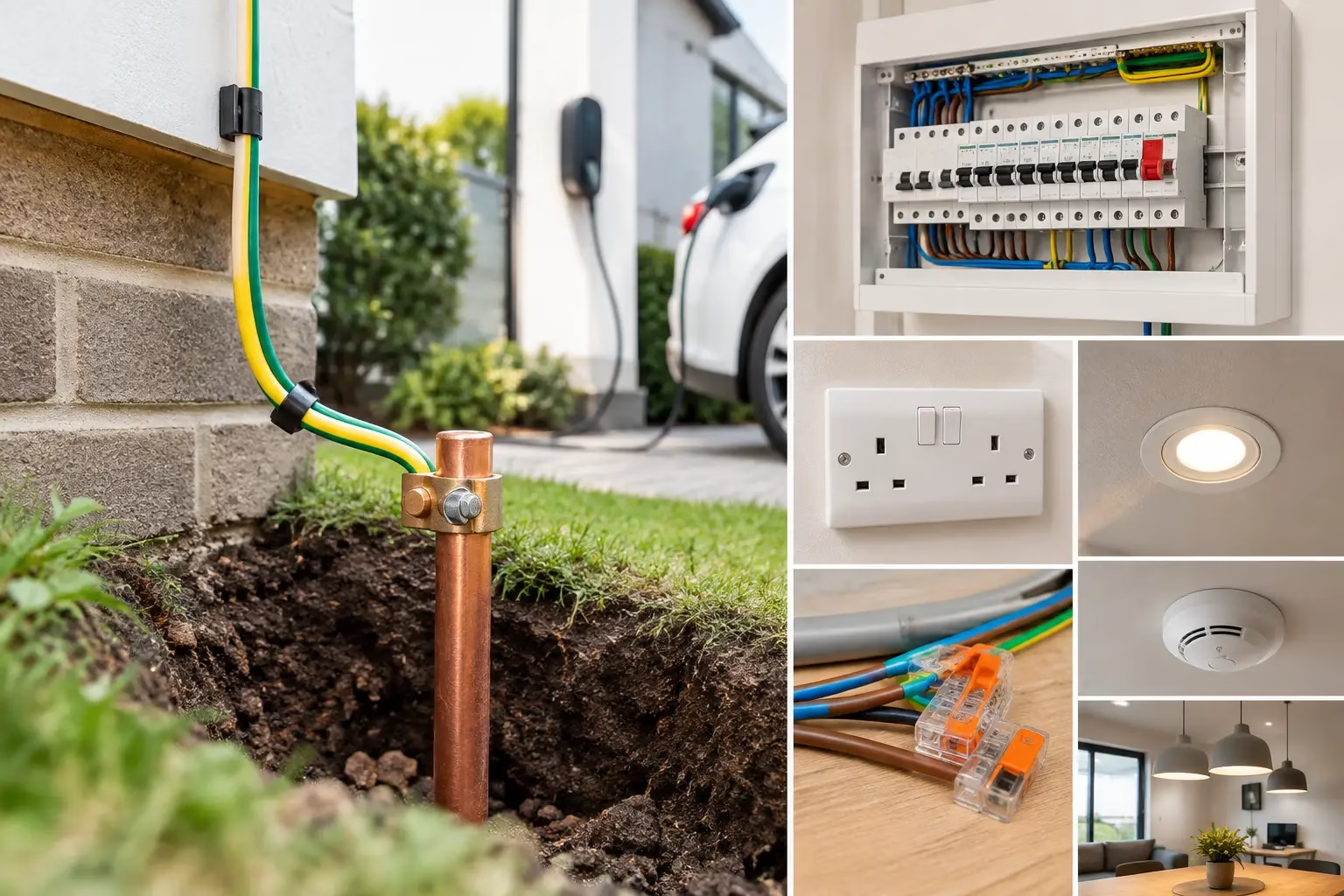
A damaged appliance should not turn a metal tap, cooker casing or light fitting into a shock risk. That is the job of earthing: it provides a controlled route for fault current and helps protective devices disconnect the supply quickly. This electrical earthing guide explains what homeowners and landlords need to know, what can go wrong, and why this is always a job for a competent electrician.
What electrical earthing does in your home
Most electrical installations have live, neutral and earth conductors. The live conductor supplies power, the neutral completes the normal circuit, and the earth conductor is a safety measure. Under normal conditions, the earth should not carry current.
If a live wire touches the metal body of a washing machine, a cooker or another Class I appliance, the earth path gives fault current a low-resistance route back to the supply. This should cause the fuse, circuit-breaker or RCD to operate and cut off the electricity before someone receives a serious electric shock.
Earthing works alongside other safety measures. Your consumer unit contains devices designed to detect overloads, short circuits and, where fitted, earth leakage. Socket circuits and many other circuits should also have suitable protection. None of these measures should be viewed in isolation. A modern consumer unit cannot compensate for an unsafe or missing earth path, and an earth alone does not replace the need for correctly selected protective devices.
The main parts of a safe earthing arrangement
The exact arrangement varies between properties, particularly where a home has been extended, rewired or altered over several decades. However, a typical UK installation includes a main earthing terminal, earthing conductors and protective bonding.
The main earthing terminal
Usually located close to the consumer unit, the main earthing terminal is where protective conductors are connected. It links the installation’s earthing system to the incoming supply arrangement. Depending on the property and supply network, the earth may be provided by the electricity distributor or through an electrode installed in the ground.
An electrician must identify the earthing arrangement before carrying out certain work. Assumptions can be dangerous, especially in older homes where previous alterations may not meet current standards.
Circuit protective conductors
Each circuit that requires an earth should have a circuit protective conductor, often called the CPC. In modern twin-and-earth cable, this is the bare copper conductor that is sleeved green and yellow at its terminations.
The CPC connects exposed metal parts of equipment and accessories to the earthing system. Loose connections, damaged cable, incorrect terminations or DIY alterations can interrupt this protection without producing an obvious fault straight away.
Main protective bonding
Bonding connects certain incoming metal services, such as water and gas pipework, to the main earthing terminal where required. It helps reduce dangerous voltage differences between conductive parts during a fault.
Bonding is not the same as earthing, although the terms are often mixed up. It does not make an electrical installation safe on its own. It is one part of a coordinated system designed in accordance with BS 7671 requirements.
Why earthing faults are easy to miss
A faulty socket may still power a mobile phone charger. A cooker may still heat up. Even a circuit with a missing or poor earth connection can appear to work normally because the problem only becomes critical when another fault develops.
That is why visual checks alone are not enough. During inspection and testing, an electrician uses calibrated test equipment to verify continuity, polarity, earth fault loop impedance and the operation of RCDs where applicable. These results show whether protective devices are likely to disconnect quickly enough if a fault occurs.
This is also why connecting a green-and-yellow wire is not proof that an installation is safe. The size of the conductor, quality of every connection, supply characteristics and protective-device ratings all matter. Safe electrical work depends on tested results, not guesswork.
Warning signs that need attention
Some signs point directly to an electrical fault, while others indicate an installation that deserves inspection. Arrange professional advice promptly if you notice repeated tripping, tingling from metal appliances or taps, scorch marks around sockets, buzzing accessories, a burning smell, or damaged and exposed wiring.
A metal light fitting, cooker, shower, washing machine or outdoor accessory that gives even a mild shock should be treated seriously. Stop using it if it is safe to do so, avoid touching exposed metal parts, and seek urgent help from a qualified electrician. Do not keep resetting a tripping circuit in the hope that it will settle down.
Older properties can require particular care. Rewires carried out at different times may leave a mixture of cable types, ageing accessories and circuits with limited protection. An old fuse board, two-pin sockets, unlabelled circuits or a lack of RCD protection do not automatically confirm an earthing defect, but they are sensible reasons to book an assessment.
Electrical earthing guide for landlords
Landlords have a clear duty to keep electrical installations safe. In rented homes in England, the electrical installation must be inspected and tested at the required intervals, generally at least every five years, by a qualified and competent person. The resulting Electrical Installation Condition Report, or EICR, identifies defects and observations using recognised classification codes.
An EICR does more than look at sockets and lights. It includes testing of the installation’s earthing and bonding arrangements, protective devices and circuits, subject to the scope and access available. If the report identifies urgent dangerous defects, they must be addressed without delay.
For landlords, testing is also practical protection against avoidable disruption. A well-maintained installation reduces the chance of emergency faults, helps keep tenants safe and creates a clear record of the condition of the property. Keep the report and any remedial-work certificates with your property records.
When changes to your home affect earthing
Electrical alterations can affect safety beyond the new fitting or socket being installed. Adding a shower, electric vehicle charger, garden power supply, extension, consumer unit or new kitchen circuit may require the existing earthing and bonding arrangements to be assessed.
Outdoor work deserves special care because moisture, buried cables and metalwork increase the consequences of a fault. An electrician may need to consider RCD protection, cable routes, isolation, local earth electrodes and the supply type. The correct approach depends on the property, the circuit and the equipment being installed.
Consumer unit upgrades can also reveal issues that were not apparent with an older installation. Modern RCD or RCBO protection improves safety, but nuisance tripping can occur if existing faults, borrowed neutrals or unsuitable circuit arrangements are left unresolved. A proper inspection before and during the work helps prevent surprises.
What you can do safely – and what to leave alone
You can keep an eye out for damaged plugs, cracked accessories, loose faceplates and leads trapped under furniture. Use appliances as intended, avoid overloading extension leads, and never remove an earth pin from a plug to make it fit an unsuitable socket. If a circuit trips, take note of what was being used at the time, as this can help with fault finding.
Do not alter earthing or bonding conductors, remove consumer-unit covers, test wiring with improvised methods or rely on plug-in testers as a full safety check. A socket tester can indicate certain basic wiring issues, but it cannot confirm every fault or prove that an earthing arrangement meets the required disconnection times.
If you are planning electrical work, ask who will test the installation, what certification will be provided and whether any notifiable work will be correctly registered. Clear answers before work starts are a good sign that the job is being approached properly.
Choosing the right response
A suspected shock, burning smell, visible heat damage or repeated tripping needs prompt attention. If there is immediate danger, switch off the affected circuit only if you can do so safely and contact an emergency electrician. If you are unsure which circuit is involved, do not take risks around the consumer unit or damaged equipment.
For planned checks, an EICR or targeted inspection is often the right route. Gerrard’s Electrical Solutions can inspect, test and explain the findings in plain English, with work completed to current BS 7671 and 18th Edition requirements.
Earthing is mostly hidden behind walls, beneath floors and inside consumer units, but its purpose is simple: to give a fault a safe path and protect the people using the property. If something does not feel right, trust that instinct and arrange a professional inspection before a small defect becomes a serious hazard.