

- July 23, 2026
- By
- Blog
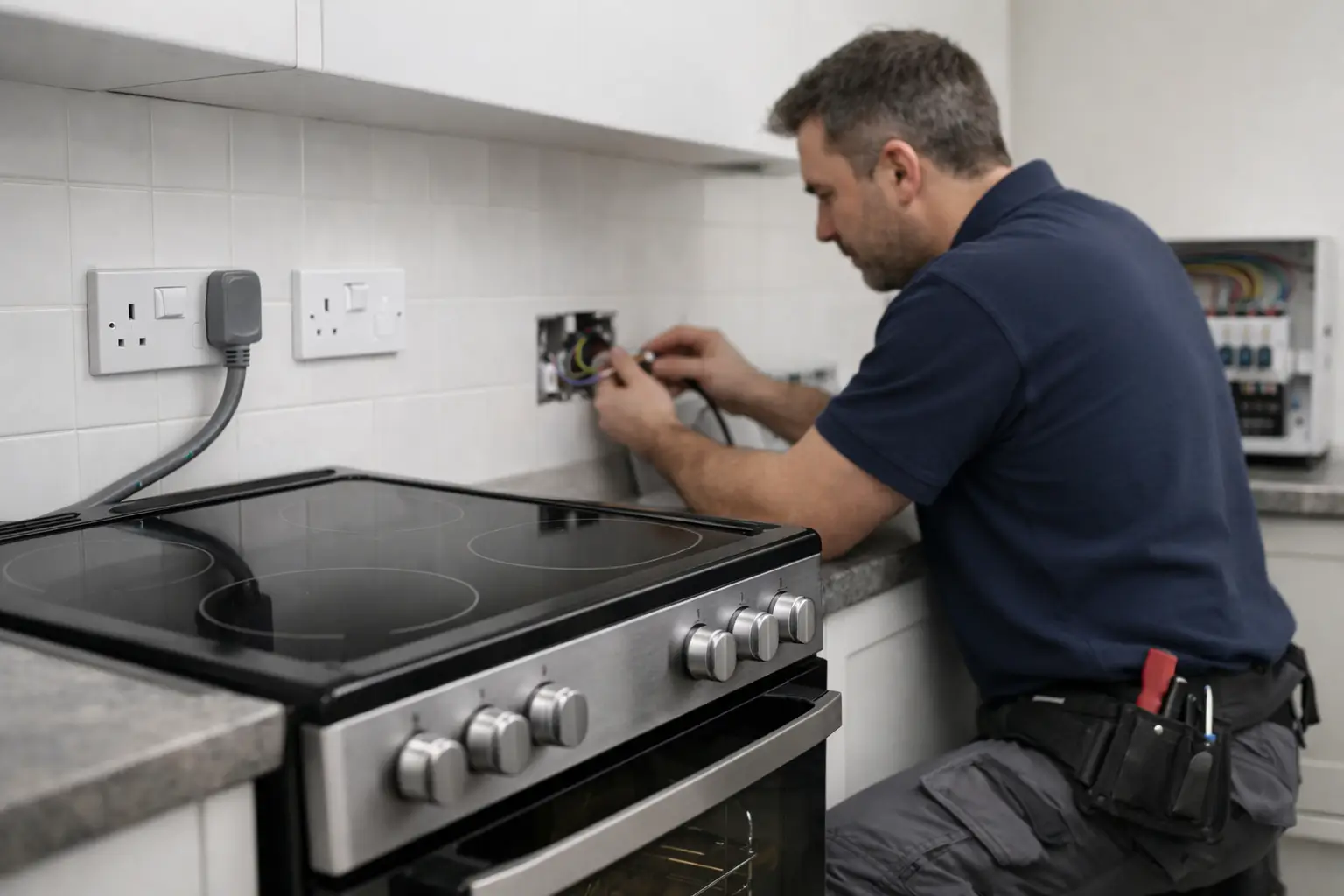
A new cooker can look like a straightforward kitchen upgrade, but electrical cooker installation requirements are about far more than connecting a few wires. Cookers are high-load appliances. If the circuit, cable, protective device or connection point is unsuitable, the result can be nuisance tripping, overheating, electric shock or fire risk. Getting it checked and installed correctly protects your household and avoids costly alterations later.
Why cooker installation needs proper electrical planning
An electric cooker, oven or range cooker may draw substantially more power than most plug-in appliances. A small built-in oven may work from a standard 13A socket, while a larger cooker with multiple ovens, ceramic or induction hobs and grills often needs a dedicated circuit from the consumer unit.
The rating on the appliance data plate is the starting point. It tells the electrician the connected load, normally in kilowatts or amps, but it does not decide the installation on its own. The cable route, cable length, insulation around the cable, circuit protection, consumer unit capacity and the type of cooker all affect what is safe and compliant.
This is why one household may need a new cooker circuit while another can use a suitable existing one. It depends on the appliance and the condition of the electrical installation, not simply on whether there is already a cooker switch on the wall.
Electrical cooker installation requirements at a glance
A compliant installation should provide a correctly designed supply, suitable isolation, safe cable routing, appropriate protection against electric shock and overload, and proper testing once the work is complete. The installation should be designed and verified in line with BS 7671, the UK Wiring Regulations.
For a full-size electric cooker, this commonly means a dedicated radial circuit running from the consumer unit to a cooker control unit and connection point. The circuit may be protected by a 32A, 40A or 45A device, but choosing a rating by guesswork is unsafe. The protective device must match the cable capacity and the calculated demand of the appliance.
Modern consumer units also usually provide RCD protection, which disconnects the supply quickly if it detects an earth leakage fault. Where the existing consumer unit is old, damaged, overloaded or lacks suitable protection, an upgrade or remedial work may be required before a new high-load circuit can be installed safely.
The cooker circuit and cable size
Cable size is one of the most critical parts of the job. A cable that is too small for the circuit can overheat before the protective device operates. Equally, fitting a larger breaker to stop nuisance tripping is never an acceptable fix, as it may remove the protection the cable needs.
Electricians assess the appliance rating and apply diversity where appropriate. Diversity recognises that not every ring, oven and grill element will run at maximum output continuously. However, it must be applied carefully. A high-powered range cooker, for example, can still require a substantial supply even after diversity is considered.
The cable must also be installed correctly. Running it through insulation, grouping it tightly with other cables, burying it in a wall or routing it through a hot area can reduce its safe current-carrying capacity. These details are invisible once the kitchen is finished, yet they matter as much as the cable size itself.
Isolation and cooker connection points
A cooker needs a means of safe isolation, usually a double-pole cooker control unit. This isolates both live conductors so the appliance can be worked on safely without switching off power to the whole property.
The control switch should be accessible without reaching across the hob. It also needs sensible positioning away from heat, steam and splash zones. The cooker is then connected through a suitable outlet plate or connection unit, usually located behind or alongside the appliance where it is protected from excessive heat and can be accessed when needed.
A standard plug and socket should only be used where the appliance manufacturer permits it and the appliance load is suitable for a 13A supply. Never assume a plug can be fitted simply because an oven has arrived with one attached. The manufacturer’s instructions and appliance rating always take priority.
Do you need a new circuit for an electric cooker?
Not always. If there is an existing cooker circuit, a qualified electrician can inspect its condition and confirm whether it is adequate for the replacement appliance. They will check the circuit rating, cable size, earthing arrangement, RCD protection, accessories and test results.
A new circuit is more likely where you are changing from gas to electric, fitting an induction hob, installing a larger cooker, moving the appliance to a new kitchen position, or discovering that the existing wiring is old or unsuitable. Kitchen refurbishments can also expose issues such as damaged cables, inaccessible connections or consumer units that no longer meet the standard expected for new work.
If your cooker repeatedly trips the circuit, the fault may be in the appliance, the circuit or the consumer unit. Do not keep resetting the breaker and hoping it holds. A burning smell, crackling connection, warm switch, damaged cable or frequent tripping needs prompt investigation.
Building Regulations, certification and landlord responsibilities
Electrical work in homes must comply with the relevant Building Regulations, including Part P in England. Some types of work, such as installing a new circuit or replacing a consumer unit, are notifiable and must be dealt with through the proper process. A competent electrician can advise what applies to your planned work and provide the appropriate paperwork.
After installation or alteration, the circuit should be inspected and tested. This verifies continuity of protective conductors, insulation resistance, polarity, earth fault loop impedance and RCD operation, among other checks. The test results are recorded on an Electrical Installation Certificate or a Minor Electrical Installation Works Certificate, depending on the scope of work.
For landlords, safe cooker wiring is part of maintaining a safe electrical installation. An EICR checks the fixed wiring, not the cooker appliance itself, but it can identify concerns with the cooker circuit, consumer unit or earthing that need attention. Keeping certificates and repair records is sensible evidence that electrical safety has been managed properly.
What to check before your installation appointment
Before the electrician arrives, keep the appliance specification or installation manual available. The key details are the total connected load, required supply arrangement and any manufacturer requirements for ventilation, clearances or connection.
Make sure there is clear access to the consumer unit, kitchen and route between them where possible. If the property has a recent EICR, previous electrical certificates or information about past alterations, have these ready too. They can help identify whether the circuit has been changed over time.
It also helps to be realistic about kitchen units and finishes. A new cooker circuit may require cables to be routed under floors, through walls, within cupboards or via a carefully planned surface route. A tidy electrician will minimise disruption, but safe cable routes and accessible connections must take precedence over hiding every part of the installation.
Why DIY cooker wiring is a poor risk to take
Changing an appliance connection may appear simple online, but it is easy to miss a loose termination, incorrect conductor size, inadequate earthing or unsuitable protective device. These faults may not show themselves immediately. They can develop under sustained cooking load, when terminals and cables become hottest.
A professional installation also includes the testing that a visual check cannot provide. Gerrard’s Electrical Solutions carries out cooker-related electrical work with clear advice, clean workmanship and checks to current BS 7671 requirements, so you know whether your existing supply is suitable before the appliance is connected.
If you are planning a new cooker, arrange the electrical check before delivery day where possible. It gives you time to resolve any circuit or consumer unit issues properly, rather than being left with a cooker that cannot be safely used when you need it most.