

- July 19, 2026
- By
- Blog
A failed circuit, poor lighting or an overloaded distribution board can stop a business day far more quickly than most owners expect. Choosing the right commercial electrical installation contractor is not simply about getting power to a new socket or fitting a few lights. It is about protecting staff, customers, stock, equipment and your ability to trade.
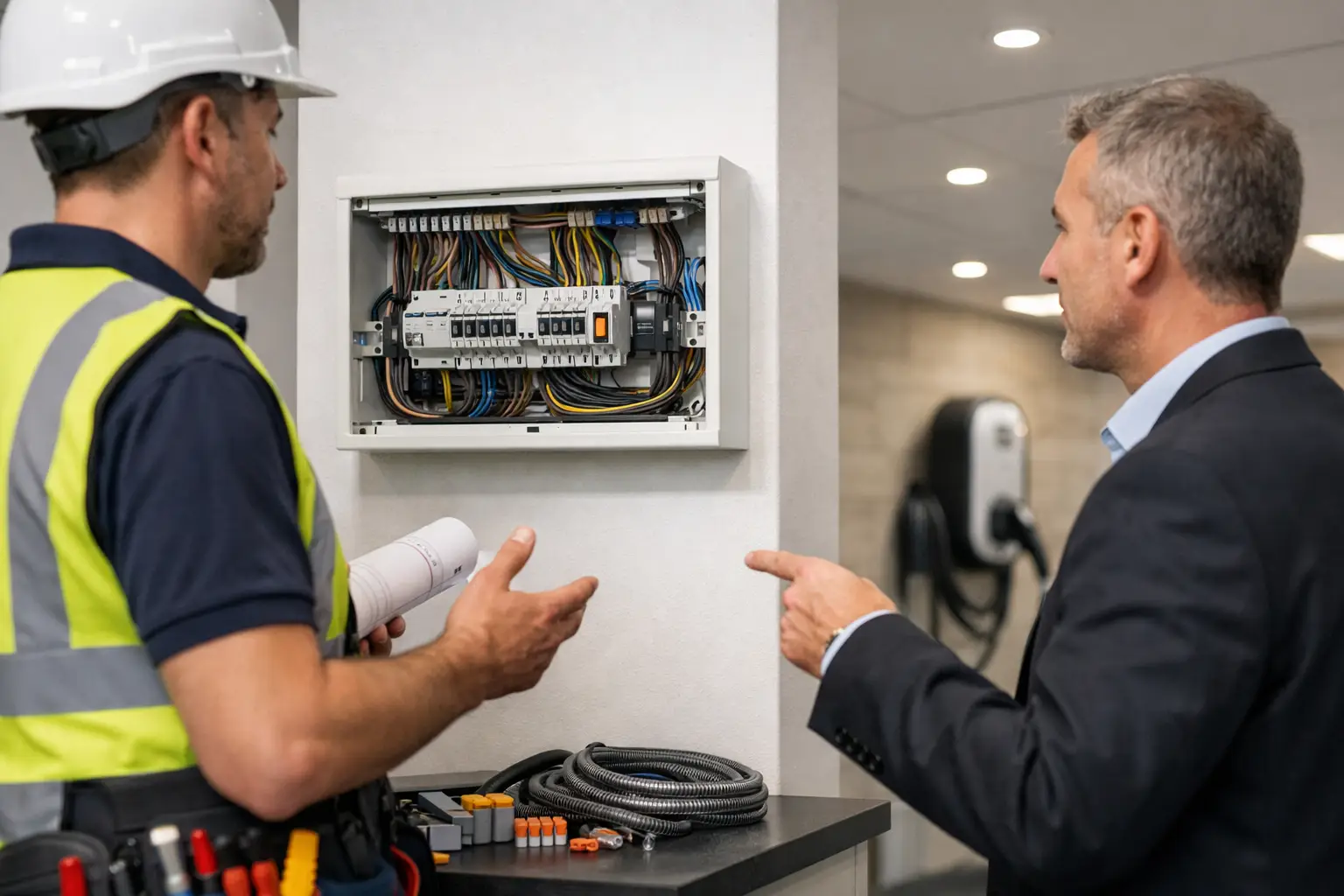
For offices, shops, warehouses, hospitality venues and managed properties, electrical work needs careful planning, clear communication and proper testing. The right contractor will explain what is needed in plain English, complete the work neatly around your operations and leave you with confidence that the installation is safe and compliant.
What a commercial electrical installation contractor should do
Commercial electrical installations cover much more than general repairs. Depending on your premises, the work may include new circuits, distribution board upgrades, LED lighting, emergency lighting, power supplies for equipment, additional sockets, data cabling routes, external lighting, security systems or a full fit-out during a refurbishment.
Every site is different. A small retail unit may need improved display lighting and safe additional power points, while a workshop could require dedicated circuits for machinery. A landlord preparing a commercial unit for a new tenant may need remedial work following an Electrical Installation Condition Report, often called an EICR.
A capable contractor starts by understanding how the building is used. That means looking at existing wiring, expected loads, access, future expansion and the disruption the work could cause. Installing a circuit that meets today’s minimum need but leaves no room for planned equipment or growth can create unnecessary expense later.
The work should be designed and carried out in line with BS 7671, the requirements for electrical installations, including the current 18th Edition regulations. Once relevant work is complete, appropriate inspection, testing and certification are just as important as the physical installation itself.
Start with safety, not the lowest quote
Price matters, particularly when managing a fit-out, repair or property portfolio. But an unusually low quote can be a warning sign if it is vague about materials, testing, certification, access requirements or remedial work that may be needed once the job begins.
A useful quote sets out the scope clearly. You should be able to see what is being installed, where it will be installed, whether making good is included, what testing will take place and whether certification is provided. If the contractor has allowed for standard materials only, they should say so rather than adding unexpected costs at the end.
It also helps to ask what happens if the existing installation reveals a problem. Older commercial premises can contain undocumented alterations, damaged cabling, inadequate earthing or circuits already carrying too much load. No honest electrician can always predict every hidden issue before access is gained, but they can explain how any variation will be identified, priced and agreed.
For urgent faults, clear call-out pricing matters too. A fast response is valuable when a business has lost power, but you should still know the starting cost and what work has been authorised. Transparent communication prevents a stressful situation becoming a costly surprise.
Check competence, insurance and certification
Electrical work in a commercial setting should never be treated as a handyman job. Ask whether the contractor is suitably competent and insured for the work involved, and whether they will inspect, test and issue the relevant paperwork on completion.
The level of documentation depends on the work. New circuits, consumer or distribution board changes and significant alterations usually require formal certification. Smaller additions may require a minor works certificate where appropriate. The key point is that you should not be left with a verbal assurance alone.
For landlords and property managers, keep certificates with your building records. They provide a useful history of the installation and can make future maintenance, insurance queries, tenant handovers and EICRs more straightforward. They also show that electrical safety has been taken seriously rather than addressed only after a problem occurs.
Plan work around your trading hours
The best commercial electrical installation contractor understands that a tidy, well-planned job is part of the service. You may need work completed before opening, after closing or in stages to keep key areas operating. A restaurant cannot easily lose its kitchen supply on a busy evening, and an office may need network and desk power maintained while staff are working.
Before work starts, agree the practical details: which areas need isolating, how long interruptions are likely to last, who will provide access and whether furniture, stock or equipment needs moving. If the work affects fire alarms, emergency lighting, security systems or machinery, this should be considered in the programme rather than discovered halfway through the job.
There are trade-offs. Completing all work in one planned shutdown may be quicker and less expensive, but phased work can reduce disruption to customers and staff. The right approach depends on the type of premises, the safety risks and how much downtime the business can absorb.
Good housekeeping matters as well. Cabling should be routed properly, work areas protected where possible and waste removed at the end of the day. It is a basic standard, but it makes a real difference in occupied premises.
Think beyond the immediate installation
Electrical work is often commissioned because something has gone wrong: sockets are limited, lights are unreliable or circuits keep tripping. Solving that immediate issue is essential, but it is worth asking whether the installation is ready for what comes next.
LED lighting is a common example. Replacing old fittings can improve light quality and reduce energy use, but the right choice depends on the room, the task being carried out and the existing controls. Bright, even lighting is useful in a workshop or retail area, while offices may benefit from zoned switching or occupancy controls to avoid lighting empty spaces.
The same applies to power. If you are adding more workstations, refrigeration, charging points, kitchen equipment or security systems, the supply and distribution arrangement should be assessed before more loads are added. Repeated tripping is not something to work around with extension leads. It is a sign that the circuit needs investigating.
Future-proofing does not always mean paying for a full upgrade immediately. Sometimes it means choosing a distribution board with sensible spare capacity, installing containment for later cabling or planning circuits so a future extension can be completed without reopening finished walls and ceilings. A good electrician will explain which improvements are worthwhile now and which can wait.
When an EICR should be part of the conversation
An EICR is a detailed check of an existing electrical installation. It is particularly useful when taking on a new commercial premises, changing use of a building, buying a property, dealing with recurring faults or planning a major alteration.
The report identifies whether the installation is satisfactory and records observations that may need attention. Not every observation demands an immediate full rewire. Some issues can be corrected with targeted remedial work, while others may point to ageing wiring or equipment that needs a more considered plan.
If you receive an unsatisfactory report, ask for the findings to be explained clearly. You need to know what presents an immediate safety concern, what requires improvement and what is advisory. That makes it easier to prioritise the work responsibly and budget without guessing.
Questions worth asking before you appoint a contractor
A short conversation before booking can tell you a great deal. Ask whether the contractor has experience with premises like yours, how they will minimise disruption, what certificates you will receive and whether the quote includes testing. You should also ask how quickly they can respond if an issue is found during or after the installation.
Pay attention to the answers, not just the sales pitch. Straightforward explanations, realistic timescales and a willingness to discuss options are good signs. So is a contractor who is prepared to say when further investigation is needed rather than guessing from a photograph or promising a fix without seeing the installation.
For businesses in and around Chester, Gerrard’s Electrical Solutions provides planned commercial installations, fault finding, repairs, lighting upgrades, EICRs and responsive support. Work is approached with the same priorities every commercial client needs: safety, compliance, clear costs, punctual attendance and a site left clean and orderly.
Your electrical installation should support the way you work, not become another operational risk. Choose a contractor who takes time to understand the premises, documents the work properly and gives you practical advice you can act on. That is how a necessary electrical job becomes a safer, more reliable foundation for your business.