

- November 15, 2026
- By
- Blog
A new television, boiler controls or home-office equipment can be damaged in a moment by a voltage spike that lasts far less time than it takes to notice a flicker. Sensible power surge protection steps help protect the electrical equipment you rely on, but they also begin with a safe, properly maintained installation rather than a plug-in accessory alone.
A surge is a sudden rise in voltage above the level your wiring and appliances are designed to handle. Some are caused by lightning or supply-network faults, while many smaller surges are created inside the property when motors and high-load equipment switch on and off. Over time, those smaller events can shorten the life of sensitive electronics even when there is no obvious immediate failure.
Start with your consumer unit
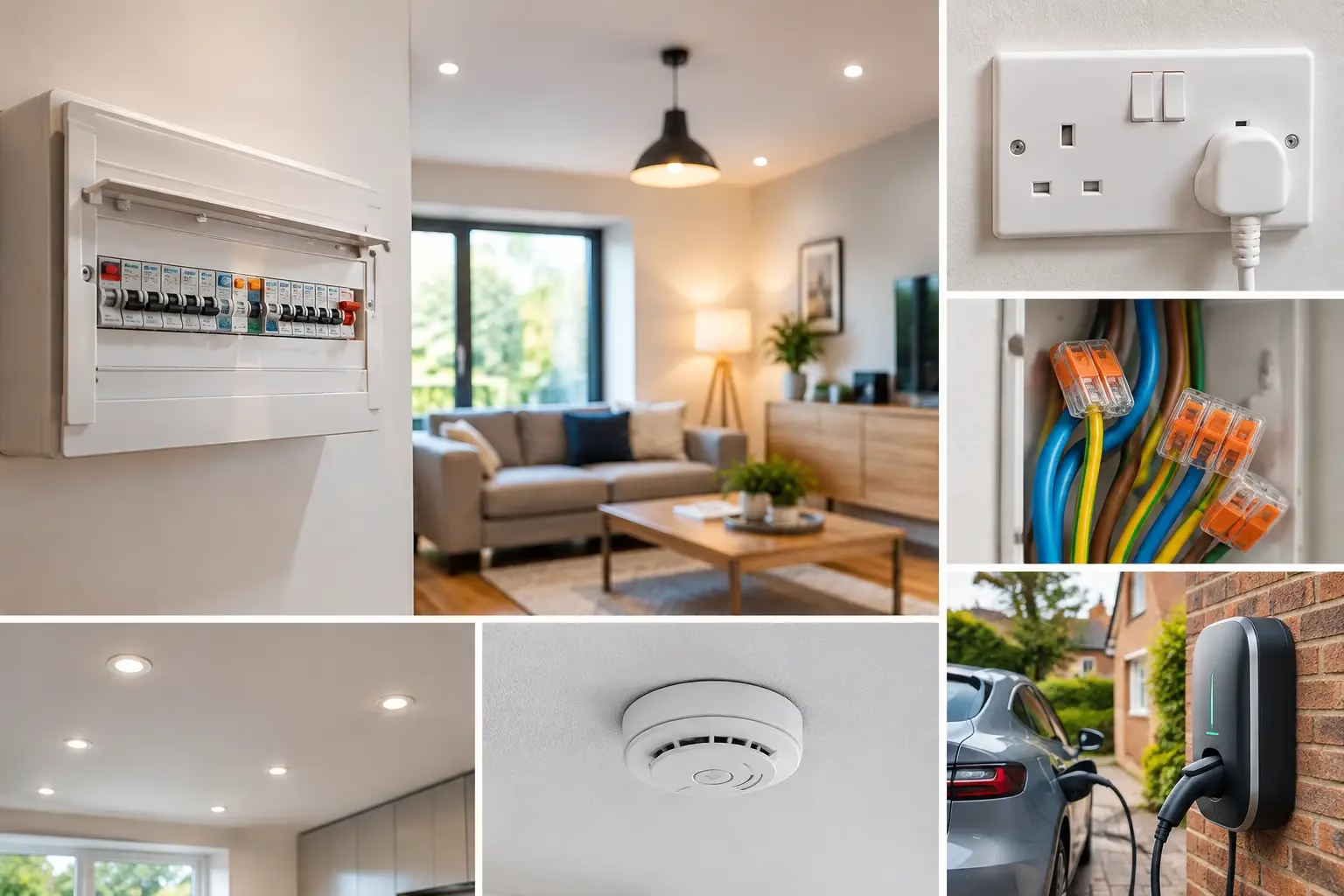
The consumer unit is the right place to consider whole-home surge protection. A qualified electrician can fit a surge protective device, commonly called an SPD, at or near the consumer unit. It is designed to divert excess voltage safely away from circuits before it reaches equipment connected around the property.
This is particularly worthwhile where a home has modern electronics, a smart heating system, an electric vehicle charger, solar equipment, alarm systems or valuable appliances. It can also make sense for landlords responsible for maintaining electrical installations and providing safe accommodation.
Under current BS 7671 requirements, surge protection should be considered as part of electrical installation work. In many domestic situations, an SPD will be the practical and expected choice unless its omission can be justified through a documented risk assessment. The correct approach depends on the property, its supply arrangement, earthing system and the equipment in use. An electrician should assess this rather than simply adding a device because it appears to fit in the consumer unit.
A consumer unit upgrade, rewire or major alteration is a good opportunity to address surge protection properly. It is also a sensible time to check that circuits are correctly labelled, protective devices are suitable and the installation is in good overall condition.
Use power surge protection steps in layers
Whole-home protection is the first line of defence, but it cannot guarantee that every voltage spike disappears at every socket. Layered protection gives sensitive equipment a better chance, especially where there are long cable runs or equipment is connected to external services.
For televisions, computers, games consoles, broadband routers and similar items, choose a reputable surge-protected extension lead or adaptor with a clear protection rating and indicator light. A standard extension lead only gives you more sockets. It does not protect connected equipment from a surge.
Plug-in protectors have limits. Their internal components wear down as they absorb surges, and some will no longer provide protection once their status light has gone out. Check them occasionally and replace units that show a fault, have visible damage or have been through a known electrical event. Do not assume an old adaptor is still doing its job simply because it continues to supply power.
Where appropriate, protect connected data lines too. A broadband router can be affected through the power supply, telephone line, aerial or external network cable. This is not always straightforward, particularly with modern fibre installations, so avoid improvising with unsuitable accessories. Ask an electrician or the relevant service provider where protection is appropriate.
Prioritise the equipment that matters most
You do not need to protect every low-value device in the house in the same way. Focus first on equipment that is expensive, difficult to replace or essential to daily life. This may include your boiler controls, router, desktop computer, CCTV recorder, smart-home hub, freezer, television and electric garage-door controls.
It is worth remembering that a surge protector cannot correct every supply problem. It will not keep equipment running during a power cut, and it may not protect against prolonged overvoltage or faults within an appliance. A computer containing important work may also need an uninterruptible power supply, which provides short-term battery backup as well as a degree of surge protection. The right option depends on how critical it is to keep that equipment running safely.
Do not overlook earthing and bonding
Surge protection works with the electrical installation, not separately from it. Effective earthing and main protective bonding provide a route for fault current and excess energy to be handled safely. If those arrangements are defective, missing or unsuitable, fitting a surge protector alone is not a complete solution.
Older properties can have changes made over many years, including extensions, replacement consumer units and alterations by previous owners. That is why visual checks are not enough. An Electrical Installation Condition Report, or EICR, examines the fixed wiring and identifies defects that need attention. Landlords should ensure inspection and testing is carried out at the required intervals, while homeowners can arrange an EICR if the installation is older, has an unknown history or is showing signs of trouble.
Never remove an earth pin, use damaged adaptors or rely on multiway extensions as a permanent substitute for additional sockets. Aside from the risk of overload, poor connections and damaged leads can leave valuable equipment – and the people using it – less protected.
Reduce the risks created inside the home
Not every surge begins outside. Large appliances with motors and heating elements can place demand on circuits as they start and stop. This does not mean normal household appliances are unsafe, but it does underline the value of a correctly designed installation with suitable circuits and protective devices.
Avoid plugging high-load appliances such as portable heaters, kettles, tumble dryers or washing machines into extension leads. Use fixed sockets in good condition, and do not overload multiway adaptors. If sockets feel warm, plugs are loose, lights dim noticeably when equipment starts, or circuit breakers trip repeatedly, stop treating it as an inconvenience. These can be signs that need professional fault finding.
A burning smell, buzzing from the consumer unit, scorch marks, shocks from metal fittings or persistent loss of power require prompt action. If it is safe to do so, switch off the affected circuit or the main switch, avoid touching damaged equipment and call a qualified electrician. For immediate danger, smoke or fire, contact the emergency services first.
Take extra care during storms and supply faults
A direct lightning strike is uncommon, but storms can cause nearby network disturbances and power interruptions. If severe weather is forecast and it is safe and practical, unplug non-essential sensitive equipment from the mains. Do not handle plugs or wiring during an active storm, and do not attempt to disconnect hardwired appliances yourself.
After a power cut, bring equipment back into use gradually if possible. Check the consumer unit first. If an RCD or circuit breaker has tripped and will not reset, leave it off rather than repeatedly forcing it back on. Repeated tripping indicates a fault that needs investigation.
If several appliances have failed after a supply event, keep a note of the time, the affected items and any visible signs of damage. This can help with an insurance claim and gives an electrician useful information when checking the installation. Do not continue using equipment with a damaged plug, swollen power supply, burning smell or intermittent operation.
Arrange professional advice when protection is due
The best time to discuss SPDs is before a problem, during planned electrical work or when an EICR identifies upgrades that would improve safety. At Gerrard’s Electrical Solutions, we can assess consumer units, earthing arrangements and the practical needs of your home or rental property, then explain the options in plain English.
Good surge protection is not about buying the most expensive adaptor on the shelf. It is about a sound electrical installation, suitable protection at the consumer unit and sensible care with the equipment you value. If your wiring is ageing, your consumer unit is outdated or electrical faults are becoming a regular occurrence, arranging an inspection now can prevent a small concern becoming a costly failure later.