

- August 31, 2026
- By
- Blog
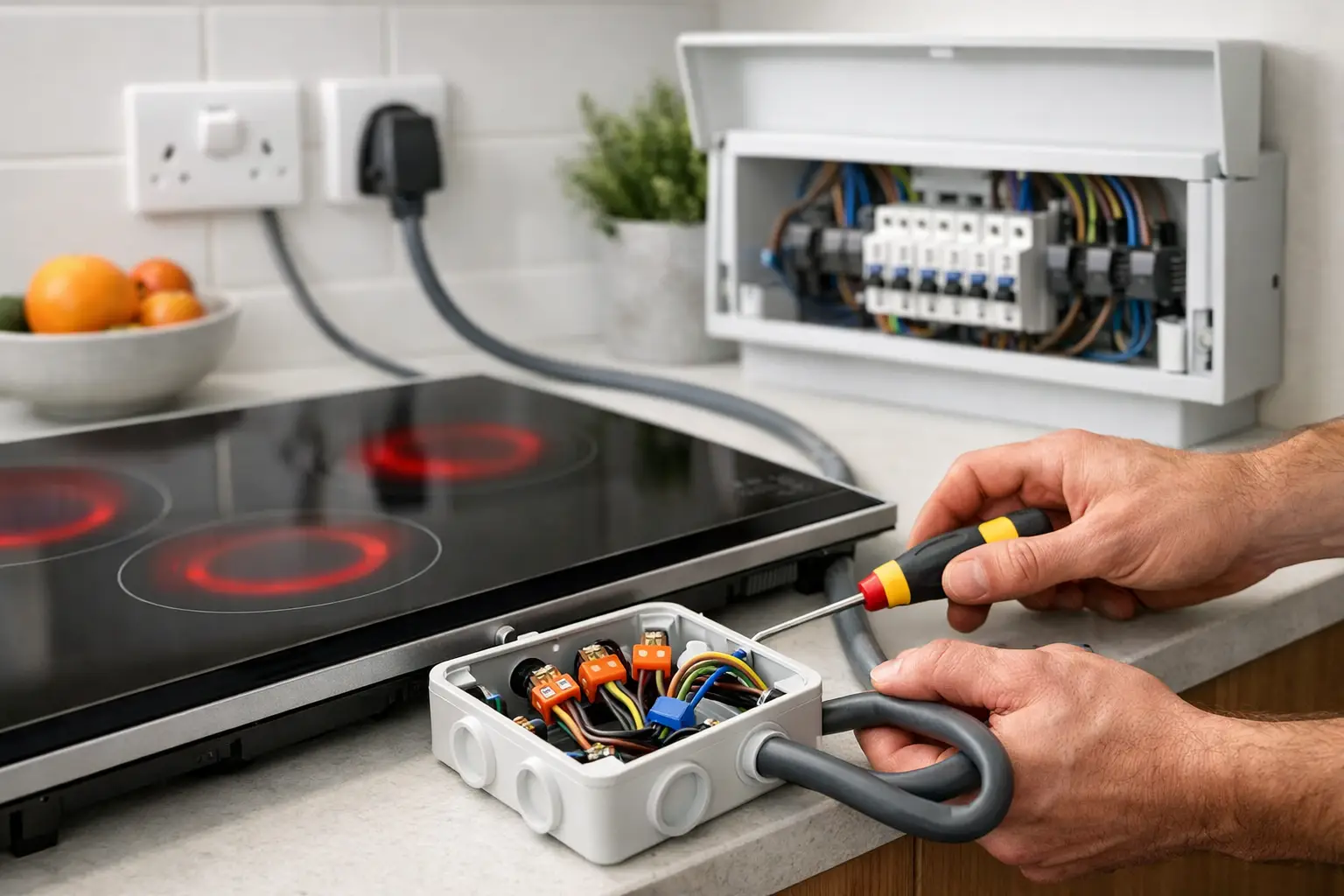
A new induction hob can transform a kitchen, but the work behind it matters more than the appliance’s sleek glass surface. Induction hob connection safety depends on whether the existing electrical supply is suitable, properly protected and tested after installation. A hob that appears to work can still have an unsafe connection, an overloaded circuit or loose terminals that create problems later.
For most homes, this is not a job to treat as a simple appliance swap. A qualified electrician can assess the supply, install or alter it where needed, and leave you with confidence that your new kitchen is safe to use.
Why induction hobs need the right electrical supply
Induction hobs heat pans quickly and efficiently by using an electromagnetic field. That makes them popular with homeowners replacing gas or upgrading a kitchen, but many models draw considerably more power than a standard 13-amp plug socket can provide.
Most full-size induction hobs are hard-wired into a dedicated cooker circuit. The exact electrical demand varies by model, size and available power settings, so the manufacturer’s instructions must always be checked before any connection work begins. A compact two-zone hob may have different requirements from a wide five-zone model with a boost function.
The circuit needs to be capable of carrying the expected load without overheating. That means considering the cable size, protective device at the consumer unit, installation route, insulation around the cable and the type of connection point used. These details are not visible once the hob is fitted, which is why getting them right first time matters.
Induction hob connection safety: what an electrician checks
A proper installation starts before the old cooker is disconnected. An electrician will identify the existing circuit and assess whether it is appropriate for the new appliance, rather than assuming that an existing cooker switch means the supply is suitable.
The consumer unit is checked to establish how the circuit is protected. Modern installations will normally require suitable RCD protection, often provided by an RCBO or RCD at the consumer unit. This protection is designed to reduce the risk of electric shock in certain fault conditions, but it does not make an incorrectly sized cable or poor connection safe.
The cable itself must be suitable for the circuit and its route. A cable that is adequate in open air may not be adequate when enclosed by insulation, run through a wall or grouped with other cables. The electrician also checks for signs of age, damage or previous alterations, particularly in older properties where kitchens may have been updated without a full rewire.
The connection point and cooker isolation switch should be correctly rated, secure and accessible. Loose terminals can generate heat over time, while a damaged or poorly fitted switch can become a point of failure. The hob must also be earthed correctly where required by its design and the manufacturer’s instructions.
Once connected, the installation should be tested. This confirms that protective measures operate as intended and helps identify faults that cannot be seen from the outside. Testing is the difference between hoping a new hob is correctly fitted and knowing the circuit has been checked properly.
Can an induction hob use an existing cooker circuit?
Sometimes, yes. Many homes already have a dedicated cooker circuit that can supply an induction hob safely. However, it depends on the condition and rating of that circuit, as well as the power requirements of the new appliance.
A common mistake is to focus only on the hob’s maximum wattage. In real-world use, not every zone will always operate at maximum power at the same time. Electricians use recognised design principles when assessing load, but they must still ensure the circuit remains safe for its intended use. The appliance instructions, protective device rating and cable capacity all need to work together.
An existing circuit may need attention if it has an older fuse board, no suitable RCD protection, undersized cable, damaged accessories or signs of overheating. If the kitchen is being refurbished, this can be a sensible time to upgrade the cooker supply or consumer unit rather than concealing old issues behind new cabinets.
Do not assume that a previous electric cooker circuit is automatically suitable. Older cookers, gas hobs with an ignition supply and modern induction appliances can have very different demands.
Why a plug and extension lead are not the answer
Some smaller induction hobs are specifically designed to plug into a standard socket. If the manufacturer confirms this and the socket circuit is in good condition, that can be acceptable. Full-size built-in induction hobs are different and usually require a fixed connection.
Using an extension lead, adaptor or multi-socket extension to power an appliance that was designed to be hard-wired is unsafe. These accessories are not intended to carry high sustained loads from a cooking appliance. Heat at plugs, sockets and extension leads can build up gradually, often out of sight behind a unit.
It is also unwise to alter the supplied cable, fit a plug because it seems more convenient, or connect the hob to whichever cable is already present. The manufacturer’s requirements are part of a safe installation, not optional guidance.
Warning signs that need prompt attention
If an induction hob has already been fitted, do not ignore changes in how the circuit behaves. Switch the appliance off and arrange for an electrician to investigate if you notice any of the following:
- A burning smell, buzzing, crackling or heat around the cooker switch, socket or consumer unit.
- The circuit breaker or RCD trips when the hob is used, especially when several zones are on.
- Flickering lights, loss of power elsewhere or a switch that feels unusually warm.
- Error messages, intermittent operation or the hob cutting out without an obvious appliance fault.
- Damaged cable, loose faceplates, scorch marks or discolouration around electrical accessories.
A circuit that trips repeatedly is doing its job by responding to a fault or overload. Resetting it over and over without finding the cause can make a developing issue harder to diagnose and may increase the risk of damage.
Kitchen changes can affect the electrical work
Induction hob installation often happens alongside new worktops, extractor fans, ovens and kitchen units. This is where planning pays off. The location of cables, isolation switches and connection points needs to work with the final kitchen layout, while remaining accessible for maintenance and emergency isolation.
The hob must have suitable ventilation space beneath it, as specified by the manufacturer. This is mainly an appliance requirement, but it can affect where electrical cables and connections can safely sit. Cramming a connection into a restricted space behind a drawer unit may leave it difficult to inspect or may expose it to excess heat.
If you are adding extra sockets, lighting or appliances during the same project, the overall electrical load should be considered too. A kitchen is one of the busiest rooms in the home electrically, and piecemeal alterations can leave a consumer unit or circuit arrangement struggling to keep up.
Compliance, certification and peace of mind
Electrical work in homes should comply with BS 7671, commonly referred to as the IET Wiring Regulations. Depending on the scope of work and the property, building regulations requirements may also apply. A competent electrician can advise on what is needed for the specific installation rather than giving a one-size-fits-all answer.
After appropriate electrical installation work, you should receive the relevant certification or documentation. Keep this with your property records. It can be useful for future kitchen work, electrical inspections, insurance queries and house sales.
For landlords, safe appliance connections form part of wider electrical safety responsibilities. An EICR does not replace proper installation work, but it can identify deterioration, unsuitable protection and other issues within the fixed wiring that deserve attention before a new hob is connected.
When to call an electrician
Arrange a professional assessment before buying the hob if you are unsure what supply is available, particularly in an older property or during a full kitchen refit. It is much easier to plan a suitable circuit before worktops and units are fitted than to alter it afterwards.
For homeowners across Chester and the surrounding area, Gerrard’s Electrical Solutions can assess the existing supply, explain the options in plain English and carry out safe, tidy electrical work in line with current 18th Edition requirements. If you have noticed tripping, heat or a burning smell around your cooker circuit, stop using the affected appliance and seek prompt advice.
A properly connected induction hob should make everyday cooking easier, not leave you wondering what is happening behind the kitchen units. A quick professional check before installation is a practical way to protect your home, your new appliance and the people using it.