

- August 23, 2026
- By
- Blog
A kettle, microwave and toaster running together can be enough to identify overloaded electrical circuits in a busy kitchen. The warning may be obvious, such as a circuit breaker tripping, but it can also begin more quietly: a socket that feels warm, lights that dim when an appliance starts, or an extension lead doing far more work than it should.
An overloaded circuit is not something to ignore or simply work around. It means the wiring, sockets or protective device are being asked to carry more current than the circuit is designed for. Modern consumer units are built to disconnect the supply when they detect a problem, but repeated tripping is a message to investigate the cause, not a reason to keep resetting the switch.
What an overloaded electrical circuit means
Every electrical circuit in your property has a limit. That limit is determined by factors including the cable size, the circuit design and the rating of its protective device in the consumer unit. A typical ring final circuit supplying sockets may have a higher capacity than a lighting circuit, for example, but neither is designed for unlimited demand.
Overloading happens when too many appliances are used on one circuit at the same time, particularly high-wattage items that produce heat. Kettles, portable heaters, air fryers, tumble dryers, washing machines and electric showers can all draw substantial power. The issue is not always the number of appliances plugged in. A single faulty appliance, loose connection or ageing installation can create similar symptoms, which is why proper fault finding matters.
It also depends on how your home is wired. Sockets in different rooms can sometimes be on the same circuit, especially in older properties. You may assume you have spread appliances around the house when, in reality, they are all placing demand on one protective device.
Signs that help identify overloaded electrical circuits
A circuit breaker that trips when several appliances are in use is one of the clearest signs. If the power goes off every time the kettle boils while the dishwasher is running, there may be too much demand on that circuit. However, if it trips when one particular appliance is plugged in, the appliance itself may be faulty instead.
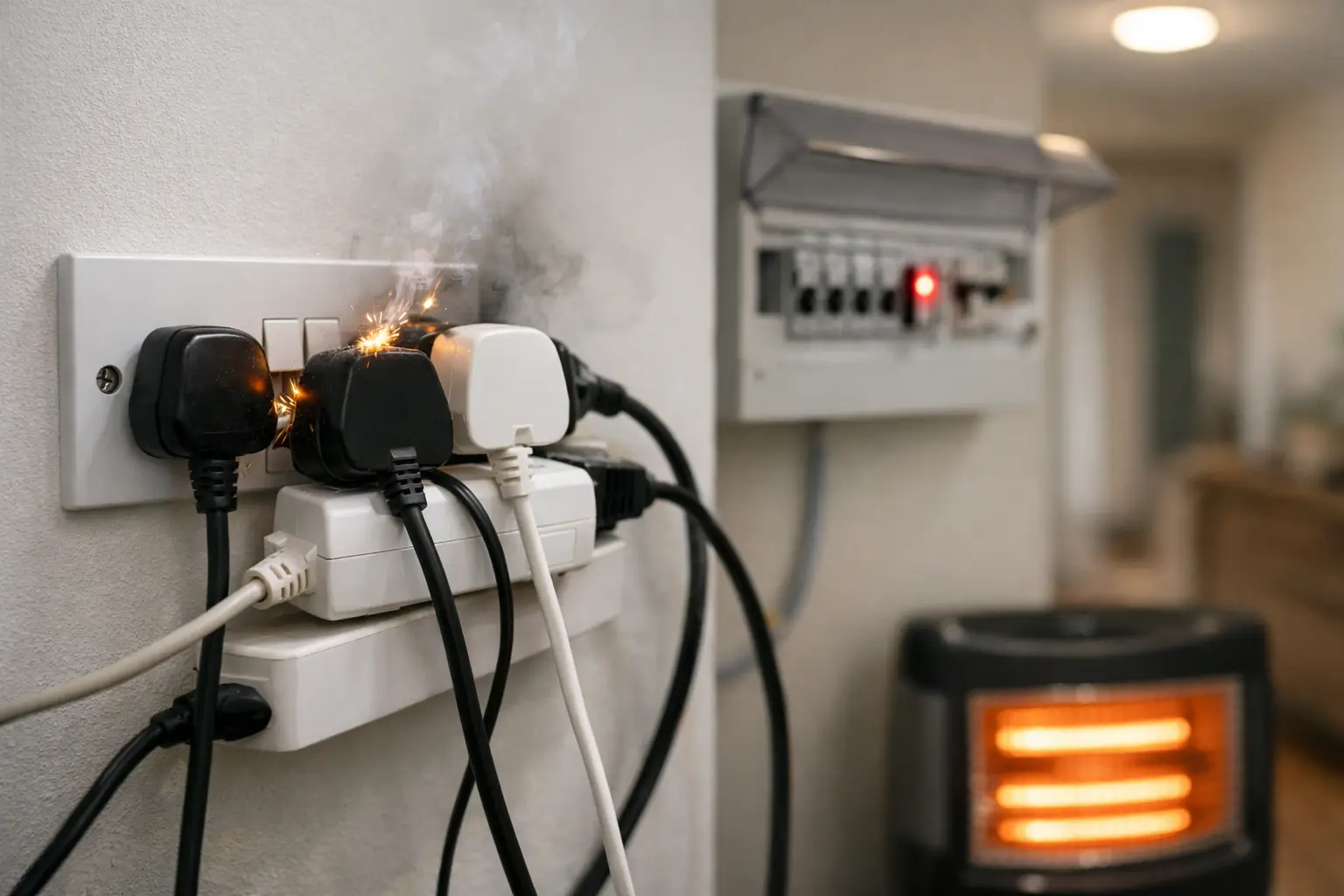
Look out for changes at sockets and switches too. A warm faceplate, a burning smell, crackling or buzzing, brown marks, melted plastic or a plug that fits loosely should be treated as urgent warning signs. Turn off the affected circuit at the consumer unit if it is safe to do so, stop using the socket and arrange for a qualified electrician to inspect it. Do not remove socket covers or attempt a repair yourself.
Other signs can be less dramatic. Lights may flicker or dim when a powerful appliance starts. Extension leads may become warm, and plugs can feel hot after use. Fuses in plugs may blow repeatedly. These do not automatically prove an overload, but they indicate that the installation needs attention.
The following situations deserve particular care:
- Several high-power appliances are supplied from one extension lead or multiway adaptor.
- A portable heater, electric radiator or heated airer is used on an extension lead rather than directly at a suitable wall socket.
- A circuit trips repeatedly after being reset, even when normal appliances are being used.
- You notice scorching, discolouration, a smell of burning or buzzing from a socket, switch or consumer unit.
Never cover extension leads with rugs or run them where they can be crushed by furniture. Heat cannot escape properly, and damaged cables can create a fire and shock risk.
Check demand safely without taking electrical risks
Start by making a note of what was running when the circuit tripped. This is often more useful than repeatedly switching the breaker back on. Was the oven on? Had someone plugged in a portable heater? Were the washing machine, tumble dryer and kettle all operating together?
Next, unplug or switch off appliances on the affected circuit. At the consumer unit, reset the tripped breaker once. If it stays on, reconnect appliances one at a time, allowing a short pause between each. If a particular appliance causes the circuit to trip, leave it unplugged and have the appliance checked or replaced. If the circuit trips only when several appliances run together, reduce the load and arrange for an electrician to assess whether the circuit arrangement is suitable for how you use the space.
Do not keep resetting a breaker that immediately trips. And do not replace a fuse with one of a higher rating to stop it blowing. Protective devices are there to protect the cable and reduce the risk of overheating. Increasing their rating without changing the circuit design can make a fault more dangerous, not less.
It is worth knowing the difference between a circuit breaker and an RCD, although you do not need to diagnose the fault yourself. A circuit breaker may trip because of overload or a short circuit. An RCD can trip when it detects current leaking to earth, which may point to a damaged cable, moisture or a faulty appliance. Both need sensible investigation, particularly if they keep operating.
Common problem areas in homes and rentals
Kitchens are frequent trouble spots because they combine high-power appliances with everyday convenience sockets. A modern kitchen may need dedicated circuits for fixed appliances, while additional sockets can reduce reliance on adaptors. Adding sockets is not merely about convenience when it removes unsafe extension-lead use.
Home offices are another growing pressure point. Computers and monitors use modest amounts individually, but printers, heaters, chargers and multiple devices can soon create a cluttered setup. Use good-quality, correctly rated extension leads only where necessary, avoid daisy-chaining one extension lead into another, and keep cables visible and undamaged.
Garages, lofts and outbuildings also deserve attention. These spaces often acquire freezers, tools, chargers and lighting over time, sometimes supplied from an old or improvised arrangement. Electrical work in these areas should be designed for the environment and properly protected, especially where damp, dust or outdoor use is involved.
For landlords, recurring tripping complaints should be dealt with promptly and recorded. An Electrical Installation Condition Report, commonly called an EICR, assesses the condition of the fixed installation and highlights defects or improvements needed for safety. It does not replace sensible day-to-day use, but it provides a clear picture of whether the property’s wiring and consumer unit remain suitable.
When an upgrade is the right answer
Reducing appliance use can be a short-term solution, but it is not always practical. If your household has changed, a kitchen has been refurbished, or you are regularly relying on extension leads because there are too few sockets, the electrical installation may no longer match the way you live.
An electrician can test the circuit, check connections, confirm the condition and rating of protective devices, and identify whether the problem is genuine overload, a faulty appliance or another fault. The solution may be as straightforward as replacing a damaged accessory. In other cases, it may involve adding a dedicated circuit, installing additional sockets, upgrading an older consumer unit or carrying out partial rewiring.
The right option depends on the property, the existing wiring and the expected load. A proper assessment is safer than guessing, and work should be completed in line with BS 7671 and current 18th Edition requirements. If you are planning a new kitchen, electric heating, a workshop or an EV charger, discuss the expected demand before installation rather than after nuisance tripping starts.
Act quickly on heat, smoke or repeated tripping
If you smell burning, see smoke, find a melted socket or hear persistent crackling, stop using the affected area immediately. If there is immediate danger, call the emergency services. Otherwise, isolate the circuit if you can do so safely and contact an emergency electrician. Keep everyone away from the affected socket, consumer unit or appliance until it has been checked.
For homeowners and landlords across Chester and the surrounding area, Gerrard’s Electrical Solutions can investigate persistent tripping and electrical faults with clear advice on what has caused the issue and what needs doing next. A tidy, properly tested repair is always preferable to living around a circuit that keeps telling you something is wrong.
Your electrics should support daily life without demanding workarounds. If a circuit is repeatedly tripping, warming up or forcing you to rely on adaptors, treat it as a practical safety issue and get the cause checked before it becomes a more serious fault.