

- October 20, 2026
- By
- Blog
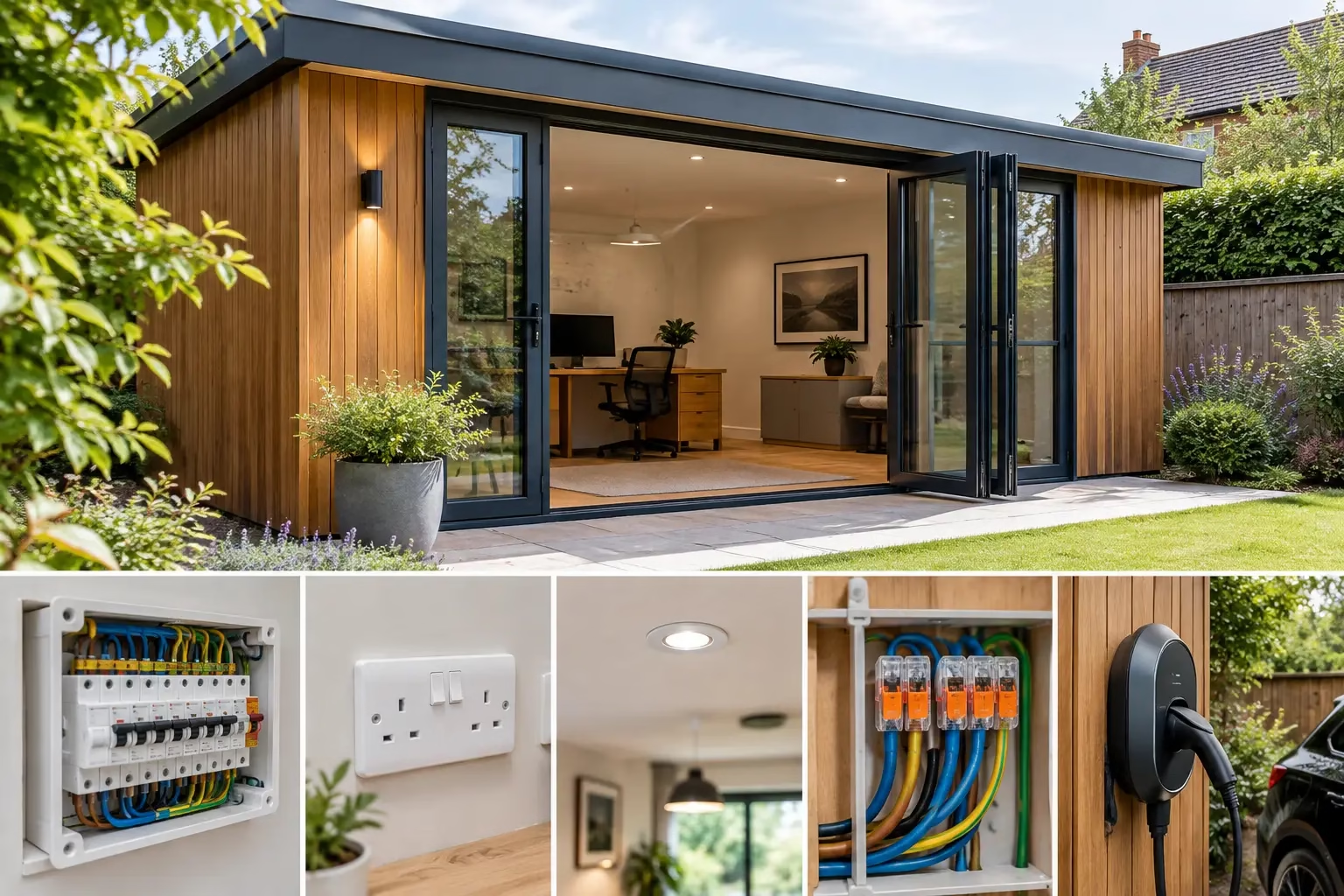
A garden office can look finished long before it is ready to use. The cladding may be fitted and the desk assembled, but Chester garden office electrics need careful planning if you want reliable power, safe heating, good lighting and no nuisance tripping once work begins. Running an extension lead across the lawn is not a solution for a building you will use every day.
A proper electrical installation gives your workspace the same practical standards as a room inside the house. It should be designed around how you work, installed to current BS 7671 requirements and tested before it is put into service. That means fewer compromises later, whether the building is used as a home office, studio, treatment room or a quiet place for the family to study.
Planning Chester Garden Office Electrics
The best time to think about electrics is before insulation, plasterboard and flooring go in. At that stage, cables can be routed neatly, socket positions can be agreed properly and future additions are much easier to allow for. Retrofitting is possible, but it can mean lifting finished surfaces or accepting visible containment.
Start with the equipment you expect to use. A laptop, monitor, printer and phone charger place a modest demand on an installation. Add an electric panel heater, air conditioning unit, kettle, underfloor heating, external lighting or a workshop bench and the design changes quickly. The question is not simply how many sockets you need. It is whether the supply, protective devices and cable size are suitable for the likely load.
It is sensible to allow more outlets than you currently need. Two double sockets by a desk may be enough for a simple office, while a larger building may benefit from sockets on more than one wall, a dedicated point for heating and provision for data equipment. This reduces the reliance on multiway adaptors and keeps cables off the floor.
The supply from the house
Most permanent garden offices are supplied by a dedicated cable from the main property, rather than from an existing outdoor socket circuit. The cable normally runs underground in a suitable route and may need mechanical protection, warning tape and a safe depth appropriate to the installation. Armoured cable is commonly used where it is buried or exposed outdoors, but the final specification depends on the route, cable length, load and earthing arrangement.
Longer runs deserve particular attention. Even where a cable appears large enough, voltage drop can affect performance at the far end of the garden. An electrician will calculate the design rather than make assumptions based on the size of the building alone.
The route should also be agreed before landscaping starts. A cable installed beneath a future patio, driveway or planted border may be harder to access if it ever needs repair. It is worth recording the route and retaining the installation paperwork for future owners, builders or gardeners.
Consumer Units, RCD Protection and Earthing
A small consumer unit in the garden office is often the clearest and most practical arrangement, especially where there are several circuits. It allows the lighting, sockets and fixed appliances to be protected separately. If a fault occurs on one circuit, the whole office does not necessarily lose power.
Modern installations should have appropriate RCD protection, often provided by RCBOs that protect individual circuits. These devices are designed to disconnect the supply rapidly where a fault could create a risk of electric shock or fire. They are a vital safety measure, but they are not a substitute for sound installation work or sensible use of electrical equipment.
Earthing is another part of the design that should never be guessed. A detached outbuilding may require a particular approach depending on the incoming supply, the cable used, the property’s earthing system and any conductive parts within or around the building. This is technical work, but the result should be straightforward for you: a safe installation that has been tested and clearly labelled.
For domestic work, Building Regulations requirements may also apply. Using a competent electrician means the work can be assessed, tested and certified correctly, with notification handled where it is required. Certificates are not just paperwork. They provide evidence that the work has been inspected and can be useful for insurance, property sales and future alterations.
Getting the Layout Right Inside the Office
A good garden office layout makes the room easier to use every day. Socket locations should follow the furniture plan, not simply sit wherever the first-fix cable happens to reach. Think about where the desk will face, where chargers will sit and whether you might rearrange the room in a year’s time.
Lighting deserves equal thought. One central pendant can leave a desk in shadow, particularly on darker winter afternoons. A combination of general lighting and focused task lighting usually works better. LED fittings keep energy use low and provide good light output, while dimmable options can make a compact office feel less harsh in the evening.
External lighting is useful too, particularly where the office is accessed after dark. A well-positioned light at the door and along the route from the house improves safety without flooding the garden with glare. PIR-controlled lighting can be convenient, although positioning matters. Poorly placed sensors can trigger constantly from passing pets, trees or neighbouring movement.
If the building will have a kitchenette, toilet or sink, electrical accessories must be selected and positioned with moisture in mind. The same applies to outdoor sockets, which need suitable weatherproof equipment and protection. These details are easy to overlook until the building is nearly complete, when changes become more disruptive.
Heating, Networking and Future-Proofing
Electric heating is a common choice for garden rooms because it is simple to control and does not require extending central heating pipework. However, it can be one of the largest electrical loads in the office. A small, well-insulated building may suit a panel heater, while an air conditioning system with heating capability may be more economical over time. The right answer depends on insulation, how often the room is occupied and your budget for installation and running costs.
Do not treat broadband as an afterthought. Wi-Fi may reach a garden office perfectly well, or it may become unreliable as soon as doors close and devices connect. For video calls and cloud-based work, a hard-wired data cable can be a worthwhile addition while the electrical supply route is being installed. Some customers also want provision for CCTV, an alarm, access control or smart heating controls.
Future-proofing does not mean installing every possible extra. It means considering sensible allowances before walls are sealed. A spare way in the consumer unit, a conduit for a data cable or a suitable route for a future air conditioning supply can save substantial disruption later.
Common Shortcuts That Cause Problems
The most common mistake is relying on a domestic extension lead for a permanent setup. Extension leads are not designed to run through walls, under floors or outdoors for months at a time. They can be damaged by doors, weather, foot traffic and garden tools, and overloaded adaptors increase the risk further.
Another issue is choosing the cable before deciding what the office will power. Cable type and size must be selected for the installation conditions, not just the purchase price. A cable that is unsuitable for burial, too small for the demand or poorly protected at the house end may create safety and reliability problems.
It is also unwise to assume an old consumer unit has enough capacity for a new outbuilding. The existing installation may need assessment first, particularly if there are signs of ageing wiring, limited protective devices or regular tripping. A garden office project can be the right time to address those wider issues rather than adding another demand to an already stretched installation.
Finally, avoid covering electrical work with finishes before it has been inspected and tested. Clear photos of cable routes are useful, but they do not replace proper testing. The installation needs to be verified with the correct equipment and issued with the appropriate certification once complete.
A Safer, More Useful Space From Day One
A professionally planned garden office should feel simple to use. The sockets are where you need them, the lights work well, the heating has a suitable supply and the consumer unit is accessible and clearly labelled. More importantly, the parts you cannot see – cable routing, earthing, protection and testing – have been dealt with properly.
Gerrard’s Electrical Solutions can assess a proposed garden office installation in Chester, explain the options in plain English and carry out work to current 18th Edition standards. The aim is not to overcomplicate a small building, but to make sure it is safe, compliant and ready for the way you actually intend to use it.
Before the first cable is installed, take a little time to plan for the coldest workday, the busiest desk setup and the equipment you may add later. That early thought is what turns a garden room into a dependable place to work.