

- September 23, 2026
- By
- Blog
A row of old halogen downlights can quietly add a noticeable amount to your electricity bill, particularly in kitchens, halls and living spaces where lights are used every day. The best energy saving lighting upgrades reduce that waste without leaving your home feeling dim, cold or inconvenient to use. The right choice depends on how each room is used, the condition of the existing wiring and fittings, and whether you want a simple lamp change or a longer-term improvement.
For homeowners and landlords, lighting is one of the most practical places to improve efficiency. Modern LED fittings use far less electricity than halogen or traditional filament lamps, last longer and give far better control over brightness and colour temperature. However, not every upgrade is as simple as swapping a bulb. Older dimmers, transformers, bathroom fittings and recessed ceiling lights all need checking before work begins.
Best Energy Saving Lighting Upgrades to Consider
Replace halogen lamps with quality LEDs
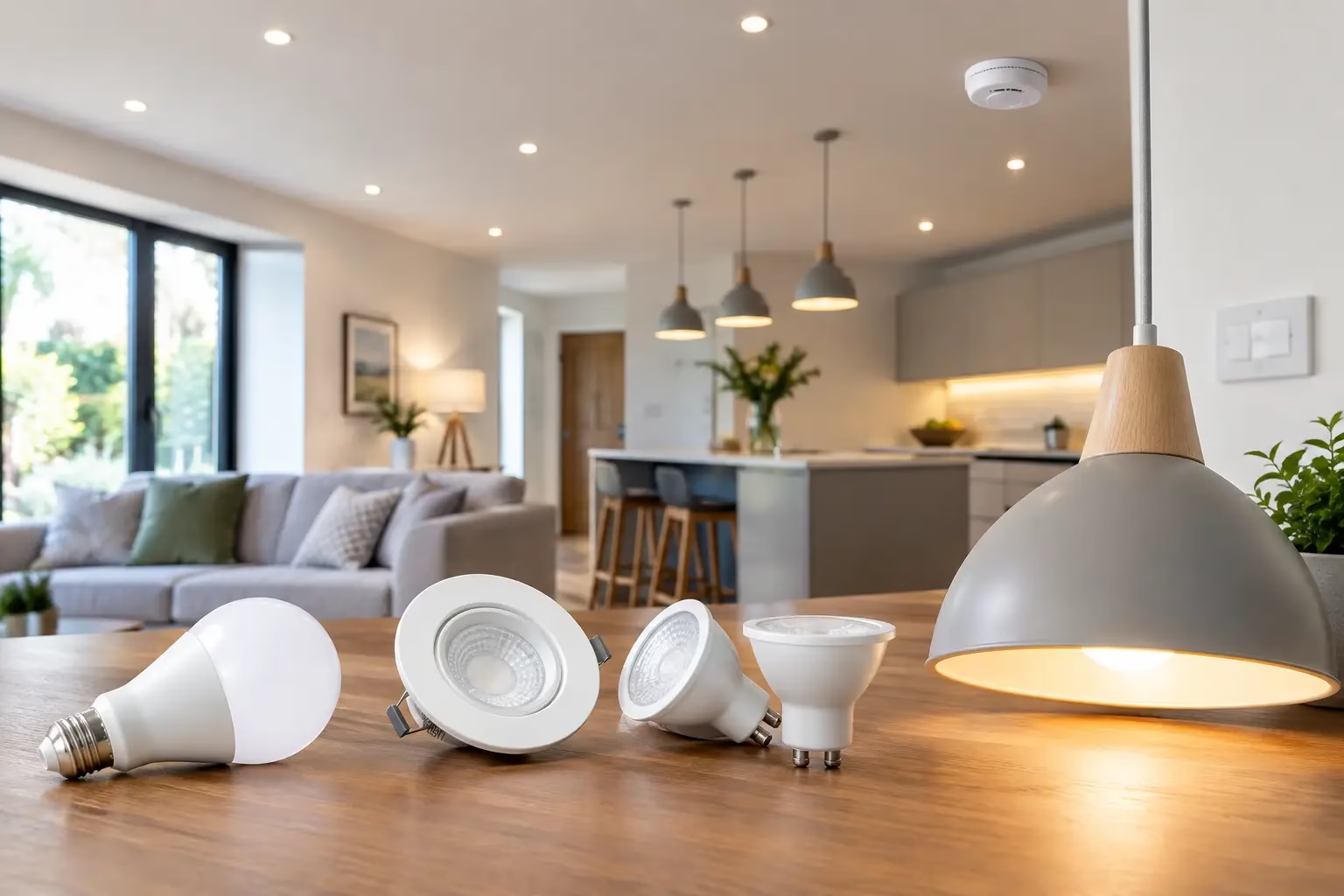
Replacing halogen lamps is usually the fastest route to lower lighting costs. A typical 50W halogen spotlight can often be replaced with an LED equivalent using around 5W to 7W. Multiply that saving across a kitchen ceiling with eight or ten fittings, and the difference becomes meaningful over a year.
Quality matters here. Cheap LED lamps can flicker, fail early or produce an uneven beam that makes a room look patchy. Look for lamps with a suitable beam angle for the space: a narrower beam works well for highlighting a worktop or feature, while a wider angle gives more even general lighting. Warm white is often preferred in lounges and bedrooms, whereas neutral white can suit kitchens, utility rooms and work areas.
If your existing fittings use transformers or low-voltage halogen lamps, compatibility must be checked. Some older transformers need a minimum load that LEDs do not provide, causing flickering or lamps that will not switch off properly. In those cases, replacing the transformer or upgrading the complete fitting is normally the sensible answer.
Upgrade recessed downlights, not just the bulbs
Older recessed downlights can lose heat into the ceiling void and may not be appropriately fire rated. Modern integrated LED downlights are more efficient and often provide a cleaner, more reliable result than continually replacing individual lamps.
For ceilings between floors, fire-rated downlights can help maintain the fire resistance of the ceiling where holes have been cut for fittings. This is particularly relevant in rental properties and homes with converted lofts or rooms above. The fitting should also be selected for the environment. A bathroom needs suitable IP-rated lighting, especially around the bath or shower, while a kitchen may benefit from fittings that are easy to clean and positioned to avoid shadows over preparation areas.
Integrated fittings do have a trade-off. When the LED module eventually fails, the whole fitting may need replacing rather than just a lamp. A good-quality fitting from a reputable manufacturer, correctly installed and suitably rated for the ceiling, is therefore worth the investment.
Fit LED strip lighting where task light is needed
Under-cupboard LED lighting is an efficient upgrade that also makes kitchens safer and easier to use. It puts light directly onto worktops, reducing the need to run brighter ceiling lighting for everyday tasks. The same approach can work in utility rooms, cupboards, wardrobes and home offices.
Well-fitted strip lighting should be concealed where possible, installed with an appropriate driver and protected from heat, moisture and accidental damage. It is not simply a decorative extra. Proper task lighting can make a small kitchen feel more usable while keeping energy use low.
Add smart controls and occupancy sensors
The bulb or fitting is only part of the saving. Controls stop lights being left on when they are not needed. Occupancy sensors are particularly useful in porches, hallways, garages, cloakrooms, communal areas and commercial spaces. They switch lights on when movement is detected and turn them off after a set period.
Smart switches, timers and app-controlled lighting can be useful in family homes too. You might schedule exterior lights to come on at dusk, turn off upstairs lighting from downstairs, or create simple routines for holidays. The most useful smart system is usually the one that remains easy to operate manually. Complicated controls that confuse visitors or other household members are rarely a good upgrade.
Before fitting smart switches, an electrician should confirm whether a neutral conductor is available at the switch position and whether the chosen equipment is compatible with your lighting load. Some systems work around this limitation, but the correct solution varies by property.
Improve exterior and security lighting
Exterior lighting is often left running longer than necessary, especially where older floodlights are controlled by a basic switch. LED security lights with a daylight sensor and adjustable motion detection can provide bright, targeted light only when it is needed.
Positioning matters as much as wattage. A poorly aimed floodlight can shine into neighbouring homes, create glare near paths or miss the area you actually need to see. For entrances, paths and side access, lower-level, well-directed lighting can be more welcoming and practical than one powerful fitting.
Any outdoor equipment needs to be suitable for external use and installed with appropriate protection against moisture and damage. If there are signs of cracked fittings, water ingress, tripping circuits or unreliable lights, treat it as an electrical repair issue rather than repeatedly changing lamps.
Start With How You Use Each Room
The most effective lighting plan is not the one with the lowest wattage everywhere. It is the one that gives enough light for the task, without wasting electricity. A bright, cool kitchen may be ideal for cooking but feel uninviting in a bedroom. Equally, dim ambient lighting may look attractive but is not enough for reading, shaving or preparing food safely.
Think in layers. General lighting illuminates the room, task lighting serves a specific activity, and accent lighting adds atmosphere or highlights a feature. Using separate circuits or controls for these layers lets you light only what you need. In a kitchen, for example, ceiling downlights, under-cupboard lighting and decorative pendant lights do not all need to be on at the same time.
Dimming can save additional energy when used properly, but LED lamps and dimmer switches must be compatible. An old dimmer designed for incandescent lamps can cause buzzing, flashing or a restricted dimming range. Replacing it with an LED-compatible dimmer is a small job that can make a major difference to reliability.
When a Lighting Upgrade Needs an Electrician
Changing a standard lamp is straightforward. Replacing fittings, adding new lighting points, altering circuits or installing bathroom and outdoor lighting is different. These jobs need proper assessment of the existing wiring, circuit loading, earthing and protective devices.
An electrician can also identify problems hidden above the ceiling, such as scorched terminals, loose connections, damaged insulation or unsuitable fittings installed too close to combustible materials. These faults may not be obvious until a light fails, a circuit trips or a burning smell develops.
For landlords, lighting works should support the wider duty to keep the electrical installation safe. An up-to-date EICR identifies issues with the fixed installation, while good maintenance prevents avoidable faults between inspections. Replacing old, unreliable fittings during planned maintenance is often less disruptive than waiting for a tenant to report a failure.
All fixed electrical work should be completed to the relevant requirements of BS 7671, with appropriate testing and certification where required. This is not paperwork for its own sake. It provides a clear record that the installation has been checked and that safety has been considered alongside energy efficiency.
A Sensible Order for Planning Upgrades
Start by identifying the lights used most often and the ones that still use halogen or filament lamps. These usually offer the quickest return. Next, look at areas where lights are frequently left on, such as hallways, garages and exterior spaces, as controls may save more there than a brighter fitting ever will.
Then consider the condition of the fittings and wiring. If downlights are ageing, damaged or causing repeated lamp failures, a full replacement may be better value than piecemeal repairs. If you are decorating, remodelling a kitchen or updating a consumer unit, it is also an ideal time to plan lighting circuits and switches properly rather than adding compromises later.
A clear, on-site assessment helps avoid buying equipment that is unsuitable for your property. Gerrard’s Electrical Solutions can advise on practical LED, sensor and smart-lighting options, then install and test the work cleanly and safely.
Good lighting should make your home safer, more comfortable and less expensive to run – without creating a new set of electrical headaches. Start with the rooms you use most, choose quality fittings suited to the job, and get any fixed wiring work checked by a competent electrician before the ceiling is closed up.