

- August 29, 2026
- By
- Blog
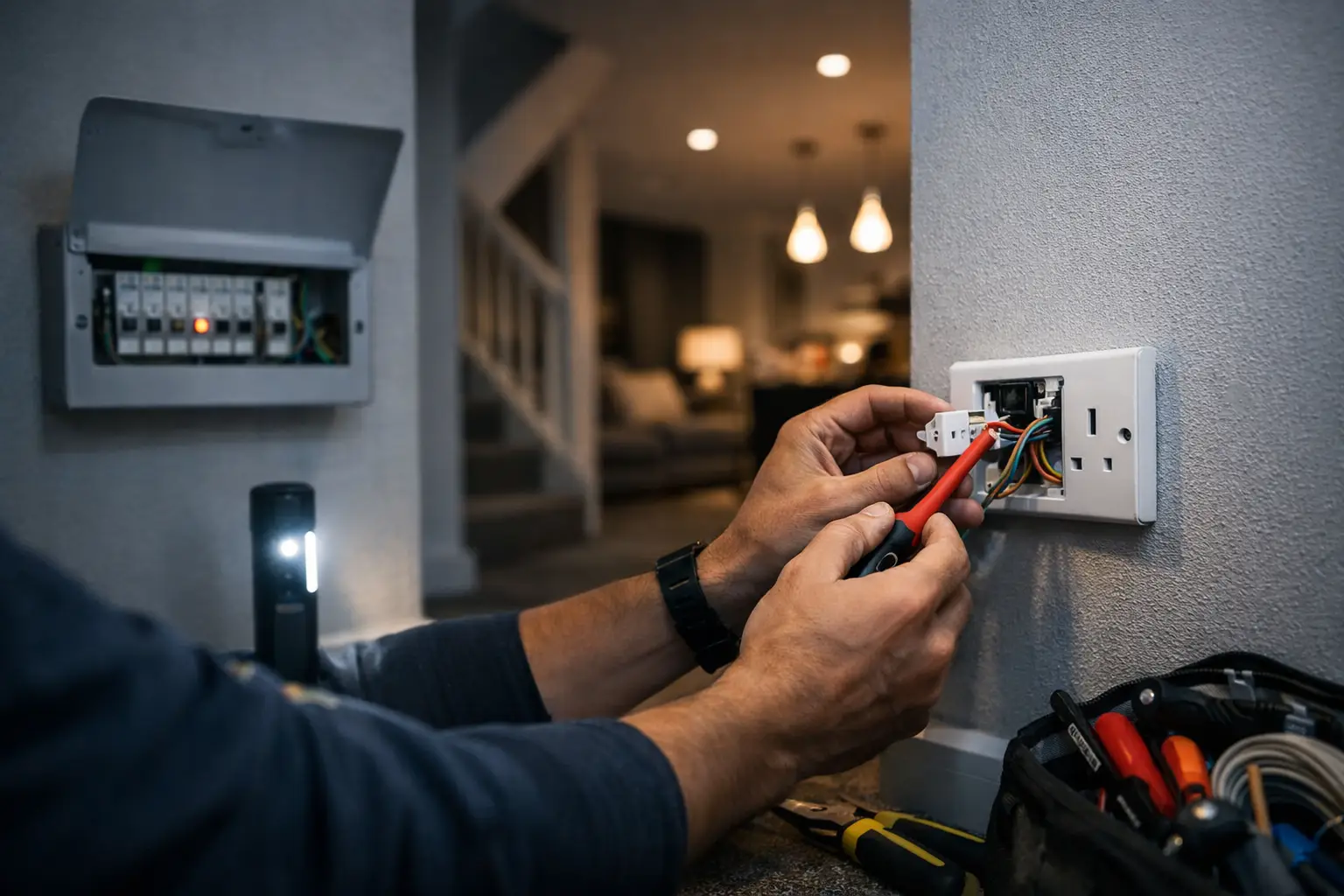
A circuit breaker trips at 11pm, the kitchen sockets suddenly go dead, or you notice a burning smell near the consumer unit. In those moments, an after-hours electrical repair guide should give you one thing above all else: a clear, safe next step. The priority is not getting every light back on immediately. It is protecting people, property and the electrical installation until a qualified electrician can assess the fault.
When an electrical fault is an emergency
Not every loss of power needs an urgent call-out. A single circuit that has tripped after a known appliance fault may be safely left off until morning, provided there is no sign of damage and essential services are unaffected. But some faults should never wait.
Treat the situation as urgent if you can smell burning, see smoke, hear buzzing or crackling from wiring or accessories, find scorch marks, notice a socket or switch is hot, or discover exposed cables. Repeated tripping that will not reset is also a warning that needs proper fault finding, especially if it affects lights, heating, refrigeration, alarms or essential equipment.
If there is fire, smoke, a serious electrical shock or immediate danger to life, call 999. Do not touch a person who may still be in contact with live electricity. Switch off the supply only if you can do so safely, then wait for emergency services.
For a wider local power cut, check whether neighbouring properties are affected before assuming the fault is inside your home. Your electricity network operator can advise on known outages through 105. If your neighbours still have power, the issue is more likely to be within your property and an emergency electrician may be needed.
What to do before an after-hours electrical repair visit
Start by making the area safe. Keep children, pets and anyone unfamiliar with the problem away from the affected room or appliance. If water is present near electrics – after a leak, flooding or an overflow – do not step into the area or touch switches, plugs or metal fittings. If it is safe to reach your consumer unit without entering the affected area, turn off the relevant circuit or the main switch. Otherwise, leave it alone and seek urgent help.
Next, unplug appliances from the affected circuit where it is safe to do so. This can include items such as a kettle, toaster, washing machine, charger or extension lead. Avoid pulling out a plug if it is damaged, hot, wet or showing signs of burning. Never handle an appliance while standing on a wet floor.
A quick check at the consumer unit can provide useful information. Modern consumer units have circuit breakers or RCBOs that move to the off position when they detect a problem. If one has tripped, you can switch it fully off and then attempt to reset it once. If it stays on, monitor the circuit and avoid reconnecting the appliance you suspect caused the trip. If it trips again, leave it off. Repeatedly forcing a breaker back on can worsen a fault or conceal the cause.
Take note of what happened just before the problem began. Perhaps the lights went out when the shower was switched on, sockets failed after the washing machine started, or a breaker tripped during heavy rain. These details help an electrician narrow down the cause quickly, which can reduce disruption and avoid unnecessary work.
What not to do during an electrical emergency
Electrical faults can feel frustratingly simple, particularly when the problem appears to be one socket or one appliance. That is exactly when unsafe shortcuts tend to happen. Do not remove socket fronts, light fittings or consumer-unit covers. Internal wiring can remain live even when part of the installation appears to be switched off.
Do not replace a circuit breaker with a higher-rated device, fit makeshift fuses, or tape over damaged cables. Avoid using extension leads to run power from another room as a permanent workaround, particularly for high-load appliances such as heaters, tumble dryers and microwaves. Overloaded extensions can create a second hazard while the original fault remains unresolved.
It is also wise not to assume a tripped breaker is a nuisance. Modern protective devices are designed to operate when they detect conditions that may be unsafe. The cause might be a faulty appliance, moisture ingress, damaged wiring, a loose connection or deterioration in an older installation. Only testing can establish which one it is.
Common faults that need professional fault finding
A qualified electrician will not simply reset a breaker and leave. Proper fault finding means identifying why the protective device operated, testing the circuit safely and repairing the underlying issue. The eventual repair depends on the fault, the age of the installation and the condition of the accessories and cables.
A circuit keeps tripping
This is often caused by an appliance with an internal fault, but it can also point to damaged cable insulation, water entering an outside fitting, a failed immersion heater or a problem within a lighting circuit. The pattern matters. A circuit that trips only when one item is used suggests a different route of investigation from a circuit that trips with nothing plugged in.
Sockets or switches are hot, loose or discoloured
Heat, discolouration and loose fittings can indicate poor connections or overloaded equipment. Stop using the accessory immediately. A loose socket can allow connections to deteriorate over time, creating heat and arcing behind the faceplate. It may be a contained repair, but it should be dealt with promptly rather than watched.
Lights flicker or part of the property loses power
Flickering may be linked to a failing lamp or incompatible dimmer, but widespread flickering or intermittent power needs closer attention. Loose connections, circuit faults and supply issues can all be involved. If lights dim when major appliances start, or several circuits behave unpredictably, arrange an assessment rather than relying on guesswork.
Water has affected electrics
Water and electricity need a cautious response. A leak from a bathroom, roof, pipework or appliance can travel along cable routes and affect fittings some distance away from where the water first appeared. The circuit may need to remain isolated until it has been inspected, tested and confirmed safe to use.
What an emergency electrician should explain
A good after-hours repair service brings clarity as well as a practical fix. You should be told what has been found, what has been made safe, and whether further work is recommended. Sometimes the safe solution is a same-night repair. In other cases, isolating a faulty circuit and returning with parts in daylight is the better option, particularly where replacement accessories, cable repairs or a consumer-unit upgrade are required.
Ask whether the repair has restored the circuit safely, whether an appliance should be replaced, and whether the fault points to a wider issue. Older fuse boards, recurring faults, damaged wiring and a lack of up-to-date inspection records may justify an Electrical Installation Condition Report. For landlords, this is especially relevant: electrical safety duties do not end because a fault has been temporarily resolved.
At Gerrard’s Electrical Solutions, emergency work is approached with the same care as planned work: clear advice, tidy workmanship and repairs completed in line with BS 7671 and current 18th Edition requirements. You should also expect transparent call-out information before work begins, so an urgent situation does not create unnecessary uncertainty.
Preparing for the electrician’s arrival
If it is safe, leave the affected circuit switched off and keep the consumer unit accessible. Make a note of any appliances that were in use and the sequence of events. If you have photos of scorch marks, water damage or a breaker position, they can be helpful, but never take them at the expense of safety.
Clear a path to the consumer unit, affected room and any relevant outdoor equipment. For landlords or businesses, let the electrician know whether tenants, customers or staff are on site and whether there are any access arrangements, alarms or vulnerable occupants to consider. A few accurate details help the visit start efficiently.
A late-night electrical problem is unsettling, but it does not need to become a bigger one. Isolate what you can safely, avoid DIY repairs, and arrange qualified help when there is any doubt. A safe home is worth more than a quick reset.
Comment (1)
Residential Electrical Services for Safer Homes - Gerrards Electrical Solutions
Oct 10, 2026[…] Chester, Gerrard’s Electrical Solutions provides responsive fault finding and repairs, including urgent out-of-hours call-outs when a loss of power or electrical concern cannot […]