

- November 29, 2026
- By
- Blog
A circuit trips once and resets without further trouble. A socket feels hot, a burning smell appears, or the lights flicker every time the kettle is switched on. These situations are not equal, and knowing the difference can prevent a minor fault becoming a serious safety risk. Professional electrical repairs are about more than getting the power back on. They identify what caused the problem, make the installation safe and help protect people, property and appliances.
For homeowners, landlords and businesses, the safest response is usually to stop using the affected circuit or item and arrange for a competent electrician to investigate. Electricity is not an area for trial and error, particularly where heat, damaged wiring or repeated tripping is involved.
What electrical repairs can involve
Electrical faults are often hidden behind walls, beneath floors or inside a consumer unit, so the visible symptom is not always the actual cause. A failed socket may be caused by a loose connection at the socket itself, but it could also relate to a damaged cable, overloaded circuit or fault elsewhere on the installation.
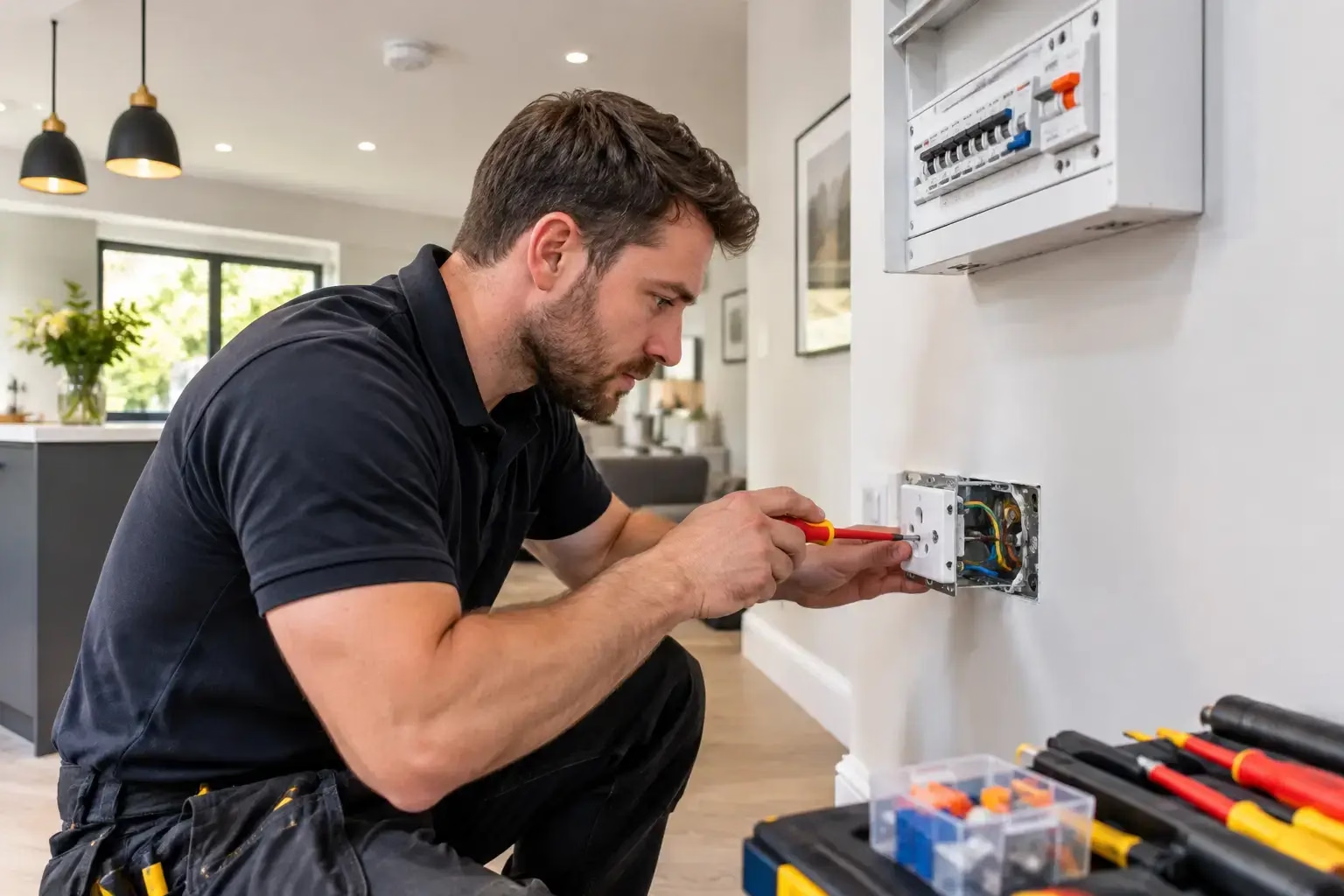
Common electrical repairs include replacing damaged sockets and switches, tracing nuisance tripping, repairing lighting faults, resolving issues with cooker and shower circuits, correcting unsafe connections and replacing worn or damaged accessories. In some cases, the right repair is not a like-for-like replacement. Ageing wiring, an outdated fuse board or signs of overheating may mean a larger upgrade is the safer and more cost-effective option.
A proper fault-finding visit should start with questions about what has happened, when the fault occurs and which appliances or circuits are affected. Testing then allows the electrician to narrow down the cause rather than simply resetting a breaker and hoping the issue does not return.
Warning signs that need urgent electrical repairs
Some faults can wait for a convenient appointment. Others need prompt attention, especially where there is a risk of electric shock or fire. Switch off the affected circuit at the consumer unit if it is safe to do so, keep people away from the area and avoid touching exposed or damaged electrical parts.
The following signs should never be ignored:
- A burning smell, smoke, scorch marks or discolouration around a socket, switch, light fitting or consumer unit.
- A socket, plug, cable or switch that feels unusually warm, buzzes, crackles or sparks.
- Circuit breakers or RCDs that trip repeatedly, particularly when the same appliance or circuit is used.
- Exposed wires, damaged cable insulation, water near electrical equipment or a visible fault after accidental damage.
- Flickering lights, intermittent power or electric shocks or tingles from fittings and appliances.
A breaker that trips is doing an important job. It has detected a fault condition and disconnected power to reduce danger. Repeatedly switching it back on without finding the cause can make matters worse, particularly if there is damaged cable insulation, moisture ingress or a faulty appliance involved.
If there is smoke, fire or an immediate danger to life, leave the property and contact the emergency services. For urgent electrical faults that do not require the fire service, an emergency electrician can isolate the issue, carry out safe repairs where possible and explain what further work is needed.
What to do before the electrician arrives
You do not need to diagnose the fault yourself. Useful information can, however, help make the visit quicker and more straightforward. Make a note of which rooms have lost power, whether a particular appliance was in use and whether the problem began after DIY work, a leak, a power cut or new equipment being installed.
Do not remove socket fronts, open the consumer unit or attempt to join damaged wires with tape. Do not continue using an appliance that has caused a circuit to trip until it has been checked. If water is present near electrical equipment, avoid the area and do not touch any switches or fittings.
Where safe, switch off and unplug affected appliances. If only one circuit is causing trouble, leaving it switched off can limit disruption while protecting the rest of the property. This is particularly helpful in a rental home, where clear information from the tenant can help an electrician attend with the right expectations and equipment.
Why proper fault finding matters
Electrical faults can be frustrating because they are often intermittent. A light may work for days before flickering again. A circuit may trip only when the washing machine and tumble dryer run together. Replacing the most obvious component without testing may provide a temporary fix, but it can also leave the original fault in place.
Professional fault finding uses appropriate inspection and testing to establish whether the issue is with a fixed installation, a circuit, an accessory or a connected appliance. The repair can then be targeted, explained clearly and completed in line with BS 7671 and current 18th Edition requirements where applicable.
There is a practical cost benefit too. A transparent call-out and a methodical diagnosis can be better value than repeated visits for the same recurring problem. It also gives property owners a clear record of what was found, what was repaired and whether any recommended improvement should be planned.
When a repair becomes an upgrade
Not every old electrical installation needs a full rewire. Equally, repeated repairs are not always the sensible long-term answer. The right approach depends on the condition of the wiring, the age and capacity of the consumer unit, the number of circuits, the intended use of the property and the results of testing.
For example, a modern consumer unit with RCD protection can provide an important safety improvement where an older fuse board no longer offers suitable protection. Additional sockets may reduce reliance on extension leads, while new lighting can improve safety in kitchens, bathrooms, stairways and external areas. In older homes, damaged or deteriorating cables may justify partial or full rewiring rather than isolated repairs.
An electrician should be honest about that distinction. If a straightforward repair will safely solve the fault, that should be clear. If testing shows a broader issue, you should receive plain-English advice on the options, likely disruption and priorities rather than pressure to approve unnecessary work.
Electrical repairs for landlords and businesses
Landlords have a duty to maintain electrical installations in a safe condition, and a prompt response to reported faults protects tenants as well as the property. A broken light may be inconvenient; a damaged socket, recurring RCD trip or signs of overheating require faster action. Electrical Installation Condition Reports also help identify deterioration or non-compliance before a fault becomes an emergency.
For commercial premises, electrical downtime can affect staff, customers, security systems, refrigeration, lighting and essential equipment. The priority is often to isolate the fault safely, restore suitable power where possible and arrange any follow-on work with minimal disruption. Clear communication matters, particularly where repairs affect tenants, trading hours or shared areas.
Gerrard’s Electrical Solutions provides responsive repair and fault-finding support across Chester and nearby areas, with straightforward advice and tidy, safety-focused workmanship.
Reducing the chance of future faults
You cannot prevent every electrical problem, but a few habits make faults less likely. Avoid overloading extension leads, replace damaged appliance leads promptly and use outdoor-rated equipment where it is exposed to the weather. Do not ignore loose sockets, flickering lights or switches that have started to feel warm.
If your home is being extended, renovated or fitted with a new kitchen, consider the electrical work early. Planning enough sockets, dedicated circuits for high-load equipment, suitable lighting and modern protection can avoid the need for disruptive alterations later. Landlords and owners of older properties should also consider periodic inspection, especially where the installation’s history is unclear.
When something electrical does not look, sound or smell right, trust that instinct. Turning off the affected circuit and getting a competent electrician to investigate is a small decision that can protect your home, your tenants and everyone who uses the property.