

- November 27, 2026
- By
- Blog
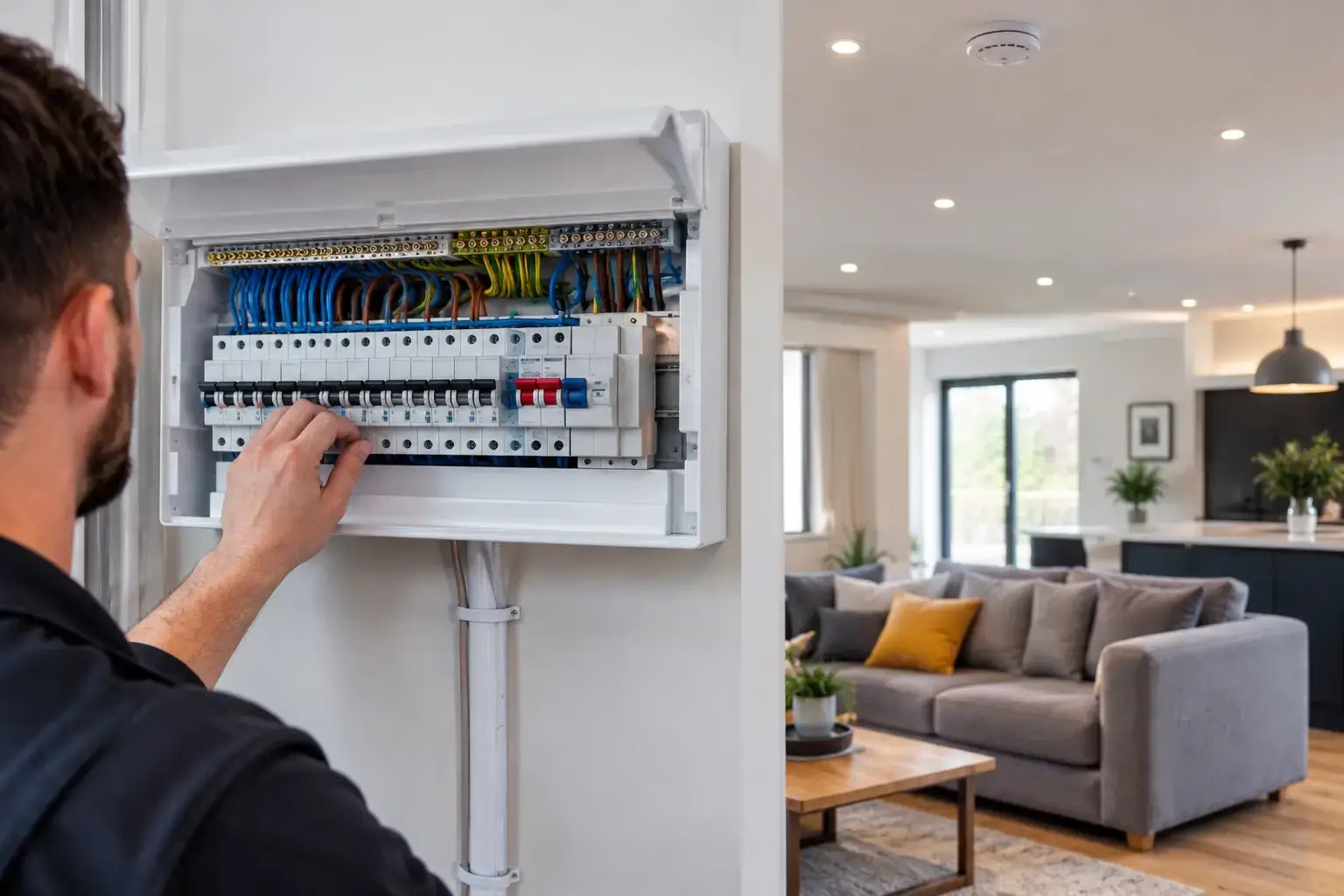
A consumer unit is easy to ignore until the power trips, a socket stops working or you notice an old-style fuse board with wire fuses. So, what is a consumer unit? It is the main electrical safety panel in your property. It receives electricity from the meter and distributes it safely to separate circuits for lights, sockets, the cooker, shower and other fixed equipment.
Often called a fuse board or fuse box, a modern consumer unit does far more than simply stop a circuit from overloading. It monitors for electrical faults, helps reduce the risk of electric shock and can limit damage caused by certain faults. If yours is old, damaged or frequently tripping, it is worth having it assessed by a competent electrician rather than resetting it repeatedly and hoping for the best.
What is a consumer unit designed to do?
Your consumer unit divides your installation into individual circuits. This means a fault on one circuit, such as a problem with a kitchen socket, should not normally cut power to the entire house. The affected circuit switches off while other circuits can remain in service.
Inside the unit are protective devices selected to suit the wiring and the purpose of each circuit. They are there to disconnect the supply quickly when they detect a potentially dangerous condition. This protects the cable hidden in walls and floors, your appliances and, most importantly, the people using the property.
The main switch allows the electricity supply to the whole installation to be isolated. This is useful during electrical work or in an emergency, but it should not be used as a substitute for finding and repairing a fault.
The main parts of a modern consumer unit
Consumer units vary by property, but most modern installations contain a combination of the following components.
Main switch
The main switch turns off the supply to all circuits within the consumer unit. It does not remove power from the incoming supply before the meter, so any work inside or around electrical equipment still needs to be carried out safely by a qualified electrician.
Circuit breakers
Miniature circuit breakers, usually called MCBs, protect individual circuits from overloads and short circuits. For example, plugging too much high-powered equipment into one circuit may cause its breaker to trip. The rating of each breaker must match the cable, circuit design and intended use. Fitting a larger breaker to stop it tripping can create a serious fire risk.
RCDs and RCBOs
A residual current device, or RCD, is designed to disconnect the supply when it detects current leaking to earth. This may happen if damaged equipment, faulty wiring or a person comes into contact with a live part. RCD protection is a key part of modern electrical safety, but it does not make unsafe work safe.
An RCBO combines RCD protection and overcurrent protection in one device for an individual circuit. This can offer better fault separation. If one circuit develops a fault, an RCBO arrangement is less likely to turn off several other circuits at the same time. It can cost more than a basic split-load board, but the added convenience and resilience are often worthwhile in a home or rental property.
Surge protection
Some consumer units include a surge protection device, known as an SPD. It helps protect sensitive electrical and electronic equipment from transient voltage surges, which can be caused by issues on the supply network or electrical activity within the installation. Whether it is needed depends on the property, the equipment in use and the assessment made during design.
Labels and a circuit schedule
A properly installed consumer unit should be clearly labelled. You should be able to identify which switch controls the upstairs lights, kitchen sockets or other circuits without guesswork. Clear labelling saves time during a fault and helps keep everyone safer.
Why do consumer units trip?
A tripped breaker is doing its job by disconnecting a circuit when it detects a fault or abnormal demand. The cause could be as simple as a faulty kettle or as serious as damaged wiring, water ingress or a loose connection.
If one circuit trips, switch off or unplug appliances on that circuit before trying to reset the breaker once. If it holds, reconnect items one at a time to identify whether an appliance is the cause. If the breaker trips again, will not reset, or there are signs of overheating, stop using the circuit and arrange for fault finding.
Never force a breaker into the on position, replace it with a higher-rated device or bypass safety equipment. A burning smell, crackling, buzzing, scorch marks or an electric shock should be treated as urgent warning signs. Turn off the supply if it is safe to do so and call an emergency electrician.
Older fuse boards versus modern consumer units
Many older properties still have rewireable fuses, cartridge fuses or consumer units with limited RCD protection. Age alone does not automatically mean an installation is unsafe, and a replacement should not be recommended without looking at the condition of the wider electrical installation.
That said, older boards may not provide the level of protection expected in a modern home. They can also be difficult to test, poorly labelled or unable to accommodate new circuits for an electric shower, induction hob, EV charger, garden power, security system or smart home equipment.
A modern metal consumer unit with correctly selected protective devices can improve safety and make faults easier to isolate. However, replacing the board is not a cosmetic upgrade. It can reveal faults in older wiring that were previously hidden, such as poor connections, inadequate earthing or circuits that do not meet current requirements. A competent electrician will test the installation and explain any remedial work before, during or after the upgrade.
When should you consider an upgrade?
An Electrical Installation Condition Report, or EICR, is often the best starting point. It assesses the condition of your fixed wiring and identifies defects, deterioration or non-compliance that may require attention. For landlords, it also provides a clear record of the installation’s condition and any work needed to maintain safe accommodation.
You may also need an upgrade if your consumer unit has no RCD protection where it should be provided, has damaged or obsolete parts, regularly trips without an obvious appliance fault, or lacks capacity for planned electrical work. New extensions, kitchen refurbishments and major rewiring projects are common points at which the existing board needs reviewing.
A consumer unit should not be upgraded simply because it looks old. Equally, a neat-looking board is not proof that the wiring behind it is safe. The right decision depends on test results, the age and condition of the installation, how the property is used and any changes you are planning.
Can you replace a consumer unit yourself?
No. Consumer unit replacement is complex electrical work with significant safety and compliance responsibilities. It requires inspection, testing, correct circuit identification, suitable protective-device selection and certification. It may also require notification under Building Regulations in England and Wales.
The job is not complete when the new board is fixed to the wall. Each circuit needs to be tested to confirm it is safe and operating as intended. Work should be completed in line with BS 7671, the current 18th Edition Wiring Regulations, and documented correctly. You should receive electrical certification and clear guidance on operating and testing your new equipment.
What to expect from a professional replacement
Before replacing a consumer unit, an electrician should discuss your current concerns, the circuits in your property and any future plans. They should inspect and test the installation, explain what needs doing in plain English and provide a clear quotation rather than leaving you guessing about costs.
There will usually be a planned power outage while the work is completed and tested. Good preparation matters: charge mobile phones, plan around refrigeration where practical and make arrangements for any equipment that must remain powered. Once finished, the electrician should label the circuits, explain the new devices and leave the work area tidy.
For homeowners and landlords around Chester, Gerrard’s Electrical Solutions can assess an existing fuse board, investigate persistent tripping and provide consumer unit upgrades completed to current standards. If a circuit is repeatedly tripping or you have noticed signs of overheating, act early – a prompt inspection is far safer than waiting for a small electrical fault to become a major problem.