

- November 23, 2026
- By
- Blog
A landlord compliance example is most useful when it reflects what happens in a real rental property, not just a list of rules. Picture a flat between tenancies: the previous occupier mentioned a socket that became warm when charging a phone, the consumer unit is older, and the current Electrical Installation Condition Report (EICR) is approaching its expiry date. The right response is not to wait for a complaint. It is to arrange an inspection, act on the findings and keep clear evidence that the property is electrically safe.
For landlords in England, electrical safety is a legal duty as well as a sensible way to protect tenants, property and rental income. A safe, well-maintained installation reduces the chance of shocks, fires, repeated call-outs and stressful last-minute repairs.
A practical landlord compliance example
Let us use a two-bedroom rental house in Chester as an example. The landlord has owned the property for several years and has an EICR completed nearly five years ago. A new tenancy is due to begin in three weeks.
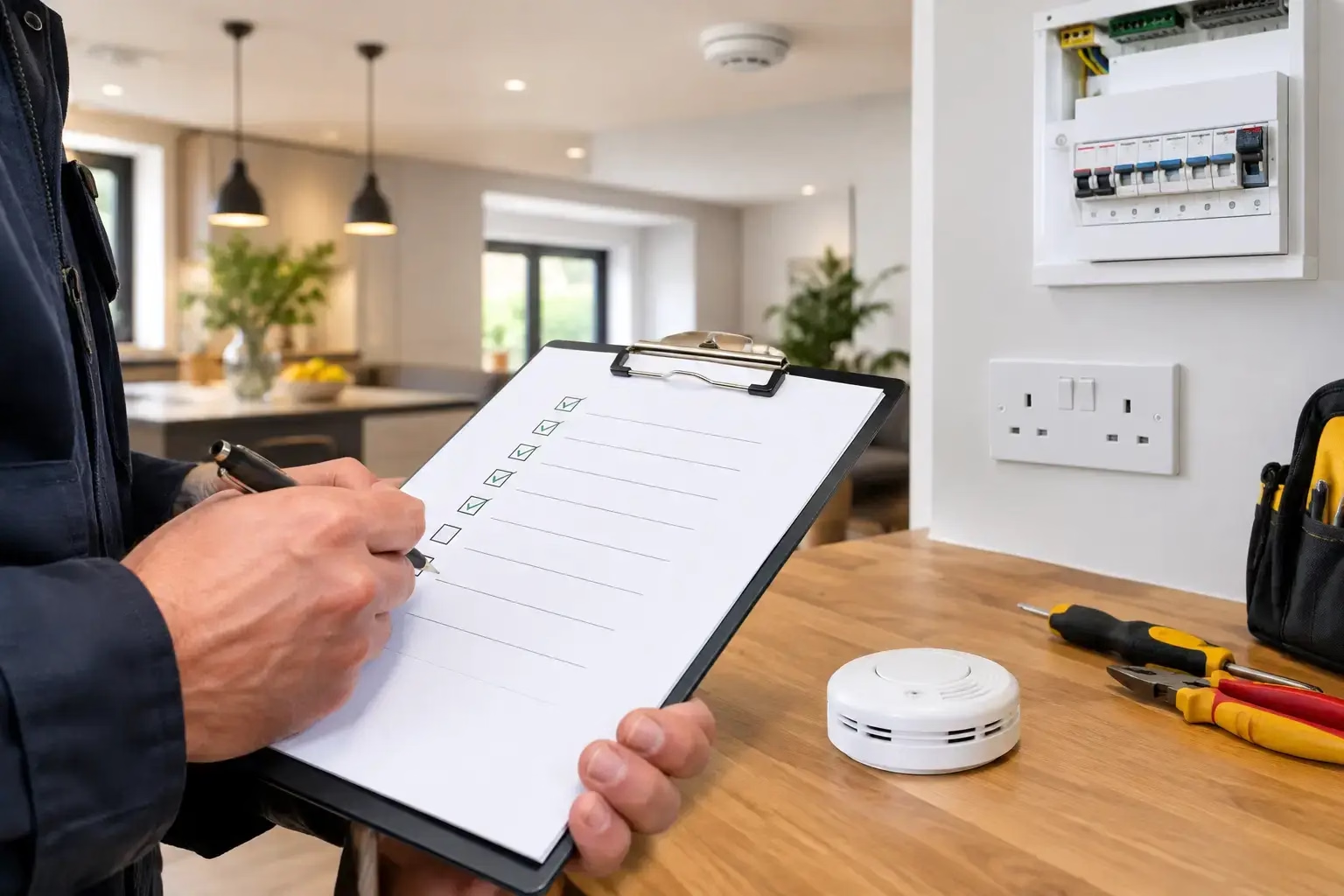
The landlord books a qualified electrician to carry out a new EICR before the incoming tenant moves in. The inspection covers the fixed electrical installation, including the consumer unit, circuits, sockets, switches, lighting points, earthing and bonding. It is not simply a quick look at the fuse board. Testing helps identify faults that may not be obvious during normal use.
The report identifies two observations. One is coded C2 because a circuit requires urgent improvement to meet safety requirements. The other is coded C3, meaning an improvement is recommended but not required for the installation to be considered satisfactory. The electrician explains the findings in plain English, provides a quote for the C2 remedial work and completes it promptly.
Once the repair has been completed, the landlord receives written confirmation that the required work has been carried out. The EICR and remedial-work documentation are then given to the incoming tenant before they occupy the property. Copies are stored securely with the tenancy records.
That is the practical difference between treating compliance as a box-ticking exercise and managing a safe rental properly. The issue was found, made safe and documented before it could affect a tenant.
What electrical compliance requires in England
Under the Electrical Safety Standards in the Private Rented Sector (England) Regulations 2020, landlords must ensure that the electrical installation is inspected and tested by a qualified and competent person at least every five years. An inspection may be needed sooner if the report recommends a shorter interval or if there is a reason to believe the installation may be unsafe.
Landlords must provide a copy of the EICR to existing tenants within 28 days of the inspection. New tenants must receive it before they move in. If the local authority requests it, the report must be supplied within seven days.
Where the report identifies remedial work or further investigation, the landlord must ensure it is completed within 28 days, or within the period specified in the report if that is shorter. Written confirmation of the completed work should then be provided to the tenant and, if requested, the local authority.
These requirements apply to the fixed installation. Portable electrical appliances supplied with a furnished property are a separate consideration. Formal PAT testing is not a blanket legal requirement for every landlord, but supplied appliances must be safe. Regular visual checks and sensible testing where appropriate are good property management.
Rules and responsibilities can differ elsewhere in the UK, so landlords with properties outside England should check the requirements that apply to that location.
Understanding the EICR codes
An EICR can feel technical, but the outcome is straightforward. The report will generally be marked satisfactory or unsatisfactory. An unsatisfactory result does not automatically mean a property is unlettable forever. It means issues have been found that need the right action within the required timescale.
A C1 observation indicates danger is present and immediate action is needed. The electrician may make the issue safe during the visit where possible. A C2 observation means potentially dangerous and requires urgent remedial work. FI means further investigation is needed without delay because the cause of a possible issue cannot be confirmed during the inspection.
A C3 observation is a recommended improvement. It does not, on its own, make an EICR unsatisfactory. For example, an older installation may be safe but would benefit from an upgrade to align more closely with current standards. The condition, age and design of the property all matter, which is why decisions should be based on the report rather than assumptions.
Do not confuse an EICR with a full maintenance plan
An EICR is essential, but it is a periodic assessment rather than a promise that nothing can go wrong between inspections. Tenants should know who to contact if a circuit trips repeatedly, a socket is damaged, a light fitting is loose or there is a burning smell.
Landlords should take reports seriously and act promptly. A tenant may notice a problem long before the next scheduled inspection. Ignoring a message about sparking, heat, buzzing or an electric shock can turn a relatively contained repair into an emergency.
The same applies after alterations. If a kitchen is refitted, an electric shower is installed, or extra sockets and lighting are added, use a competent electrician and retain the relevant certificates. Electrical work should comply with BS 7671, the current 18th Edition Wiring Regulations, and any applicable building-control requirements.
Records make compliance easier to prove
Good records protect everyone when questions arise. Keep the current EICR, previous reports, certificates for new installation work, invoices for remedial repairs and confirmation that tenants received required documents. A simple folder for each property, kept digitally and backed up, is usually enough.
It also helps to record the date an EICR is next due. Do not leave the booking until the final week. Access arrangements can take time, and an unsatisfactory report may require repairs before a new tenancy starts. Planning ahead gives you choice over appointment times and avoids rushed decisions.
For a portfolio landlord, consistency matters. Use the same process for every property: check the due date, arrange inspection, review the findings, approve necessary work, issue documents and log the next review. That approach is easier for managing agents and far less likely to leave a gap in your paperwork.
A sensible pre-tenancy electrical check
Before handing over keys, it is worth carrying out a practical visual check even where the EICR remains in date. Look for cracked sockets, loose faceplates, damaged leads on supplied appliances, missing light covers, exposed cables and signs of overheating around plugs or switches. Check that smoke and carbon monoxide alarms are present and working in line with the requirements for the property.
This is not a substitute for electrical testing, and landlords should not remove covers or attempt repairs themselves. It is a quick way to spot visible damage caused during the previous tenancy and arrange professional attention before the next tenant arrives.
Take meter readings, note the condition of supplied appliances and provide tenants with a clear route for reporting faults. Small details make a difference: tenants are more likely to report an issue early when they know it will be handled fairly and without delay.
When an urgent electrician is the right call
Some faults cannot wait for a routine appointment. Burning smells, scorch marks, sparking, repeated tripping, electric shocks, water near electrical equipment or a loss of power affecting essential systems all need urgent attention. If there is immediate danger, switch off the supply if it is safe to do so and seek emergency help.
For landlords across Chester and the surrounding area, Gerrard’s Electrical Solutions can inspect faults, complete EICRs and carry out required remedial work with clear advice on what has been found and what needs doing next. A fixed plan for routine compliance, backed by responsive help when something goes wrong, keeps tenants safer and protects the property you have worked hard to build.