

- August 11, 2026
- By
- Blog
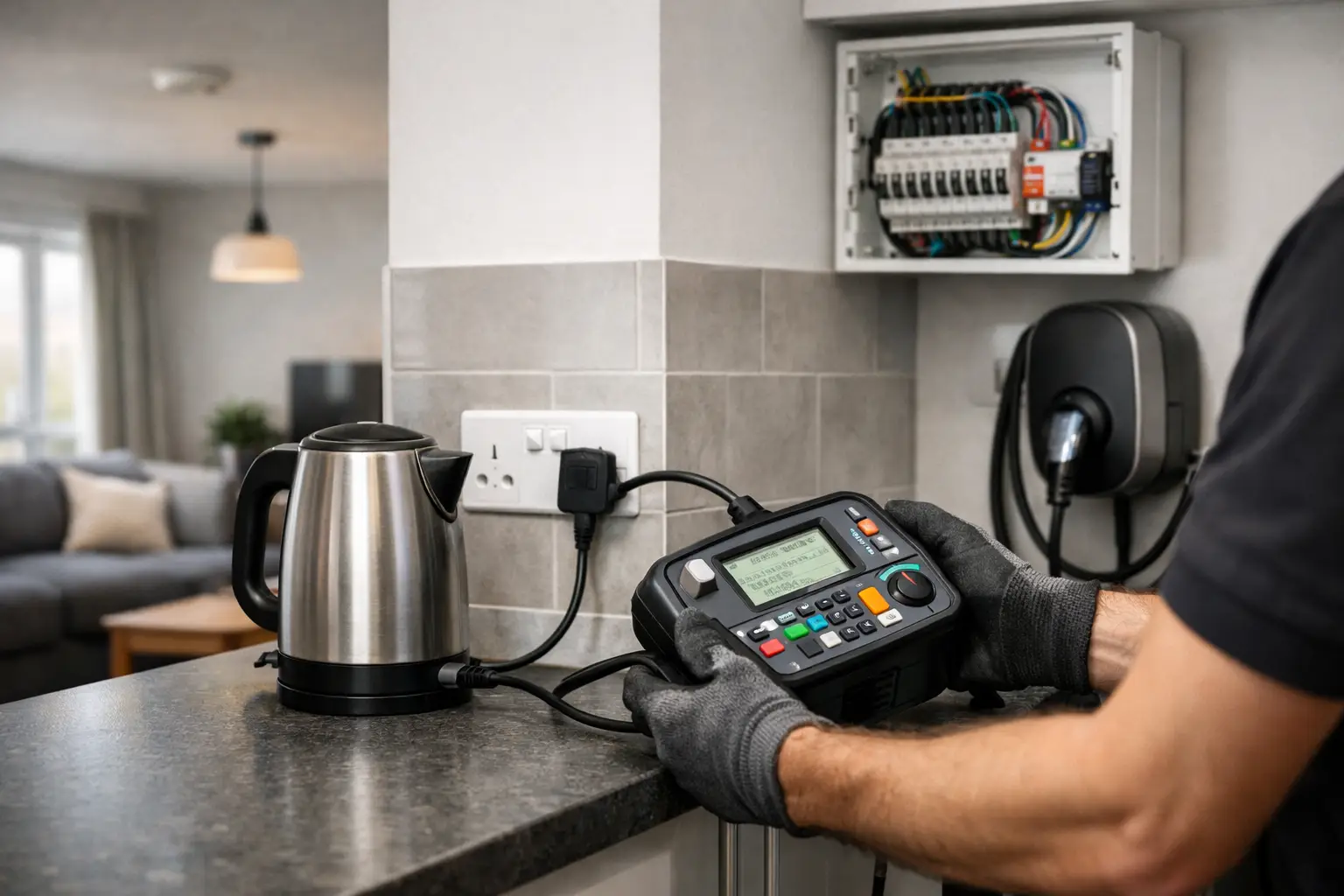
A kettle with a split flex, a damaged extension lead behind a television or a loose plug on a supplied washing machine can all turn a straightforward tenancy into a serious safety issue. So, do landlords need PAT testing? In most rental properties in England, there is no specific law saying every portable appliance must receive an annual PAT test. However, landlords are responsible for ensuring electrical equipment they provide is safe, and PAT testing can be a sensible way to demonstrate that you have taken reasonable steps.
The key is to understand what needs checking, how often, and where PAT testing fits alongside your other landlord electrical responsibilities. It is not a substitute for an EICR, and a sticker on an appliance is not a guarantee of safety.
Do landlords need PAT testing by law?
PAT stands for Portable Appliance Testing. Despite the name, it is not simply one test. A proper process usually begins with a visual inspection, followed by electrical tests where appropriate. It may identify damage to leads, plugs and casings, as well as faults that are not visible from the outside.
For private landlords, PAT testing is not generally a standalone legal requirement with a fixed annual deadline. The law requires the electrical installation in a rented home to be safe, while landlords also have wider responsibilities to provide safe appliances and equipment where these are included with the tenancy.
That means a landlord who supplies a fridge, cooker, microwave, lamps, vacuum cleaner or extension lead should make sure it is safe to use. Keeping a record of inspections and testing is good evidence of sensible property management if a problem is later reported.
There are circumstances where a more formal PAT programme may be required. Your insurer may set conditions, a local authority may include requirements within an HMO licence, or the property may have communal areas and landlord-provided equipment that receives heavier use. Always check the terms that apply to your particular property rather than assuming one approach suits every tenancy.
PAT testing and an EICR are different jobs
This is where many landlords get caught out. An Electrical Installation Condition Report, or EICR, looks at the fixed wiring and equipment in the property. This includes the consumer unit, sockets, light fittings, switches, earthing and bonding. In England, private rented properties normally need a satisfactory EICR at least every five years, or sooner if the report recommends it.
PAT testing looks at plug-in appliances. A satisfactory EICR does not confirm that a supplied toaster or washing machine is safe, just as a passed PAT test does not confirm that the wiring behind a socket is in good condition.
Both checks can be useful, but they answer different questions:
- An EICR asks whether the fixed electrical installation is safe for continued use.
- PAT testing asks whether individual portable or plug-in appliances are safe to use.
- Visual checks help spot obvious damage between formal inspections.
If a tenant reports sockets that feel hot, repeated tripping, a burning smell or flickering lights, do not wait for either scheduled check. Those are fault-finding issues that need prompt attention from a competent electrician.
Which appliances should a landlord check?
Focus on anything you own and leave for the tenant’s use. Typical examples include white goods, freestanding lamps, portable heaters, kitchen appliances, extension leads, multi-way adaptors, vacuum cleaners and supplied entertainment equipment.
A built-in electric oven or hard-wired extractor fan is not normally a PAT item. It forms part of the installation and should be considered through routine maintenance and the EICR process. A plug-in washing machine may be tested as a portable appliance, although its socket outlet and circuit remain part of the fixed installation.
Landlords are not normally responsible for testing a tenant’s own belongings. That said, it is worth encouraging tenants to report damaged sockets, plugs or appliances straight away and to avoid overloading extension leads. Clear communication makes the property safer and can prevent a small defect becoming an emergency call-out.
How often should landlords arrange PAT testing?
There is no universal annual testing rule for domestic rentals. The right interval should be based on risk. An appliance used occasionally by one careful household does not face the same wear as equipment in a shared house with frequent tenant changes.
As a practical approach, carry out a visual inspection of landlord-supplied appliances at the start of every new tenancy and during planned property visits. Look for cracked casings, damaged flexes, loose plugs, scorch marks, bent pins and signs of overheating. Remove any suspect appliance from use until it has been checked or replaced.
Formal inspection and testing is often arranged between tenancies, particularly for furnished lets or properties where appliances are supplied as part of the rental. More frequent checks can be appropriate for HMOs, communal areas, older appliances and items that receive heavy use. New, good-quality appliances in low-use settings may need less frequent testing, provided they are visually checked and properly maintained.
The best schedule is one you can justify. A competent electrician can advise on a sensible testing frequency after considering the property, the equipment supplied and how it is used.
What a useful PAT record should show
A PAT label is helpful because it identifies the appliance and the date it was checked, but the test record matters more. It should make clear what has been inspected, whether it passed or failed, the date of the check and when the next review is recommended.
Keep the record with your other tenancy safety documents, including the EICR, gas safety paperwork where applicable, appliance manuals and repair records. If an appliance fails, record what happened next. Was the plug replaced, the appliance repaired by a suitable person, or the item removed and replaced? A clear paper trail shows that safety concerns were dealt with rather than ignored.
Do not rely on a previous landlord’s label when buying a tenanted property or inheriting appliances after a change of management. Check the condition, verify the records and arrange testing where there is any uncertainty.
Reducing appliance risks between inspections
Testing is only one part of keeping a rental property safe. Buying reputable appliances, following manufacturer instructions and replacing worn items before they become unreliable all make a difference. Avoid leaving cheap multi-way adaptors and extension leads as a permanent answer to too few sockets. If a property genuinely needs more outlets, a properly installed additional socket is safer and more practical.
It also helps to give tenants simple advice at move-in: do not use appliances with damaged leads, do not run cables under rugs, avoid daisy-chaining extension leads, and report electrical concerns promptly. Tenants should never attempt electrical repairs themselves.
For furnished properties, an inventory with photographs can support this process. It provides a useful baseline for the condition of supplied electrical items at the beginning and end of each tenancy.
When to call an electrician
Arrange professional help if an appliance fails a check, a plug or cable is damaged, or a circuit trips when a particular item is used. Any burning smell, buzzing from a socket, electric shock or scorch mark should be treated as urgent. Isolate the appliance if it is safe to do so and do not allow it to be used again until the fault has been investigated.
For landlords around Chester, Gerrard’s Electrical Solutions can help separate the fixed-installation work from appliance safety checks, explain findings in plain English and deal with faults without unnecessary delay. Safe rental homes are not built around paperwork alone – they come from acting quickly when something does not look, sound or smell right.
Comment (1)
Tenancy Electrical Inspection Example Explained - Gerrards Electrical Solutions
Oct 04, 2026[…] is sensible property management, but it does not replace formal inspection and testing. Likewise, portable appliance testing is separate from the EICR and may be appropriate for landlord-supplied appliances, depending on the […]