

- November 1, 2026
- By
- Blog
A circuit that keeps tripping can be frustrating, but fitting a larger breaker is not the answer. To choose circuit protection devices safely, you need to understand what the circuit is designed to carry, what type of fault may occur and how the rest of the installation performs. The right protection helps prevent electric shock, overheating and fire. The wrong choice can leave a fault undetected or cause damage to cables hidden in walls.
For homeowners and landlords, the practical message is simple: modern protection should be selected as part of the whole electrical installation, not as an isolated replacement part. A competent electrician can identify the cause of a problem, check the condition of the wiring and fit protection that meets current BS 7671 requirements.
How to choose circuit protection devices for your property
Circuit protection devices sit inside a consumer unit, or fuse board, and disconnect the supply when they detect a fault. Different devices respond to different risks. There is no single “best” option for every house, flat, rental property or commercial unit.
The starting point is the circuit itself. A kitchen socket circuit, electric shower, cooker, lighting circuit and outdoor supply all have different demands. The cable size, installation method, expected load, earthing arrangement and condition of the existing consumer unit affect what can be fitted safely.
This is why a breaker rating should never be increased simply because it trips. If a 16-amp breaker is repeatedly operating, the issue could be overload, a faulty appliance, damaged cable, loose connection or an underlying earth fault. Increasing the rating without checking the cable could allow the cable to overheat before the protective device disconnects the supply.
Start with the reason for the work
If you are arranging a consumer unit upgrade, there is an opportunity to improve protection across the property. If only one circuit is tripping, fault finding should come first. Replacing a device before establishing why it has operated can mask the real issue and waste money.
Landlords should also consider the findings of an Electrical Installation Condition Report. An EICR may identify missing RCD protection, unsuitable consumer unit equipment, inadequate labelling or circuits that need further investigation. Addressing these points properly supports safer accommodation and helps meet electrical safety responsibilities.
The main types of circuit protection
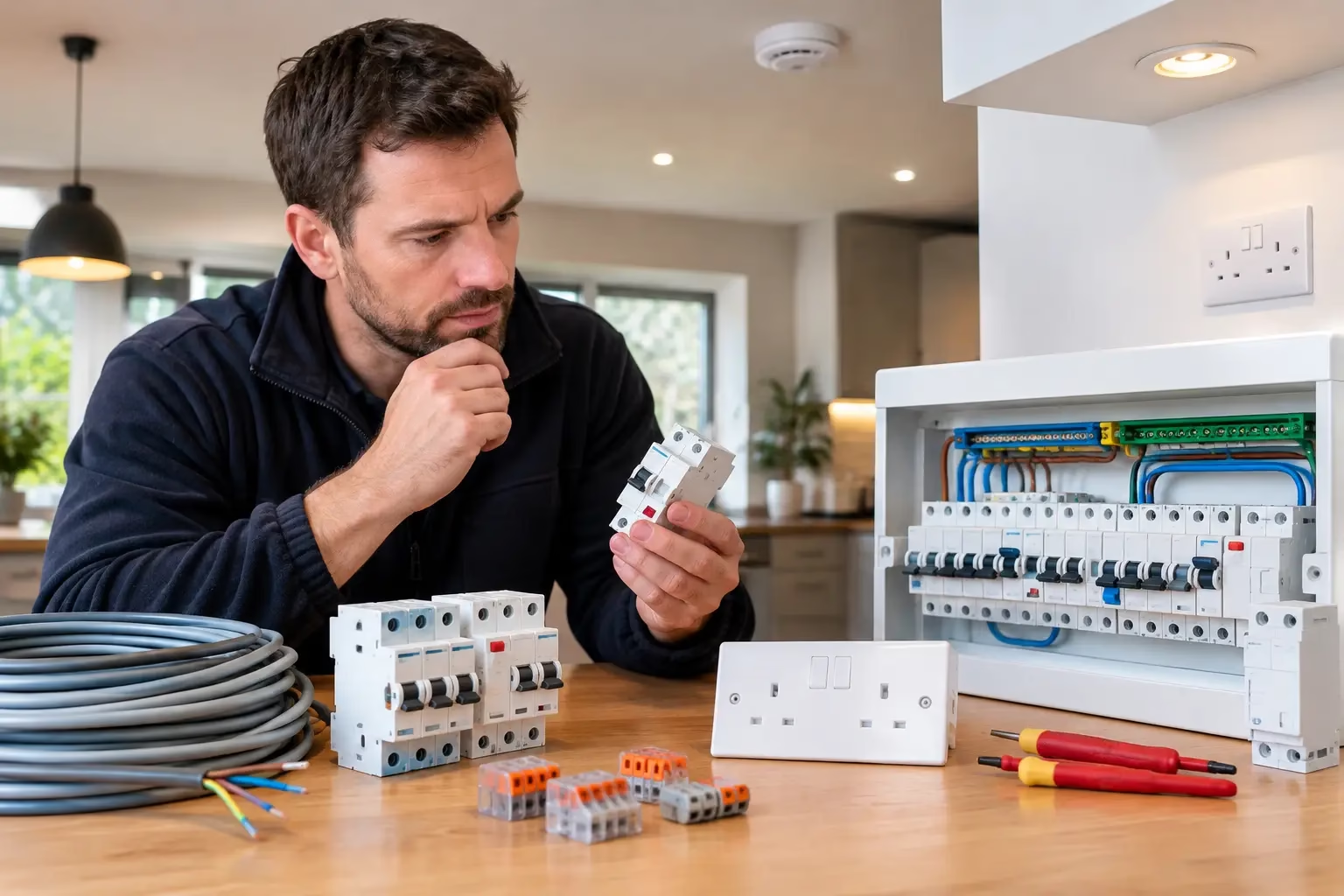
Most modern domestic consumer units use a combination of miniature circuit breakers, residual current protection and, where appropriate, additional devices for surge or arc-fault protection. Each has a particular job.
MCBs protect cables from overload and short circuits
An MCB, or miniature circuit breaker, protects a circuit against excessive current. This may happen when too many appliances are used on one circuit, or when a short circuit develops. It is the modern equivalent of the old rewireable fuse in many properties.
MCBs come in different current ratings and tripping characteristics. The correct choice depends on the circuit design, not only on the appliances plugged in today. For example, a socket circuit may use a different arrangement from a lighting circuit or a dedicated electric shower supply. An electrician will also check whether the disconnection time required by BS 7671 can be achieved if a fault occurs.
RCDs reduce the risk of electric shock
An RCD, or residual current device, monitors the balance of electricity flowing through a circuit. If some current is leaking to earth, such as through damaged insulation or a person receiving an electric shock, it disconnects rapidly.
RCD protection is particularly relevant for socket outlets, bathrooms, outdoor equipment and circuits supplying equipment used outside. It does not replace an MCB because it is designed to detect a different type of fault. It also cannot make unsafe appliances or damaged wiring safe. If an RCD trips repeatedly, stop resetting it and arrange fault finding.
Older consumer units may have one RCD protecting several circuits. That arrangement can mean a single fault takes out the lights, sockets and freezer together. It may still operate correctly, but it is less convenient and can make faults harder to isolate.
RCBOs give individual circuits their own protection
An RCBO combines MCB and RCD protection in one device. It protects against overload, short circuit and earth leakage while limiting the effect of a fault to the affected circuit.
For many homes, RCBOs are a sensible option during a consumer unit replacement. If a fault develops on the washing machine circuit, for instance, the rest of the property is more likely to remain supplied. This improves continuity and makes fault finding more straightforward.
The trade-off is cost. An RCBO board is often more expensive than a split-load arrangement, but the additional resilience is valuable in homes with home-working equipment, medical equipment, alarms, fridges, freezers or electric heating controls.
AFDDs can help detect dangerous arcing faults
An arc fault detection device, or AFDD, is designed to identify certain electrical arcs that conventional breakers and RCDs may not detect. Arcing can be caused by deteriorated connections, damaged cables or poor-quality extension leads, and can create enough heat to start a fire.
AFDDs are not a universal requirement for every domestic circuit, but current regulations set out situations where they are recommended or may be required following design assessment. They can be worth discussing for higher-risk properties, houses in multiple occupation, sleeping accommodation, older buildings or circuits where cable damage is more likely. The decision should be based on the property and its use, rather than fitting them as a box-ticking exercise.
SPDs protect sensitive electronics from voltage surges
A surge protection device, or SPD, helps reduce the effects of transient overvoltages. These short surges can result from lightning activity or switching within the electricity network and may damage televisions, boilers, broadband equipment, appliances, smart controls and security systems.
SPDs are increasingly common in consumer unit upgrades because modern homes contain more sensitive electronics than ever. Whether one is needed depends on the installation, the potential consequences of damage and the value of the connected equipment. For many households, the cost is modest compared with replacing several damaged devices.
Check compatibility before replacing anything
Consumer units are tested and assembled as systems. Mixing devices from different manufacturers, or fitting a breaker that merely appears to fit, can compromise the board’s design and invalidate the intended performance. Physical fit is not proof of compatibility.
A qualified electrician will check the make and model of the consumer unit, available ways, busbar arrangement, enclosure condition and manufacturer guidance. In some cases, a replacement device is suitable. In others, particularly where the board is old, damaged or has obsolete components, a consumer unit replacement is the safer long-term route.
The condition of the installation matters just as much. A new RCBO cannot correct brittle cable insulation, poor earthing, overloaded circuits or loose terminals. Testing is needed to confirm that protective devices will operate within the required time if a fault develops.
Consider the demands of the property
A small home with standard lighting and sockets has different needs from a property with an electric vehicle charger, induction hob, electric shower, hot tub, solar PV, battery storage or outbuildings. High-load additions often need dedicated circuits and carefully selected protection.
Outdoor circuits deserve particular attention. Garden lighting, sockets, sheds, garages and electric gates are exposed to moisture, physical damage and changing use. Suitable RCD protection, appropriate enclosures and sound earthing are essential. Temporary extension leads are not a substitute for a correctly installed outdoor supply.
For landlords, reliable circuit separation can also reduce disruption when a fault occurs. A well-designed consumer unit makes it easier to identify the affected circuit, restore unaffected supplies and arrange repairs promptly. Clear labelling is a small detail that makes a real difference during an emergency.
When a consumer unit upgrade is the right choice
A replacement consumer unit may be advisable if you have an old fuse board with rewireable fuses, no RCD protection, signs of overheating, cracked accessories, recurring tripping or insufficient capacity for planned electrical work. It is also worth considering when major alterations or a rewire are taking place.
A proper upgrade is more than changing the box on the wall. It includes inspection, testing, circuit identification, selection of suitable protective devices, certification and notification where required. Work should be completed to the current 18th Edition of BS 7671, with the property left tidy and the installation clearly labelled.
If you notice burning smells, buzzing, discolouration around the consumer unit, shocks from appliances or breakers that will not reset, treat it as urgent. Switch off the affected circuit if it is safe to do so and avoid repeatedly trying to reset it. These signs need professional attention, not trial and error.
The best circuit protection is the kind that is correctly designed, properly tested and easy to trust when something goes wrong. For homes and rental properties around Chester, Gerrard’s Electrical Solutions can assess the installation in plain English, explain the practical options and carry out the work safely without hidden surprises.