

- August 27, 2026
- By
- Blog
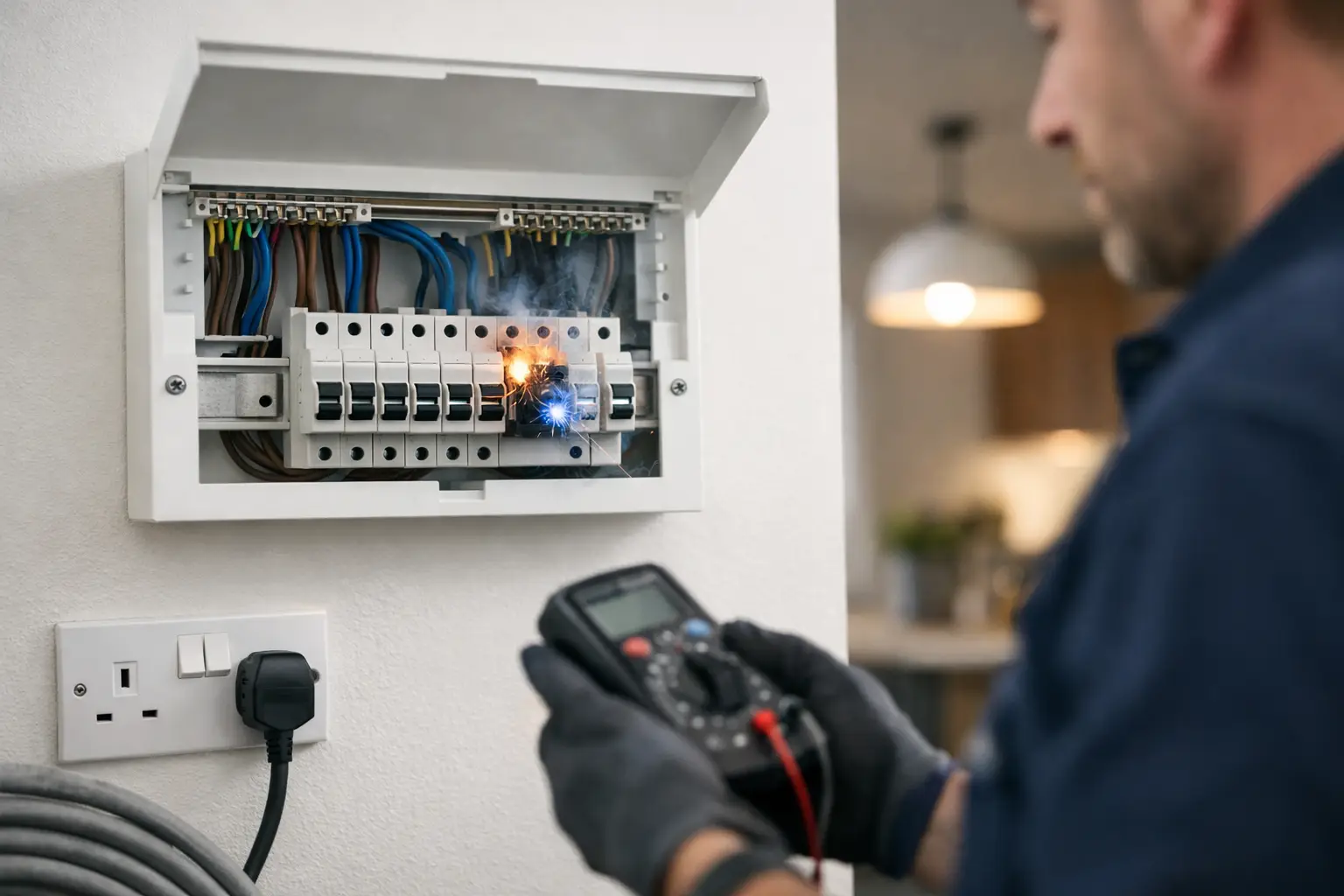
A buzzing sound from a consumer unit is easy to ignore at first, particularly if the lights still work and nothing has tripped. But why breakers buzz is not a question to leave unanswered. Circuit breakers and RCDs are normally quiet, so a new, persistent or worsening buzz can point to a loose connection, an overloaded circuit or a failing device that needs attention.
The safest approach is simple: do not remove the consumer unit cover or attempt a repair yourself. Make a note of when the noise happens, reduce electrical demand where you can, and arrange for a qualified electrician to investigate. If there is heat, a burning smell, smoke, visible damage or crackling, treat it as urgent.
Why breakers buzz in a consumer unit
A circuit breaker works by using internal mechanical and magnetic components to detect a fault or excessive current and disconnect the circuit. While electricity itself is silent, alternating current can create a slight vibration in electrical components. In some circumstances, that vibration becomes audible as a hum or buzz.
A very faint sound from an older unit may not always mean immediate danger. However, a clearly audible buzz, especially one that has recently started, should never be dismissed as normal. The key issue is finding out whether the sound is coming from the breaker itself, an RCD or RCBO, a loose connection, the main switch, or equipment elsewhere nearby such as a meter or transformer.
An electrician will test the installation properly rather than relying on sound alone. This includes checking the condition of the consumer unit, signs of overheating, the tightness and condition of connections, circuit loading, protective devices and the earthing arrangements.
Loose connections and overheating
Loose or deteriorating connections are one of the more serious possible causes. When a cable termination is not secure, electricity can meet resistance at that point. Resistance produces heat and may create vibration, buzzing or a crackling sound.
This can happen in ageing consumer units, after previous alterations, or where a circuit has been subjected to high demand over time. The danger is that a loose connection can overheat without immediately tripping a breaker. In severe cases, it can damage cables, melt insulation and increase the risk of fire.
A buzzing unit that feels warm, has brown marks around it, or gives off a hot plastic smell needs urgent professional attention. Do not keep resetting switches or wait to see if it settles down.
Overloaded circuits and high electrical demand
Buzzing may become noticeable when several high-demand appliances are running at once. Common examples include an electric shower, oven, kettle, tumble dryer, immersion heater, portable heater or EV charger. This does not automatically mean the circuit is overloaded, but it does give an electrician a useful clue.
Older properties are particularly likely to have circuits that were not designed for modern electrical habits. A kitchen, for example, may now be supporting far more appliances than it did when the wiring was installed. The solution could be as straightforward as identifying a faulty appliance, but it may also involve adding a dedicated circuit, upgrading part of the installation or fitting a modern consumer unit.
It depends on the condition and design of the existing system. A proper inspection avoids spending money on an upgrade that is not necessary while ensuring a genuine fault is not overlooked.
A worn or faulty breaker, RCD or RCBO
Protective devices do not last forever. Circuit breakers, RCDs and RCBOs can wear, develop internal faults or become unsuitable for the demands of the circuit they protect. A defective device may buzz even when no obvious appliance is switched on.
An RCD or RCBO may also make noise when it is responding to electrical leakage or an unstable fault condition. These devices are designed to protect people from electric shock, so repeated tripping, buzzing or unreliable operation should be checked promptly.
Replacing a breaker is not a simple swap. The correct device must suit the consumer unit, the cable size, the circuit design and the required protection. Work inside a consumer unit should be completed by a competent electrician and tested to current BS 7671 requirements.
When a buzzing breaker is an emergency
The sound alone matters, but the warning signs around it matter more. Call an emergency electrician without delay if the buzzing is accompanied by any of the following:
- A burning, fishy or hot plastic smell
- Heat from the consumer unit or a breaker that is hot to the touch
- Smoke, scorch marks, melting or discolouration
- Crackling, sparking, flickering lights or repeated tripping
- Loss of power to part or all of the property
If it is safe to do so and there is no smoke or fire, switch off the main switch at the consumer unit to isolate the installation. Do not touch exposed metal, damaged cables or a wet consumer unit. If you can see smoke or fire, move everyone away from the area, call 999 and do not attempt to tackle an electrical fire with water.
For landlords, a buzzing consumer unit should be treated as a maintenance priority. Electrical safety duties do not stop at obtaining an EICR. A change in the condition of the installation between inspections may require immediate investigation, particularly where tenants report heat, tripping or burning smells.
What to do before the electrician arrives
There are a few safe observations that can help narrow down the fault, without opening the unit or touching wiring. Note whether the noise is constant or only starts when a particular appliance is used. If the buzz appears when the shower, cooker or heating comes on, stop using that appliance until the circuit has been checked.
You can also switch off and unplug non-essential appliances in the affected area, provided there are no signs of overheating or damage. This may reduce the load on the circuit, but it is not a repair and should not be used as a reason to delay an inspection.
Avoid repeatedly resetting a tripped breaker. A breaker trips because it has detected a problem, such as an overload, short circuit or earth fault. Resetting it once after unplugging appliances may be reasonable where there are no urgent warning signs. If it trips again, leave it off and arrange a fault-finding visit.
If the noise appears to come from the electricity meter, service head or incoming supply cable rather than the consumer unit, do not interfere with it. Those parts may belong to the electricity network operator or meter provider. An electrician can help identify what you are hearing and advise on the correct next step.
How an electrician finds the cause
A reliable diagnosis starts with isolating the affected circuit safely and inspecting the consumer unit for signs of stress or damage. The electrician will then carry out appropriate tests, which may include checking insulation resistance, continuity, polarity, earth fault loop impedance and RCD operation.
They may also assess the appliances connected to the circuit and the amount of load being drawn. This matters because a sound that seems to come from a breaker can sometimes be linked to a fault in an appliance, damaged cable or connection further along the circuit.
Once the cause is clear, the repair should address the underlying issue. That could mean repairing a connection, replacing a faulty protective device, correcting an overloaded circuit, replacing damaged wiring or recommending a consumer unit upgrade where the existing board is outdated or unsafe. Any work should be tested and left safe, with clear advice on what has been found and why.
Do not wait for a small buzz to become a costly fault
Most buzzing breakers can be investigated before they become a major disruption. Acting early is usually safer and often less expensive than waiting for a complete loss of power or heat damage inside the consumer unit.
For homeowners and landlords around Chester, Gerrard’s Electrical Solutions provides practical fault finding, clear explanations and responsive repairs. A consumer unit should protect your property quietly in the background. If it is making itself heard, it is worth getting the right person to listen.