

- August 9, 2026
- By
- Blog
A light that flickers when the washing machine starts, a socket that feels warm, or a fuse board that trips every few days may seem like small household annoyances. They can also be signs home wiring needs replacement rather than another temporary repair. Electrical faults are not always visible, and older cables can deteriorate behind walls and beneath floors long before a complete failure occurs.
For homeowners and landlords, the right response is not to panic or start removing socket fronts. It is to have the installation assessed by a competent electrician who can identify whether the issue is a local fault, an overloaded circuit or ageing wiring that needs more substantial work.
Signs Your Home Wiring Needs Replacement
Your consumer unit uses old-style fuses
A consumer unit with rewireable fuses, a wooden backing board, or no RCD protection is often a sign that the electrical installation has not kept pace with modern safety standards. It does not automatically mean every cable in the property must be replaced, but it does justify a professional inspection.
Modern consumer units use circuit breakers and RCD protection designed to disconnect the supply quickly when a fault is detected. This can reduce the risk of electric shock and fire. If an older fuse board is paired with ageing wiring, damaged accessories or a lack of earthing, a consumer unit upgrade alone may not be the right answer. The condition of the full installation needs checking first.
Circuits trip repeatedly
A circuit breaker can trip for a legitimate reason, such as using too many high-demand appliances on one circuit. However, repeated tripping with normal day-to-day use should never be ignored. It can point to a damaged cable, a faulty appliance, loose connection, moisture ingress or an overloaded circuit.
Try to notice the pattern. Does the same breaker trip when a particular appliance is plugged in? Does it happen after rain, when the shower is used, or when several kitchen appliances are running? This information helps an electrician trace the fault safely. Do not keep resetting a breaker if it trips again, especially if there is a burning smell, heat or visible damage.
Lights flicker, dim or brighten unexpectedly
An occasional flicker may be caused by a loose bulb or a failing light fitting. Flickering across several rooms, lights that dim when appliances start, or bulbs that blow more often than expected can indicate a more serious problem with a circuit or connection.
Loose electrical connections create resistance and heat. Over time, that heat can damage cable insulation and terminals. In some properties, particularly those with older wiring or previous DIY alterations, fluctuating lighting can be a useful early warning that connections need investigation before they worsen.
Sockets or switches are warm, discoloured or damaged
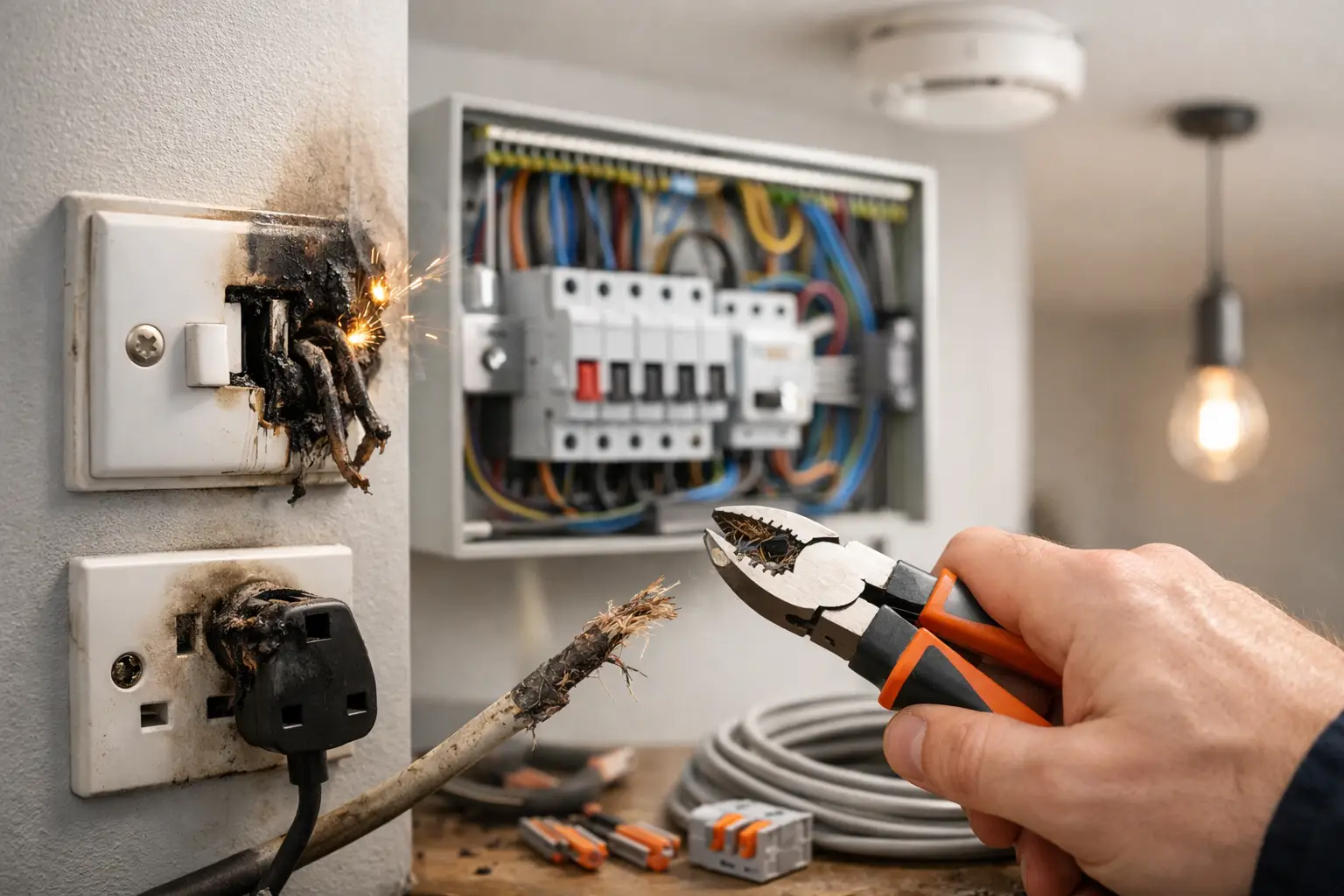
Sockets and switches should not feel hot during normal use. A slight warmth around a charger can be normal, but heat at the faceplate, cracking sounds, scorch marks, brown discolouration or a smell of hot plastic need urgent attention.
Stop using the affected outlet if it is safe to do so, switch off the relevant circuit at the consumer unit and arrange for an electrician to inspect it. The fault may be limited to the accessory or its connections, but it could also reveal cable damage or a circuit that is carrying more load than it should.
You can smell burning or hear buzzing
A burning smell from a socket, consumer unit, loft space or electrical fitting is an emergency warning sign. Buzzing, crackling or sizzling noises are also not normal. They can result from arcing, where electricity jumps across a poor connection, producing intense local heat.
If you suspect an active electrical fire risk, turn off the electricity at the main switch only if it is safe to reach it. Do not touch damaged equipment, and do not use water on an electrical fire. Call emergency services if there is smoke or fire, then arrange urgent attendance from a qualified electrician once the immediate danger is controlled.
The wiring is several decades old
Age alone does not determine whether a rewire is needed. A well-installed older system that has been properly maintained may remain serviceable, while newer wiring can be unsafe if it has been poorly altered or damaged. That said, homes with original wiring from the 1960s, 1970s or earlier are more likely to need detailed assessment.
Warning signs of older installations include fabric-covered or rubber-insulated cables, dated socket styles, a lack of earth connections, limited socket outlets and evidence of repeated additions over the years. Modern households use far more electrical equipment than homes were designed for decades ago. Extension leads, multi-way adaptors and overloaded outlets can become a daily workaround for an installation that no longer suits the property.
You rely on extension leads in every room
Using an extension lead occasionally is not necessarily a concern. Relying on them permanently for televisions, heaters, office equipment, kitchen appliances and chargers is different. It often means there are too few sockets, poorly positioned outlets or circuits that were not designed for present-day demand.
Adding sockets may be enough where the wiring is in good condition and the circuit has suitable capacity. Where cable condition, earthing or circuit design is poor, rewiring all or part of the property may offer the safer long-term solution. An electrician can explain the options clearly, rather than recommending unnecessary work.
You have had electric shocks or tingling from fittings
Even a mild tingle from a tap, appliance casing, switch or light fitting should be treated seriously. It may suggest a fault with earthing, bonding or insulation. Never assume it is harmless because it only happens occasionally.
Turn off and stop using the affected item where possible. A qualified electrician can carry out testing to find the cause. This is particularly important in kitchens, bathrooms, garages and outdoor areas, where water and metal surfaces increase the risk of electric shock.
The property has been altered or extended
Loft conversions, extensions, new kitchens and renovations can place extra demand on an existing installation. Sometimes electrical work has been completed in stages by different people, leaving circuits difficult to identify or accessories connected in ways that are no longer suitable.
If you have recently bought a property with extensive alterations, an Electrical Installation Condition Report, commonly called an EICR, provides a clear picture of the installation’s condition. The inspection checks for damage, deterioration, defects and departures from current safety requirements. For landlords, electrical safety inspections are also a key part of meeting legal responsibilities for rental homes.
Replacement, Repair or a Consumer Unit Upgrade?
Not every electrical issue requires a full rewire. A single faulty socket, damaged cable section or failed light fitting can often be repaired safely. Likewise, a consumer unit upgrade can improve protection where the wiring and circuits are confirmed to be in sound condition.
A full rewire is more likely where cables are badly deteriorated, earthing is inadequate, circuits are overloaded, wiring has been altered unsafely, or the property needs a layout designed for modern use. Partial rewiring can sometimes be suitable during a kitchen renovation or extension, but joining new work to old wiring must be carefully tested and planned.
Rewiring is disruptive because cables often run behind walls, beneath floors and through ceilings. A good electrician will explain what needs to be accessed, how rooms will be protected and what making-good may be required afterwards. The goal is not simply to replace cables, but to leave you with a safe, practical installation that meets current BS 7671 requirements.
What to Do If You Spot a Warning Sign
Do not attempt electrical repairs yourself or continue using equipment that shows signs of overheating. Take photographs of any visible damage only if it is safe, make a note of what happened and when, and contact a competent electrician for fault finding.
For homes and rental properties around Chester, Gerrard’s Electrical Solutions can assess faults, carry out EICRs and advise honestly on whether repair, an upgrade or rewiring is the sensible next step. Work should be tested, explained in plain English and completed with respect for your home.
The safest time to investigate ageing wiring is before it becomes an urgent fault. A professional inspection can replace uncertainty with a clear plan, helping you budget for the right work and keep the people in your property protected.