

- September 22, 2026
- By
- Blog
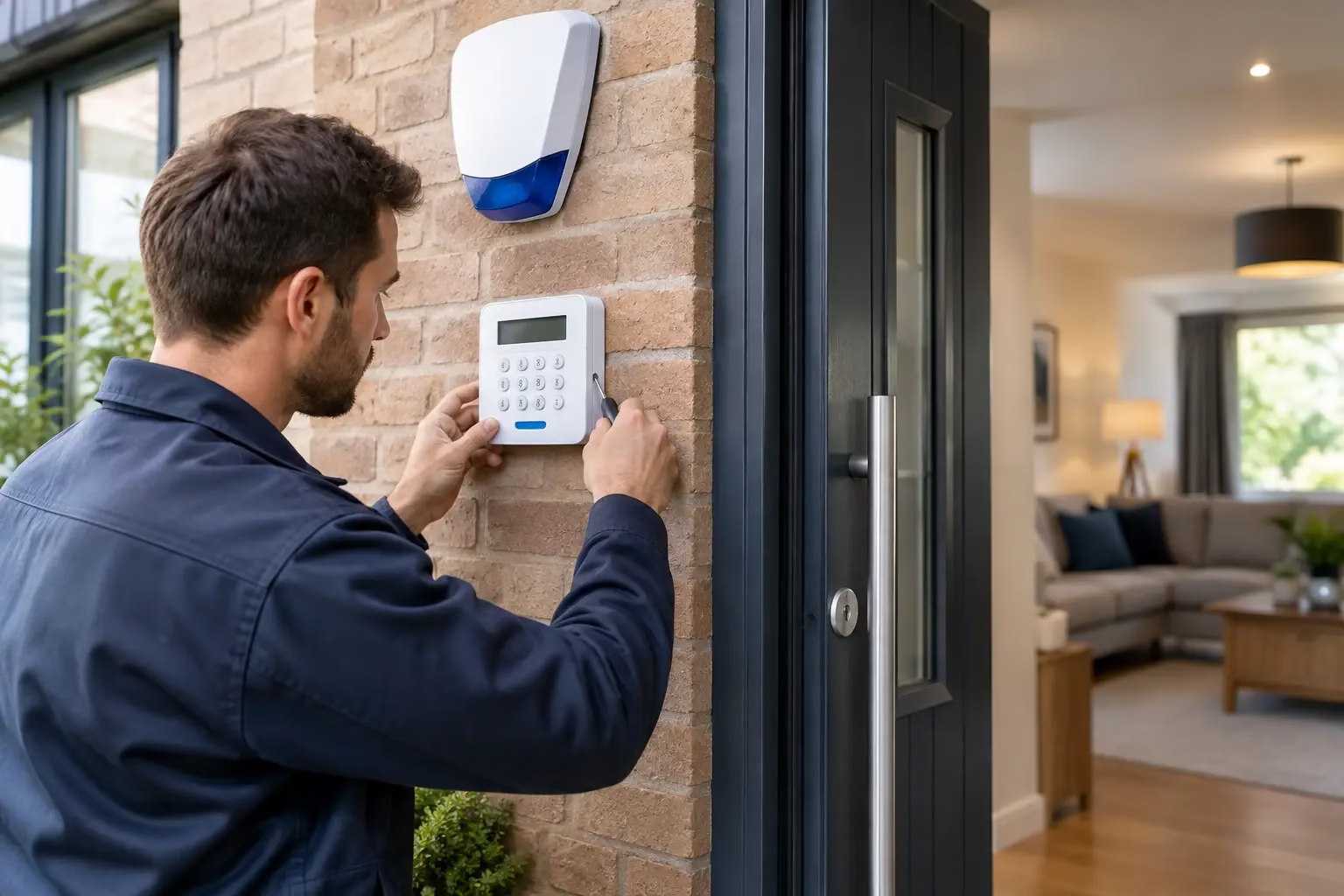
A visible bell box can make an opportunist think twice, but effective security alarm installation is about far more than fitting a device by the front door. The right system should suit how you use your home, cover genuine entry points and be simple enough to set every day. A poorly placed or unreliable alarm soon gets ignored. A well-planned one gives you practical protection and reassurance whether you are at home, at work or away.
For homeowners and landlords, the aim is not to fill every room with sensors. It is to identify the routes an intruder is most likely to use, choose equipment that works with the property and have it installed neatly, safely and tested properly.
Start with the property, not the alarm kit
Every home has different risks. A terraced house with a rear alley, a detached property with side access and a ground-floor flat each need a different approach. Before choosing equipment, look at the doors, accessible windows, garage, outbuildings and any areas hidden from view.
The most useful question is: if someone tried to enter without being seen, where would they go? Rear and side doors, patio doors, accessible windows and garages are often more relevant than a prominent front entrance. A survey should also consider daily routines. If a dog moves freely around the house, for example, standard motion sensors may cause false alarms unless pet-friendly detectors are selected and positioned correctly.
For rental properties, landlords should consider the system’s reliability and ease of use for tenants. An alarm that is complicated to arm, needs constant battery changes or produces nuisance activations can create more calls and frustration than protection. Clear handover instructions matter just as much as the installation itself.
Wired or wireless security alarm installation?
Both options can work very well. The best choice depends on the building, the level of coverage required and whether discreet cabling is practical.
A wired alarm uses fixed cables between the control panel, detectors, sounders and power supply. It is often a strong choice during a rewire, extension, renovation or new-build project, when cables can be run before walls are finished. Wired systems offer dependable communication and reduce the number of batteries that need maintaining. The trade-off is that fitting them into a finished home can take longer and may involve more access work.
Wireless alarms use battery-powered detectors that communicate with a central panel. They are usually quicker and less disruptive to install in an existing property, making them popular for homes and rental accommodation. Modern wireless systems are reliable when specified and fitted properly, but batteries still need checking and replacing when required. Signal strength must also be tested, particularly in larger homes, garages or buildings with thick walls.
A hybrid system combines wired and wireless components. This can be sensible where a property has existing alarm cabling but an extension, garage or difficult-to-reach area needs wireless coverage. There is no one-size-fits-all answer. The priority is a system that covers the right areas and can be maintained without difficulty.
Choosing the right level of protection
An audible alarm is designed to deter an intruder and alert people nearby with an internal siren and external sounder. For many homes, this is a sensible and cost-effective starting point.
If you want alerts while you are away, an app-connected alarm can send notifications to your phone when it is armed, disarmed or triggered. This is useful for checking on a property while on holiday, monitoring a second home or knowing when children arrive home. However, app alerts rely on a suitable internet connection and, depending on the system, may still need a backup communication option if broadband fails.
Monitored alarms add another layer. When triggered, a monitoring centre can contact nominated keyholders or arrange a response under the terms of the service. This can be appropriate for higher-risk homes, businesses or vacant properties, but it brings ongoing costs and may require a more specific system specification.
It is worth being realistic about what an alarm can and cannot do. It is one part of home security, alongside good locks, secure doors and windows, lighting and sensible habits. An alarm does not replace those basics, but it can make forced entry more difficult to carry out unnoticed.
Sensor placement matters more than quantity
A good installer will avoid simply placing a detector in every available corner. Motion detectors should cover likely movement routes after entry, rather than pointing at radiators, direct sunlight or areas where pets regularly pass. Door contacts can provide early warning at key entry points, while glass-break detection may be useful in some layouts.
The control panel needs a location that is accessible for everyday use but not obvious to someone entering the property. Internal sounders should be loud enough to make remaining inside uncomfortable, and the external sounder should be visible from the street where appropriate. A visible external box can be a deterrent in its own right, although the security of the system must never depend on appearance alone.
Outbuildings deserve separate thought. A garage containing bikes, tools or electrical equipment may be valuable, but its distance from the house can affect wireless signal performance. In some cases, a dedicated detector and sounder arrangement is worthwhile. In others, improving locks, lighting and door security may be the more sensible first step.
Make sure power and electrical work are safe
Security equipment needs dependable power. Most professional alarm panels have a mains supply and backup battery, so the alarm can continue operating during a power cut for a limited period. External sounders and certain accessories may have their own battery backup too.
Where electrical work is needed, it should be planned properly rather than relying on overloaded extensions or unsuitable sockets. Any associated electrical installation should be carried out safely and in line with BS 7671 and current 18th Edition requirements where applicable. Neat containment, sensible cable routes and correctly protected circuits all help the finished system remain reliable and unobtrusive.
This is particularly relevant when combining an alarm with CCTV, security lighting, smart doorbells or access control. These systems can complement each other, but adding equipment without planning power, Wi-Fi coverage and cable routes can leave a property looking untidy and create faults later on.
Testing and handover should never be rushed
The final stage of security alarm installation is where confidence is built. Every detector, contact, sounder, keypad and app connection should be tested before the installer leaves. You should be shown how to arm and disarm the system, what the different alerts mean and what to do if it activates unexpectedly.
Ask practical questions at handover. How are batteries replaced? What happens during a power cut? Can you create separate user codes? How do you silence a false alarm safely? If the system uses an app, make sure it is connected to the correct account and that notification settings are understood.
Keep a note of the installer’s details, system information and any user codes in a secure place. For landlords, provide clear instructions to tenants and make arrangements for periodic checks, especially where a property is vacant between lets.
Ongoing maintenance keeps protection dependable
An alarm is not fit-and-forget equipment. Test it periodically, check that doors and windows still close correctly, and respond to low-battery warnings promptly. A detector that has been painted over, knocked out of position or obscured by furniture may no longer protect the area it was intended to cover.
If your home changes, your alarm may need to change too. An extension, loft conversion, new patio doors or a converted garage can create new access points and blind spots. Reviewing the system after building work is usually quicker and more cost-effective than discovering a gap later.
For households across Chester and the surrounding area, Gerrard’s Electrical Solutions can advise on practical alarm and smart-security installations with tidy workmanship and clear, plain-English guidance. The most useful security system is the one you understand, use consistently and trust to work when it is needed.