

- August 19, 2026
- By
- Blog
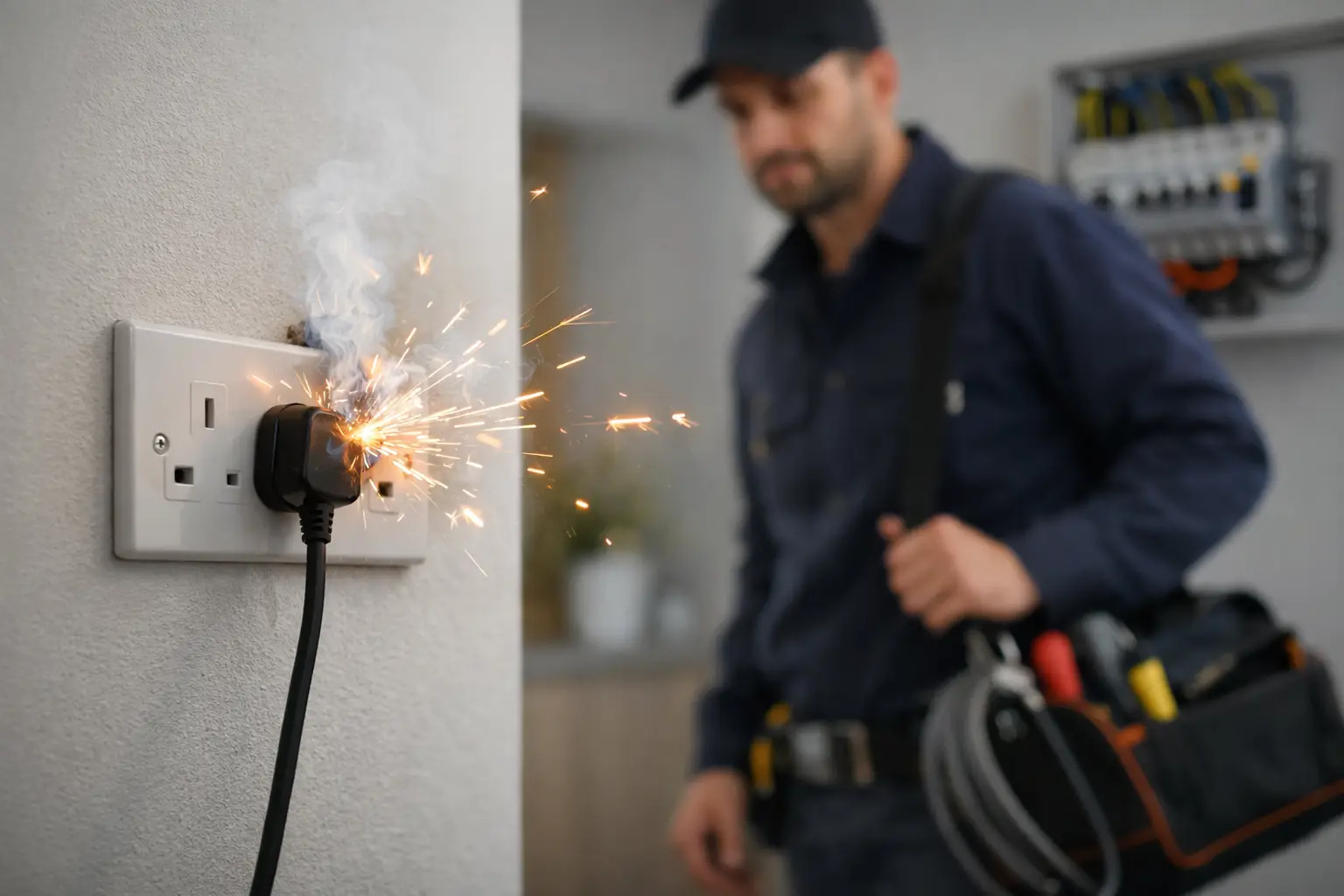
A spark at a socket can be unsettling, particularly when it is accompanied by a crackling sound, heat or a burning smell. If you are wondering why sockets spark, the answer can range from a brief, harmless electrical arc as a plug connects to a more serious fault inside the socket, plug, appliance or wiring. The difference matters, because damaged electrical connections can overheat long before a circuit breaker trips.
A socket that sparks repeatedly, looks discoloured or feels warm should not be ignored. Stop using it, isolate the circuit if it is safe to do so, and arrange for a qualified electrician to investigate the cause.
Why sockets spark when you plug something in
Electricity can jump a very small gap as the metal pins on a plug make contact with the terminals in a socket. This is called arcing. A tiny blue flash when inserting a plug can sometimes happen where an appliance is switched on or immediately draws power, such as a vacuum cleaner, kettle, charger or television.
That does not automatically mean the socket is faulty. However, it should be brief and occasional, with no crackling, buzzing, heat, smell or visible damage. Switching the socket off before inserting or removing a plug is good practice and reduces the chance of an arc occurring under load.
The concern is when sparking is frequent, substantial, comes from behind the socket faceplate, or happens without a plug being inserted. In those cases, electricity may be passing through a poor connection rather than following its intended path safely.
Common reasons a socket may spark
A loose connection inside the socket
Socket terminals need to grip plug pins firmly and the cable connections behind the faceplate must be secure. Over time, repeated use, wear, poor previous work or physical damage can leave a connection loose. Electricity then meets resistance at that point, creating heat and sometimes visible arcing.
Loose connections are a fire risk. The socket may become warm, make a faint buzzing sound, give off a burning smell or develop brown marks around the switch or plug holes. Do not try to tighten terminals yourself. The socket must be safely isolated, inspected and tested before a repair or replacement is carried out.
A damaged plug or appliance lead
The socket may not be the source of the problem. A bent plug pin, cracked plug casing, loose fuse carrier or damaged flex can all cause poor contact and sparking when the appliance is connected.
Try not to test this by repeatedly plugging it in. Unplug the appliance if it is safe to do so, then check for obvious external damage without dismantling anything. If one appliance causes the problem but other plugs work normally in the same socket, the appliance or its lead is more likely to be at fault. If multiple appliances spark in one outlet, the socket should be treated as the likely issue.
Overloaded adaptors and extension leads
Multiway adaptors and extension leads are useful for low-power items, but they are often asked to do more than they should. A single extension lead supplying heaters, kettles, air fryers, tumble dryers or other high-demand appliances can overheat, especially if it is coiled, damaged or used with another extension lead.
Overloading does not always produce an immediate spark, but it can weaken plugs, sockets and connections over time. Use wall sockets where practical and avoid daisy-chaining extension leads. If you regularly run out of usable outlets, additional sockets installed in the right places are far safer than relying on adaptors permanently.
Moisture, dirt or damage around the outlet
Water and electricity are a dangerous combination. Kitchens, utility rooms, bathrooms and garages need appropriate accessories, safe positioning and extra care. A splash, leak, condensation or wet hands can create a path for electricity where there should not be one.
Dust and debris can also build up around sockets in workshops, sheds or older properties. If there is any sign of water ingress, do not touch the socket or plug. Isolate the supply only if you can do so safely from a dry location, then call an electrician. Never use a hairdryer or heater to dry out an electrical outlet.
Ageing wiring or a fault on the circuit
Older sockets, deteriorating cable insulation and previous alterations can cause faults that are not obvious from the outside. A socket may spark because of a damaged cable, a loose connection elsewhere on the circuit or an issue in the consumer unit.
This is why a simple visual check is not enough where warning signs keep returning. Proper fault finding involves testing the circuit, checking protective devices and identifying the underlying cause rather than simply replacing the faceplate and hoping the problem has gone away.
When a sparking socket is an emergency
Treat the situation as urgent if you see smoke, persistent sparking, flames, melted plastic, scorch marks, a burning smell, or if the socket is hot to touch. Switch off the power at the consumer unit if it is safe to reach it without going near the damaged outlet. Do not use water on an electrical fire.
If there is a fire, get everyone out of the property and call 999. Once the immediate danger has passed, the affected circuit should stay switched off until it has been checked by an electrician.
A circuit that repeatedly trips when you use a particular socket also needs attention. The tripping device may be protecting you from an overload, short circuit or earth fault. Resetting it once after disconnecting appliances can be reasonable, but repeated resetting without finding the cause is not a repair.
What you can safely do before help arrives
Your priority is to prevent further use, not to diagnose the fault. Turn off the socket switch if it is safe and the socket itself is not damaged or hot. Unplug appliances only if the plug can be removed without touching damaged areas. Then switch off the relevant circuit at the consumer unit if you are confident which circuit it is.
Keep children, pets and anyone else away from the outlet. Do not cover it, spray it, remove the faceplate or push anything into the socket. Avoid using the affected circuit until it has been checked, particularly if it supplies a kitchen, utility room or outdoor equipment.
Taking a clear photo of any scorching or damage can be useful for an electrician, provided you can do so without getting close to a hot or actively sparking socket. Make a note of what was plugged in, when the issue occurred and whether any circuit breaker or RCD tripped. These details can speed up fault finding.
Why a professional inspection is worth it
Sparking at a socket is not a job for trial and error. A competent electrician can inspect the socket, plug and circuit, carry out the appropriate tests and confirm whether the cause is localised or part of a wider issue. Any repair should be completed in line with BS 7671 and current 18th Edition requirements.
For landlords, a sparking socket should be dealt with promptly. Electrical safety duties do not stop at obtaining an EICR at the required interval. Damage, reports of heat, tripping circuits or faulty outlets between inspections all need appropriate action to keep tenants safe and the installation in good order.
In an older home, an isolated socket fault can also be a useful prompt to consider the condition of the wider installation. That does not always mean a full rewire is necessary. It depends on the test results, the age and condition of the wiring, the consumer unit, and whether the installation can be safely maintained.
Make the socket safe before carrying on
A socket should be something you use without thinking about it. If it sparks, crackles, heats up or smells burnt, take that warning seriously and stop using it. Gerrard’s Electrical Solutions can investigate socket faults for homeowners and landlords across Chester and the surrounding area, explain the findings in plain English, and carry out the right repair without unnecessary work. Acting early is usually the simplest way to protect your property and the people in it.