

- August 21, 2026
- By
- Blog
A fuse blows on a Sunday evening, the lights go out in half the house, and the first question is usually: do I need a new fuse box? Understanding the consumer unit versus fuse box difference helps you make a safer, more informed decision – without paying for work that your property does not genuinely need.
Many people still call any electrical distribution board a fuse box. In everyday conversation, that is perfectly understandable. However, a modern consumer unit is designed to give far better protection against electric shock, overloaded circuits and faults than the older boards commonly found in homes across Chester and the surrounding area.
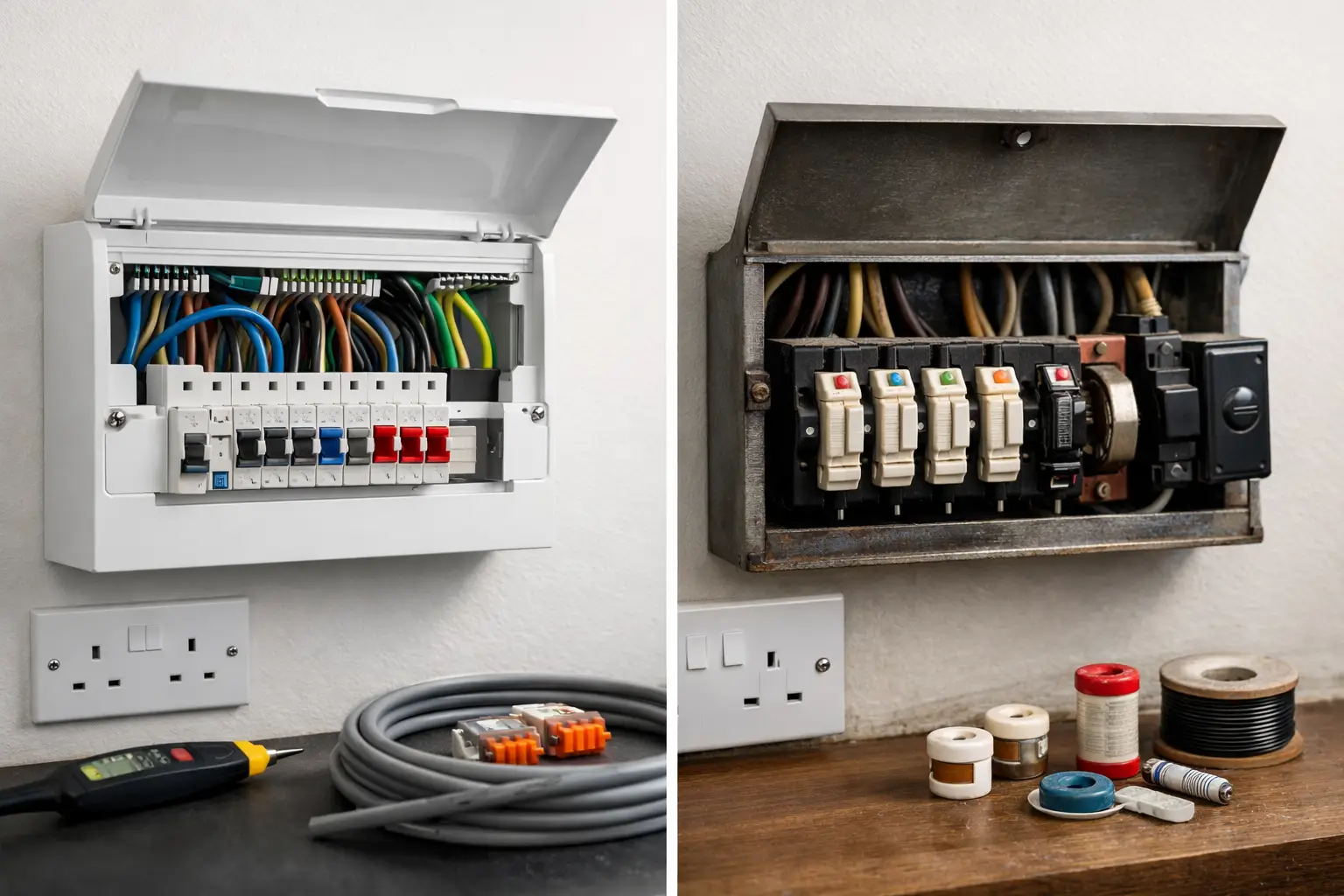
Consumer unit versus fuse box: what is the difference?
A traditional fuse box normally uses wire fuses or cartridge fuses. When a fault or overload occurs, the fuse wire melts or the cartridge fuse operates to cut off the supply. The circuit then needs a replacement fuse wire or cartridge before power can be restored.
A consumer unit is the modern version. It contains switches called circuit breakers, along with protective devices such as RCDs and RCBOs. Rather than replacing wire after a fault, you can often reset a tripped breaker once the cause has been found and dealt with.
The practical difference is not just convenience. Modern devices can respond more quickly and provide additional protection where electricity may be leaking to earth – a situation that can increase the risk of electric shock or fire.
What you may find inside an older fuse box
Older installations vary widely. Some have rewireable fuses with coloured fuse carriers, while others use cartridge fuses. A main switch may be present, but there may be little or no RCD protection.
A fuse box is not automatically dangerous simply because it is old. Its condition, the quality of previous electrical work, whether the circuits are suitable for current use, and the protective measures in place all matter. However, an older board can make it harder to meet current safety expectations, particularly after alterations or when an EICR identifies defects.
What a modern consumer unit does differently
A consumer unit separates your installation into individual circuits for items such as sockets, lighting, the cooker, shower or boiler. Each circuit is protected by a correctly rated device.
Miniature circuit breakers, usually called MCBs, protect against overloads and short circuits. An RCD monitors the electrical current and can disconnect the supply rapidly if it detects an imbalance that may indicate current flowing somewhere it should not, such as through damaged cable or a person. RCBOs combine both functions on individual circuits.
Using RCBOs has a useful everyday benefit. If one circuit develops a fault, it is less likely to turn off power to unrelated parts of the home. For example, a fault on an outdoor socket need not leave the kitchen fridge or upstairs lighting without power.
Why RCD protection matters in a home
Electricity should never be treated as something to take chances with. Older boards may still protect against a straightforward overload, but they often do not offer the level of additional protection expected in a modern domestic installation.
RCD protection is especially relevant for socket circuits, bathrooms, outdoor equipment, garden supplies and appliances used near water. It cannot make unsafe electrical equipment safe, and it does not remove the need for sound wiring or proper earthing. It is an extra layer of protection, not a substitute for competent electrical work.
Modern consumer units may also include surge protection. This can help limit damage from voltage surges that can affect sensitive equipment such as TVs, broadband routers, alarms, smart-home controls and appliances. Whether surge protection is appropriate depends on the installation and the required assessment, but it is commonly considered as part of a consumer unit upgrade.
Is it worth replacing an old fuse box?
It depends on the condition of the installation and what you need from it. A consumer unit replacement is often sensible where the existing board has no RCD protection, has damaged or loose components, shows signs of overheating, or cannot safely accommodate new circuits.
It may also be the right time to upgrade if you are having an electric shower fitted, extending the property, converting a garage, installing an EV charger, adding outdoor power, or carrying out significant kitchen work. These projects can place different demands on the electrical installation and may require new protective devices and circuits.
For landlords, an unsatisfactory EICR may identify issues that need remedial work before the installation can be considered satisfactory. An EICR does not automatically mean that every older fuse box must be replaced. The report should identify the actual observations, their classification and the recommended action. Clear advice matters more than a blanket recommendation.
Signs you should arrange an electrical inspection
Do not remove covers or attempt repairs yourself. Arrange a competent electrician to inspect the installation if you notice any of the following:
- Frequent tripping, blown fuses or circuits that will not reset
- A burning smell, crackling, buzzing or visible scorch marks near the board
- Loose, damaged or missing covers, exposed wiring or signs of water ingress
- A fuse box with no visible RCD protection, particularly in a property with older wiring
- New appliances or extensions being added to an installation that has not been checked for years
A burning smell, smoke, sparking, severe overheating or a suspected electric shock should be treated as urgent. Switch off the supply if it is safe to do so, keep clear of the affected area and call an emergency electrician. If there is a fire risk, contact the emergency services.
A consumer unit upgrade is not a like-for-like swap
Replacing a fuse box with a consumer unit involves more than fitting a new white enclosure to the wall. Before work begins, the electrician needs to assess the condition of the existing wiring, earthing and bonding arrangements, circuit design and accessories.
A new consumer unit can reveal faults that were previously hidden because modern protective devices are more sensitive. A circuit that trips after an upgrade is not necessarily evidence that the new board is faulty. It may point to damaged cable, an appliance fault, moisture in an outside fitting, poor connections or an issue elsewhere on the circuit.
This is why a proper upgrade includes inspection and testing, not guesswork. Work should be designed and completed in line with BS 7671 and current 18th Edition requirements. Once the work is complete, you should receive the appropriate electrical certification for the installation.
In some properties, a partial rewire or remedial work may be needed before a new consumer unit can be installed safely. That can feel frustrating, but fitting modern protection onto unsuitable wiring is not a shortcut worth taking.
What happens when an electrician replaces a fuse box?
A planned consumer unit replacement starts with an assessment of your existing installation and a discussion about how you use the property. This is the point to mention planned appliances, garden buildings, electric heating, security systems or future improvements.
The electrician will isolate the supply, remove the existing board, install and label the new consumer unit, then test every relevant circuit. Testing checks that protective devices operate correctly and that the circuits can be used safely. Power will be off for a period, so it is worth planning around heating controls, refrigeration, home working and any medical equipment in advance.
The final price depends on the number of circuits, the condition of the installation, the type of protection required and whether remedial work is identified. Be wary of a quote that promises a very low fixed figure without allowing for inspection, testing and certification. Transparent pricing should explain what is included and what could change if faults are found.
Can you reset a tripped consumer unit yourself?
You can usually reset a circuit breaker only after identifying a simple cause, such as too many appliances on one circuit or a faulty kettle that trips when plugged in. Unplug appliances on the affected circuit, reset the breaker once, then reconnect items one at a time if appropriate.
Do not keep resetting a breaker that trips repeatedly. Do not replace a fuse with the wrong rating, use improvised materials, or bypass a protective device. Repeated tripping is the installation doing its job by warning you that a fault needs attention.
For homeowners and landlords, the most useful question is not whether your board is called a fuse box or consumer unit. It is whether your electrical installation is safe, properly protected and suitable for the way the property is used. If you are unsure, a professional inspection gives you a clear answer and a practical route forward.