

- October 22, 2026
- By
- Blog
A failed EICR does not always mean a full rewire or an expensive surprise. This EICR repair example shows what can happen when an inspection finds several safety issues in a typical rental property, what the codes mean, and how an electrician puts the installation right.
For landlords, the key point is simple: an Electrical Installation Condition Report identifies the condition of the fixed wiring and whether remedial work is needed. The report itself does not repair faults. Once any dangerous or potentially dangerous issues have been corrected, the installation can be tested again and a satisfactory outcome issued where appropriate.
An EICR repair example in a rented house
Imagine a three-bedroom terrace property that has recently changed tenants. The landlord arranges an EICR because the previous report is approaching five years old and wants to make sure the property remains compliant before the new tenancy begins.
During the inspection, the electrician tests the consumer unit, circuits, sockets, lighting points, earthing and bonding. Much of the installation is serviceable, but the report identifies three issues requiring attention:
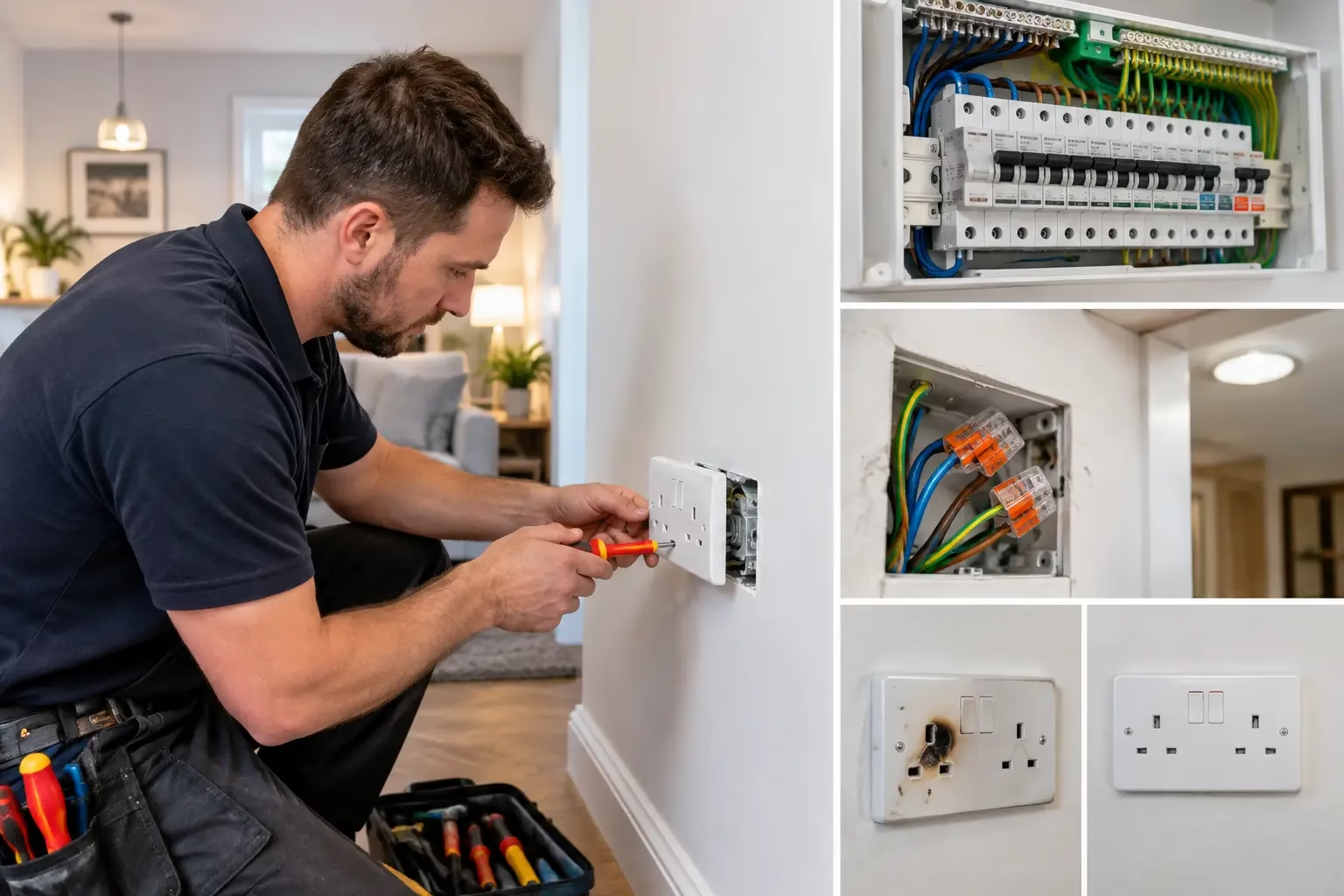
- A damaged socket outlet in the kitchen with a cracked faceplate and loose fixing screws.
- No RCD protection for the upstairs socket circuit, which supplies portable appliances in bedrooms.
- An incorrectly sized protective conductor connection at a lighting point, leaving exposed metal fittings without adequate earth continuity.
The cracked socket is recorded as C2 because damage and loose accessories can expose users to danger. The missing RCD protection is also coded C2 in this situation because ordinary use of sockets creates a foreseeable risk of electric shock without additional protection. The poor earth connection at the lighting point is coded C1 if it presents immediate danger, or C2 where it is potentially dangerous but isolated from use until repaired.
Because the report contains C1 and/or C2 observations, it is marked unsatisfactory. That sounds alarming, but it is a clear repair list rather than a reason to guess, delay or carry on as normal.
What the codes mean for a property owner
EICR observations are normally given a classification code. These codes help you understand what needs doing first, although the electrician should also explain the findings in plain English.
A C1 observation means danger is present. The electrician may need to make the issue safe immediately, such as isolating a circuit or removing a damaged fitting from service. A C2 observation means the condition is potentially dangerous and requires urgent improvement. FI means further investigation is needed because the inspector cannot confirm the cause or safety of a fault without additional work. C3 means improvement is recommended, but it does not make the report unsatisfactory by itself.
For a landlord, C1, C2 and FI observations should not be treated as paperwork to deal with later. They need prompt attention, both for tenant safety and to meet electrical safety responsibilities. For homeowners, the same codes are an equally useful warning that part of the installation needs professional repair.
How the repairs are planned and quoted
A proper repair visit starts with confirming the EICR findings on site. Sometimes an apparent fault has a straightforward cause, such as a loose termination. Other times, further investigation reveals damage within an accessory, ageing cable insulation or a fault elsewhere on the circuit.
In this example, the electrician isolates the relevant circuits safely before starting work. The damaged kitchen socket is replaced with a suitable new accessory, the terminals are inspected for heat damage, and the connections are remade securely. The lighting earth connection is corrected, tested and recorded.
The RCD issue needs more consideration. It may be possible to improve protection by fitting an RCBO to the existing consumer unit, provided the board is suitable and the circuit tests support this option. An RCBO protects an individual circuit and can reduce the chance of one fault affecting the whole property. If the consumer unit is obsolete, damaged, overcrowded or unsuitable for alteration, a consumer unit upgrade may be the safer long-term recommendation.
This is where quotations should be clear. A landlord needs to know whether the price covers the immediate EICR remedial work, any additional investigation, replacement parts, testing and certification. A good electrician will not recommend a consumer unit replacement simply because it is the largest job available. Equally, they should not add new protective devices to equipment that is not suitable to accept them.
Testing matters as much as the repair
Replacing a socket or tightening a conductor is only part of the job. The repair must be followed by the right testing to show it is safe and functioning as intended.
For the kitchen socket, this can include checking polarity, earth continuity, insulation resistance and RCD operation where applicable. For the lighting circuit, the electrician confirms that the earth path is continuous and that protective devices will disconnect the supply within the required time if a fault develops. After fitting an RCBO, its operation is tested rather than assumed.
These tests are why electrical repairs should not be treated as a general DIY task. A new faceplate may look straightforward, but the condition of the terminals, cable, earthing and circuit protection cannot be judged properly by appearance alone.
Once the listed faults have been corrected and the required tests passed, the electrician can provide confirmation of the remedial work. Depending on the scope of work and the original report, this may involve an Electrical Installation Certificate, a Minor Electrical Installation Works Certificate, and an updated or replacement EICR outcome. The correct document depends on what has been altered and tested.
When an EICR repair is not a quick fix
Some EICR observations point to wider problems. Repeated poor connections, brittle cable insulation, circuits with no effective earth, signs of overheating at the consumer unit, or numerous old accessories can indicate that piecemeal repairs will only postpone a larger job.
A full rewire is not automatically necessary because a property has older wiring. Age alone is not the deciding factor. The condition of the cables, the test results, circuit design, earthing arrangements and the property’s present use all matter. A well-maintained older installation may need targeted improvements, while a newer-looking one can still have serious hidden defects.
For example, if an EICR finds one failed socket and a missing RCD, targeted repair and protection upgrades may be sensible. If it finds low insulation resistance across several circuits, damaged cable routes and an outdated fuse board with multiple defects, a phased rewire or full rewire may be more practical and safer.
Keeping the process straightforward
Before an EICR, make sure the electrician can access the consumer unit, sockets, lights and any outbuildings supplied from the house. Let tenants know that supplies may need to be turned off briefly during testing. If there have been tripping circuits, shocks, burning smells, flickering lights or previous DIY work, mention this at the start. These details can help direct the inspection.
After receiving an unsatisfactory report, focus first on C1, C2 and FI observations. Ask for a clear explanation of what has been found, what work is needed, whether any circuit has been made safe, and what certification will be issued once repairs are complete. Keep the report, quotation, invoice and certificates together for your records.
For properties in and around Chester, Gerrard’s Electrical Solutions can inspect faults, carry out EICR remedial work to BS 7671 requirements and explain the options without unnecessary jargon. The right repair is the one that resolves the risk, suits the condition of the installation and leaves you with clear evidence that the work has been completed properly.
If an EICR has raised concerns, acting promptly turns a worrying report into a practical plan for a safer home or rental property.